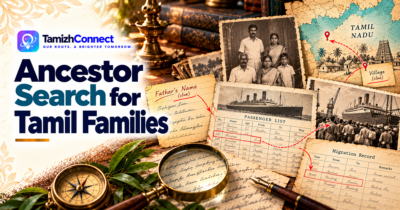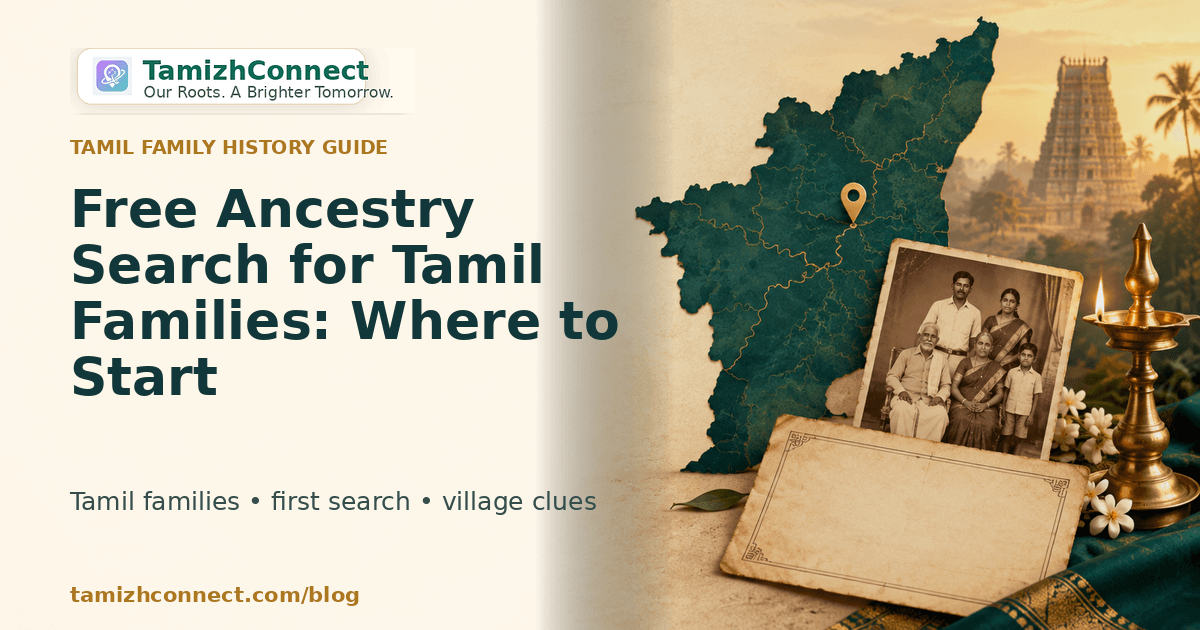
A free ancestry search is possible, but it needs structure. Tamil families should begin with family memory, native village clues, father names, documents, and migration records before depending on broad online searches.
If you search randomly, you may find many names but no proof. If you search with the right clues, even a free ancestry search can become useful.
Step 1: Build the Known Tree
Start with your immediate family.
Add:
- yourself
- parents
- grandparents
- great-grandparents if known
- siblings of each generation
- spouse and marriage links
- native villages
- approximate dates
This gives you a structure for every later record.
Step 2: Collect Village Clues
For Tamil families, village clues matter deeply.
Ask:
- What is our ancestral village?
- Which village did grandparents mention?
- Which village appears in wedding invitations?
- Which district was used in old records?
- Did the village name change?
- Is there a temple or Kula Deivam connection?
A free search becomes much stronger when you know the village.
Step 3: Record Father Names
Father names are essential in many Tamil records.
For each ancestor, record:
- personal name
- father’s name
- initials
- spouse name if known
- children’s names
- village
This helps avoid false matches when many people share the same personal name.
Step 4: Search Family Documents
Before searching the internet, search your house.
Useful documents include:
- wedding invitations
- school certificates
- property papers
- old passports
- temple receipts
- letters
- death notices
- family photos
- address books
These documents may contain the exact spelling or village needed for later searches.
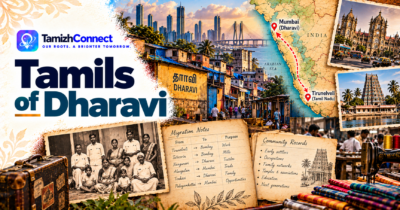
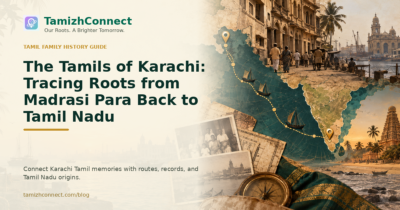
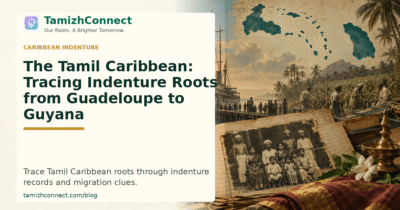
Step 5: Use Migration Clues
If your family is part of the Tamil diaspora, migration records may be important.
Tamil families migrated to many places including South Africa, Mauritius, Fiji, Malaysia, Sri Lanka, Singapore, Guyana, Trinidad, Suriname, and other regions.
Records may include:
- ship name
- arrival year
- destination
- indenture number
- father’s name
- old village
- district
Even one migration clue can reopen a lost family line.
Step 6: Treat Matches as Clues First
A free ancestry search can produce many possible matches. Do not accept a match too quickly.
A strong match usually needs more than one clue:
- name
- father’s name
- village
- district
- approximate year
- family oral history
- migration destination
- document evidence
If only the name matches, it may be the wrong person.
Step 7: Preserve Privacy
Do not post living-family details publicly while searching.
Avoid sharing:
- phone numbers
- exact addresses
- ID numbers
- private disputes
- sensitive living-person information
Use private family-tree tools and share only what is necessary for verification.
How TamizhConnect Helps
TamizhConnect is designed for Tamil ancestry research. It helps you organise family memory, Tamil relationships, village clues, and relevant records in one place.
You can start your search here: TamizhConnect
Final Thought
A free ancestry search is not about finding everything in one click.
It is about building the right evidence trail.
Start with your family. Record the villages. Preserve the names. Then search with purpose.
Where to go next
- Tamil Ancestry: A Complete Guide — the master research method for Tamil family history.
- Tamil Nadu voter search — 50 million+ current voters indexed by village and district.
- Indenture registers — for South African, Fijian, Mauritian and Malayan diaspora branches.