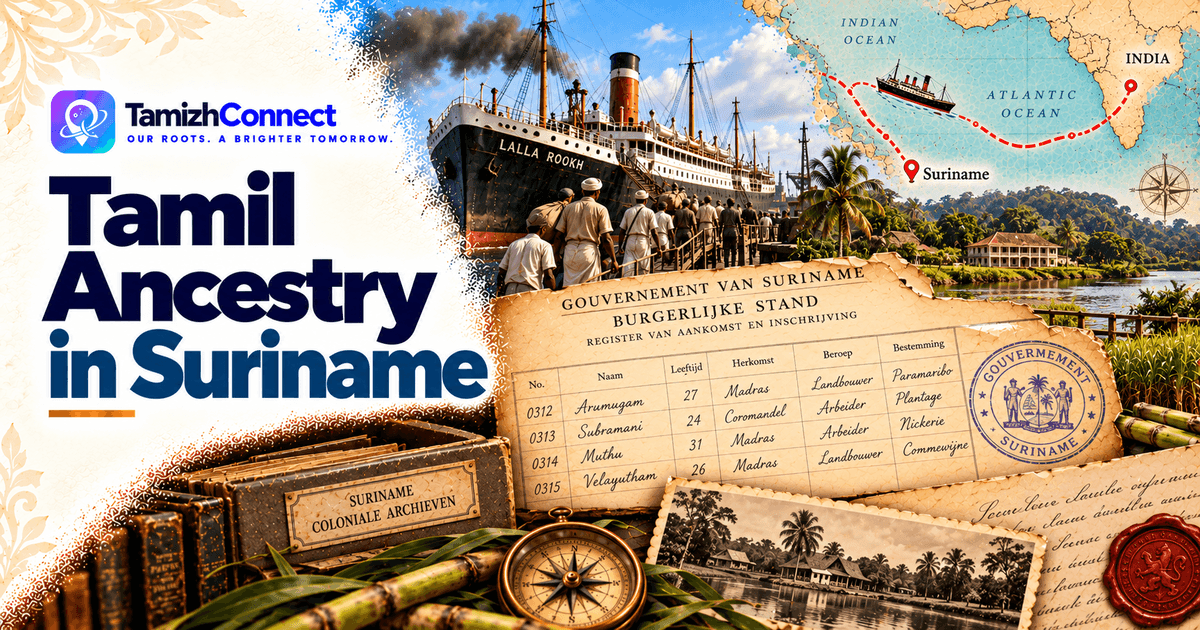
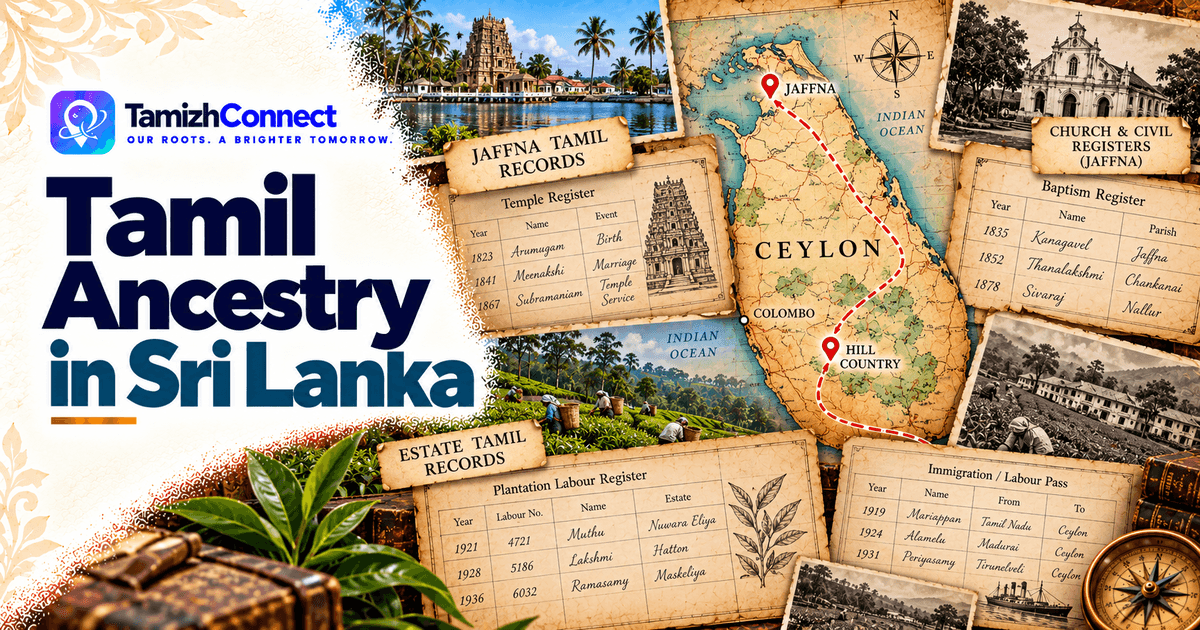
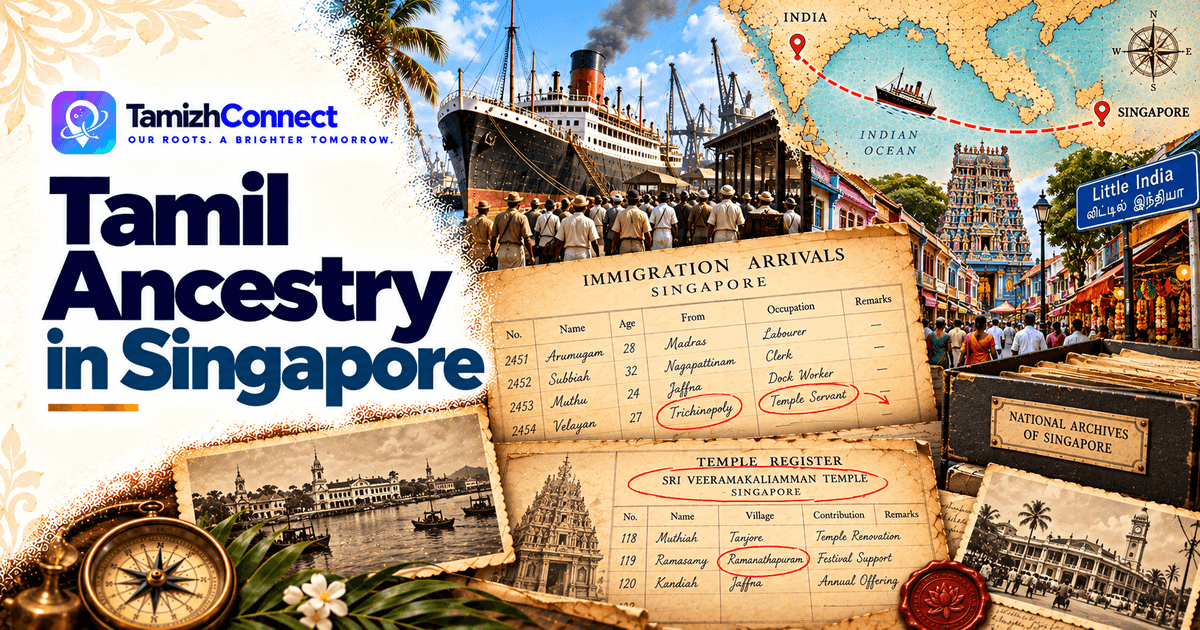
Tamil Ancestry Research: Complete Guide for Genealogical Methods (English)
All our deep-dive guides on Tamil genealogical methods, records, ethnography, and heritage validation for TamizhConnect.
TamizhConnect Blog
Practical guides to discover family links, origin villages and researching rich datasets using TamizhConnect.
Articles
156
Read in both English & Tamil.
Showing 24 of 156 posts

All our deep-dive guides on Tamil genealogical methods, records, ethnography, and heritage validation for TamizhConnect.

TamizhConnect-க்கு தேவையான தமிழ் வம்சாவளி முறைகள், பதிவுகள், இனவியல் மற்றும் பாரம்பரியச் சரிபார்ப்புக்கான அனைத்து ஆழமான வழிகாட்டிகளும் ஒரே இடத்தில்.

Complete guide to understanding Batticaloa's complex history, geography, and cultural landscape for Tamil genealogy research. Learn how to trace your Batticaloa roots through war, displacement, and diaspora patterns.

மட்டக்களப்பின் சிக்கலான வரலாறு, புவியியல் மற்றும் கலாச்சார காட்சியைப் புரிந்துகொள்ள முழுமையான வழிகாட்டி. போர், இடம்பெயர்வு மற்றும் சிதறிய மக்கள் வாழ்க்கை முறைகளின் வழியாக உங்கள் மட்டக்களப்பு வேர்களைக் கண்டறிவது.

Kudumba Maram / Kodivazhi என்றால் என்ன? தமிழ்நாட்டில் உறவுப் பெயர்கள் (பெரியப்பா, சித்தப்பா, மாமா, அத்தை…) எப்படி தந்தை/தாய் வழி, மூத்த/இளைய வேறுபாட்டோடு...

மலேசிய தமிழர் குடும்பங்களில் பயன்படும் உறவுப் பெயர்கள் + Tamil↔English spelling variants, initials, document formats ஆகியவற்றுடன் family tree (Kodivazhi)...

சிங்கப்பூர் தமிழர்கள் பயன்படும் உறவுப் பெயர்கள் + official name formats, privacy-first sharing, and family tree consistency tips.

இலங்கை தமிழர்களில் பயன்படும் குடும்ப உறவுப் பெயர்கள் (பெரியப்பா, சித்தப்பா, மாமா, அத்தை, பெரியம்மா, சித்தி…) + diaspora naming/document patterns-க்கு ஏற்ற...

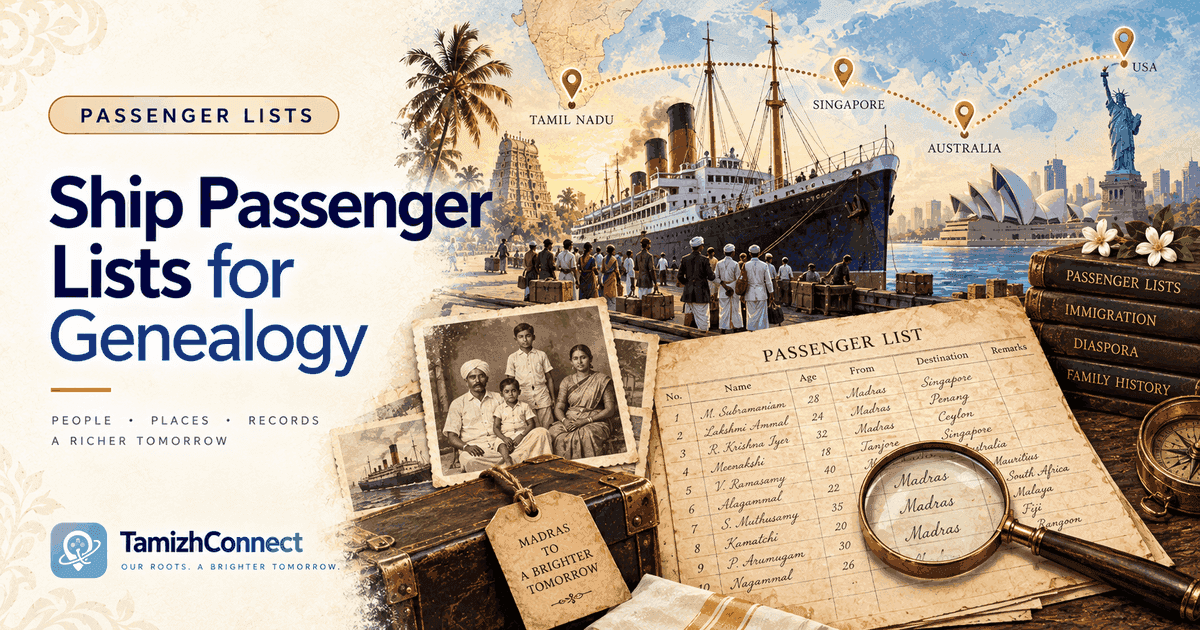
A practical hub for Tamil ancestry research: initials/patronymics, name variants, ancestral villages, evidence notes, and diaspora workflows—plus links to...

Practical Tamil ancestry guide: start with place and relationships, handle initials and spelling variants, validate evidence, and build a family tree using a...

A practical guide to building a Tamil family tree: handle initials/patronymics, spelling variants, ancestral village discovery, merge rules, and evidence notes.

Complete guide to prevent duplicate ancestors in Tamil genealogy research. Learn safe merge rules, evidence grading, and practical strategies for accurate family trees.

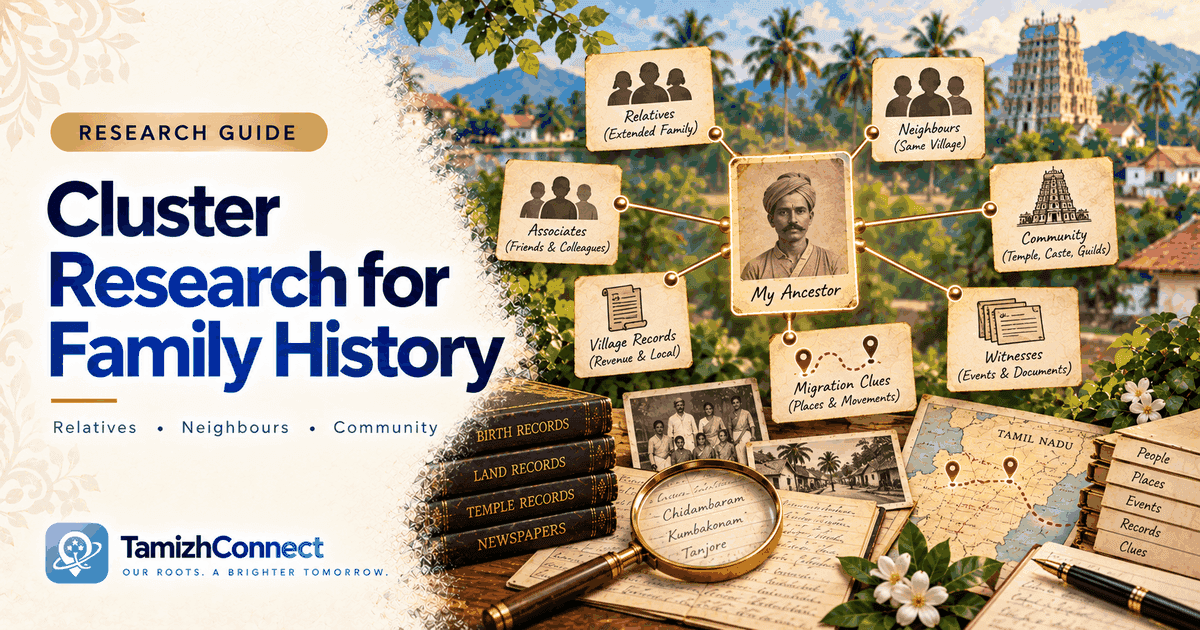
A step-by-step method to identify an ancestral village even when names change: address fragments, temple circuits, kinship terms, and record triangulation.

Step-by-step guide to identify and verify your Tamil ancestral village using temple circuits, address fragments, family networks & evidence triangulation.

Practical guide to using electoral rolls for Tamil genealogy: household reconstruction, relationship validation, address tracking & research progress even when.

A practical guide to researching Tamil ancestry using records, naming patterns, villages, and migration routes to build your family tree without DNA.

Complete Tamil diaspora ancestry playbook: document collection, migration timelines, village anchoring, name normalization and validation methods when records..

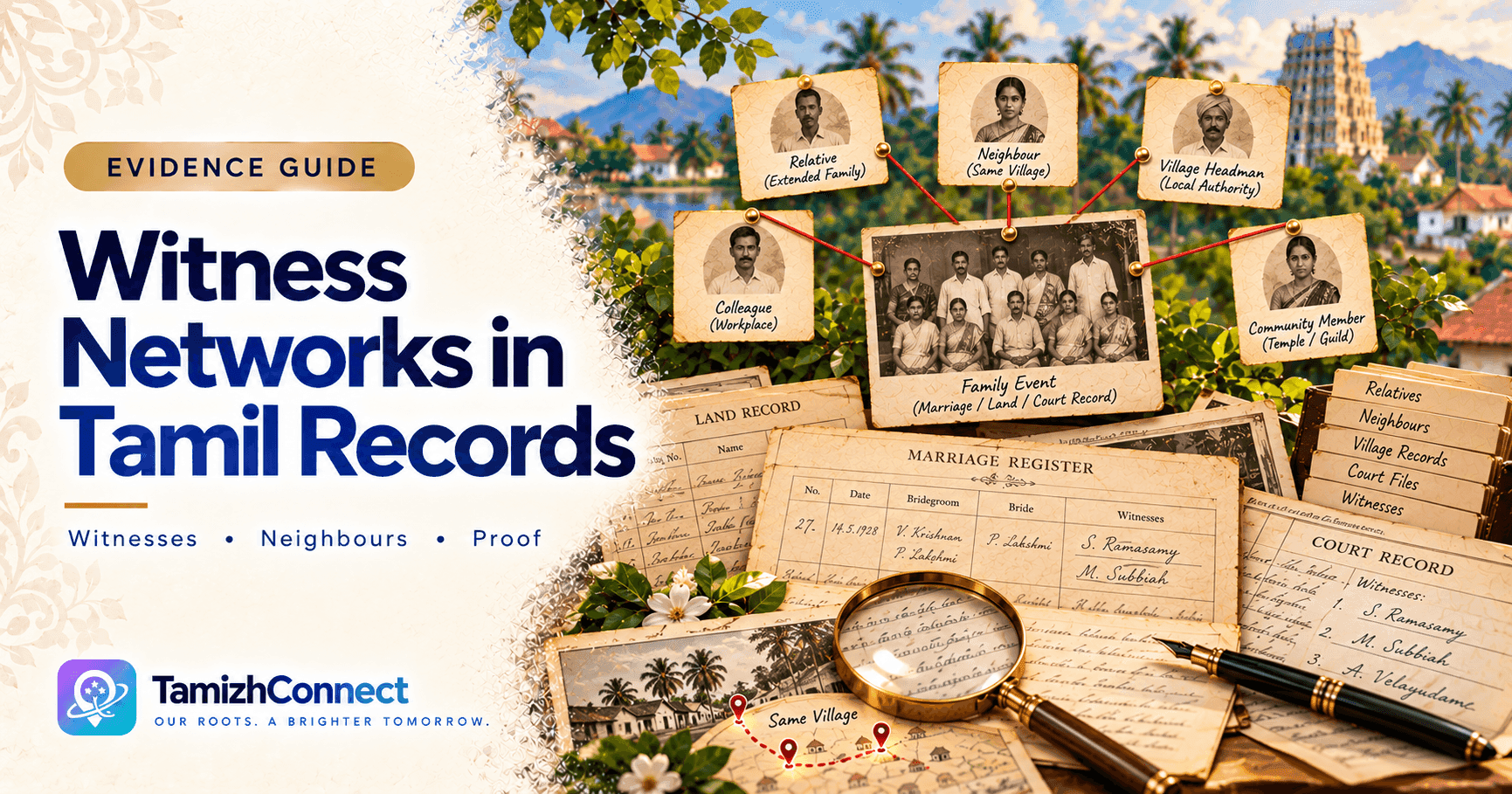
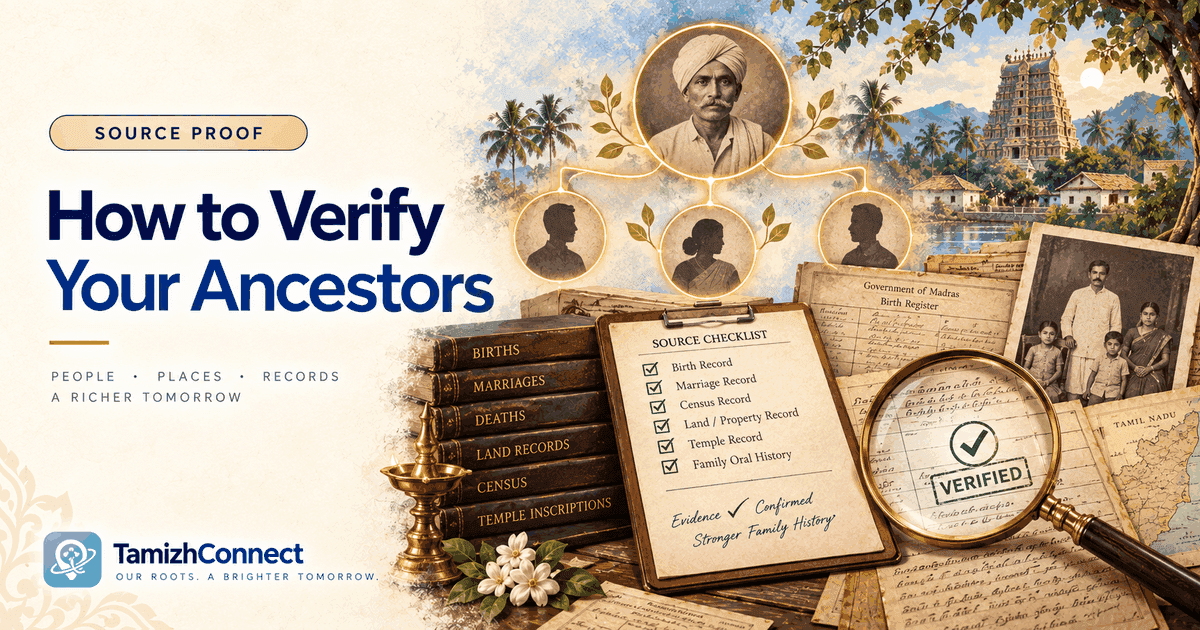
Complete evidence-notes system for Tamil genealogy: record sources, grade confidence, resolve conflicts & build ancestry trees that remain verifiable over time.

Complete 30-day plan for Tamil genealogy: collect home records, interview elders, normalize names, anchor villages, validate relationships & avoid duplicate...

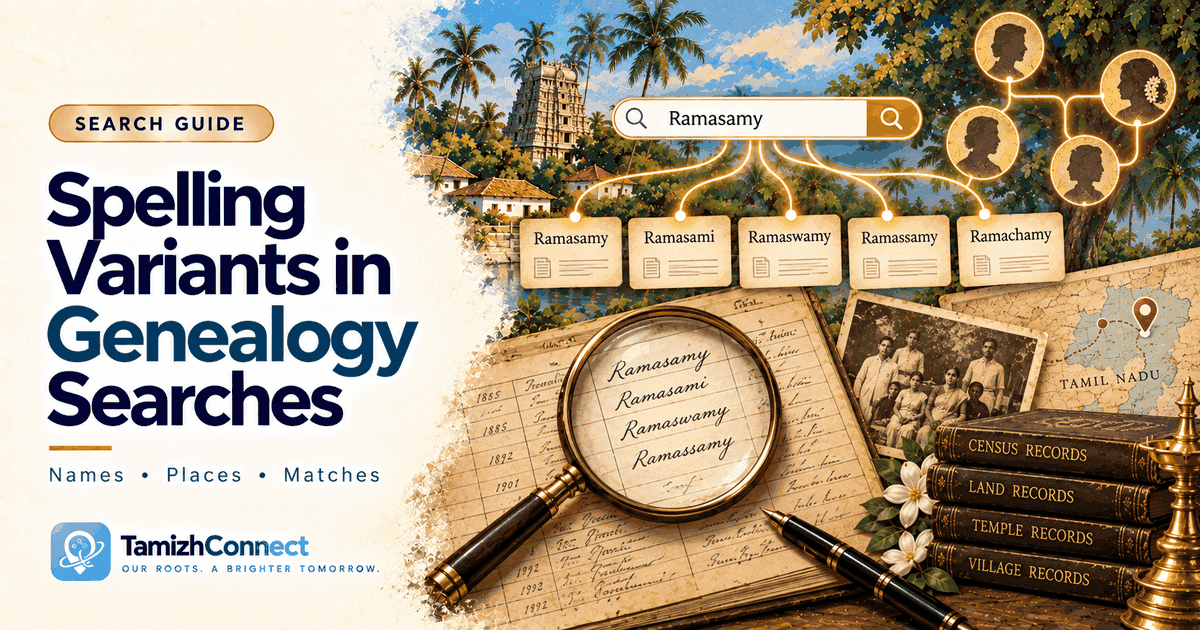
Learn how to expand Tamil initials (patronymics) safely across documents, avoid duplicate people & validate identity using place, relationships & timelines for.

Complete guide to map Tamil kinship terms to genealogical relationships. Handle ambiguity and confirm meaning using evidence for genealogy.

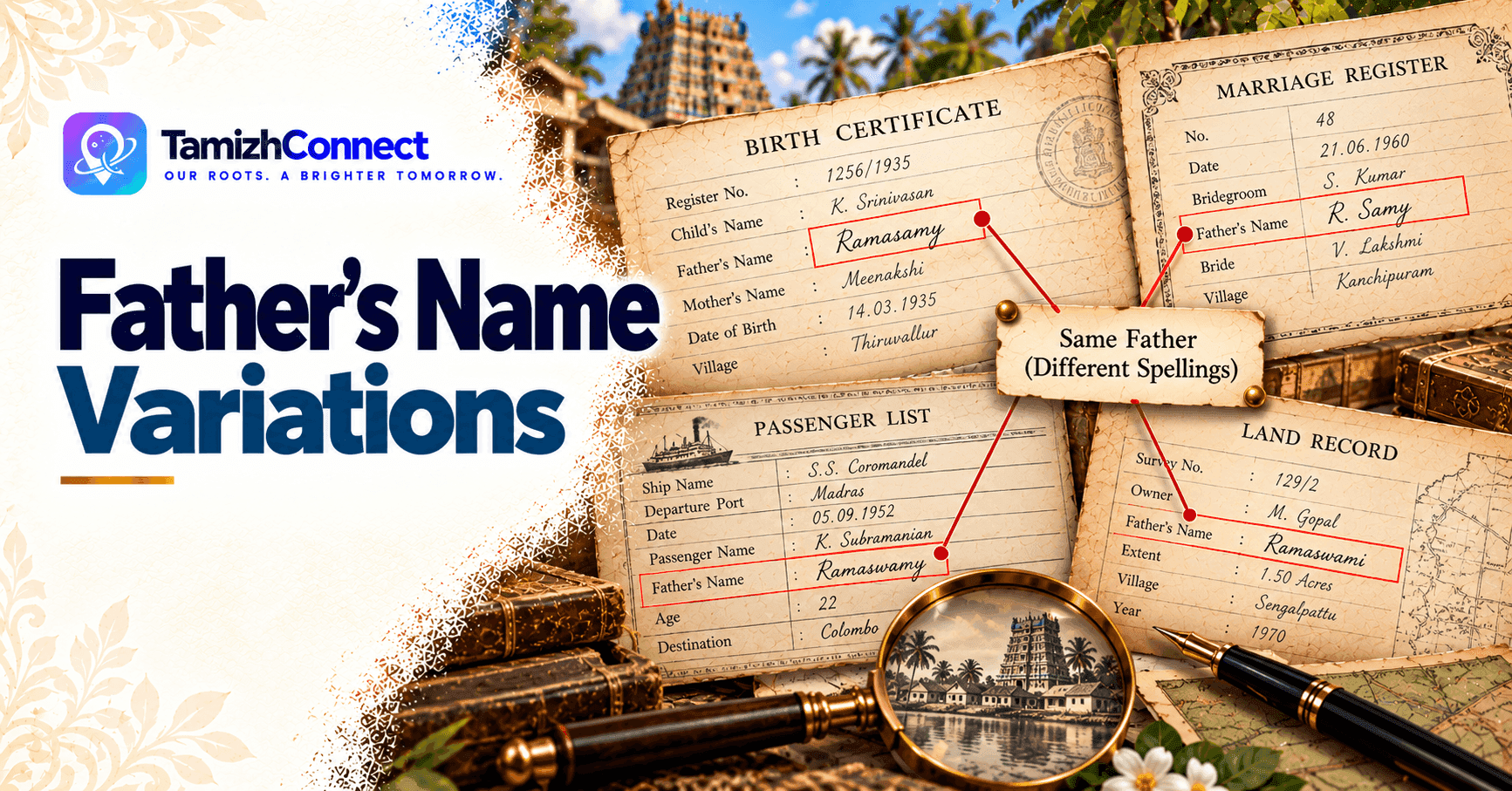
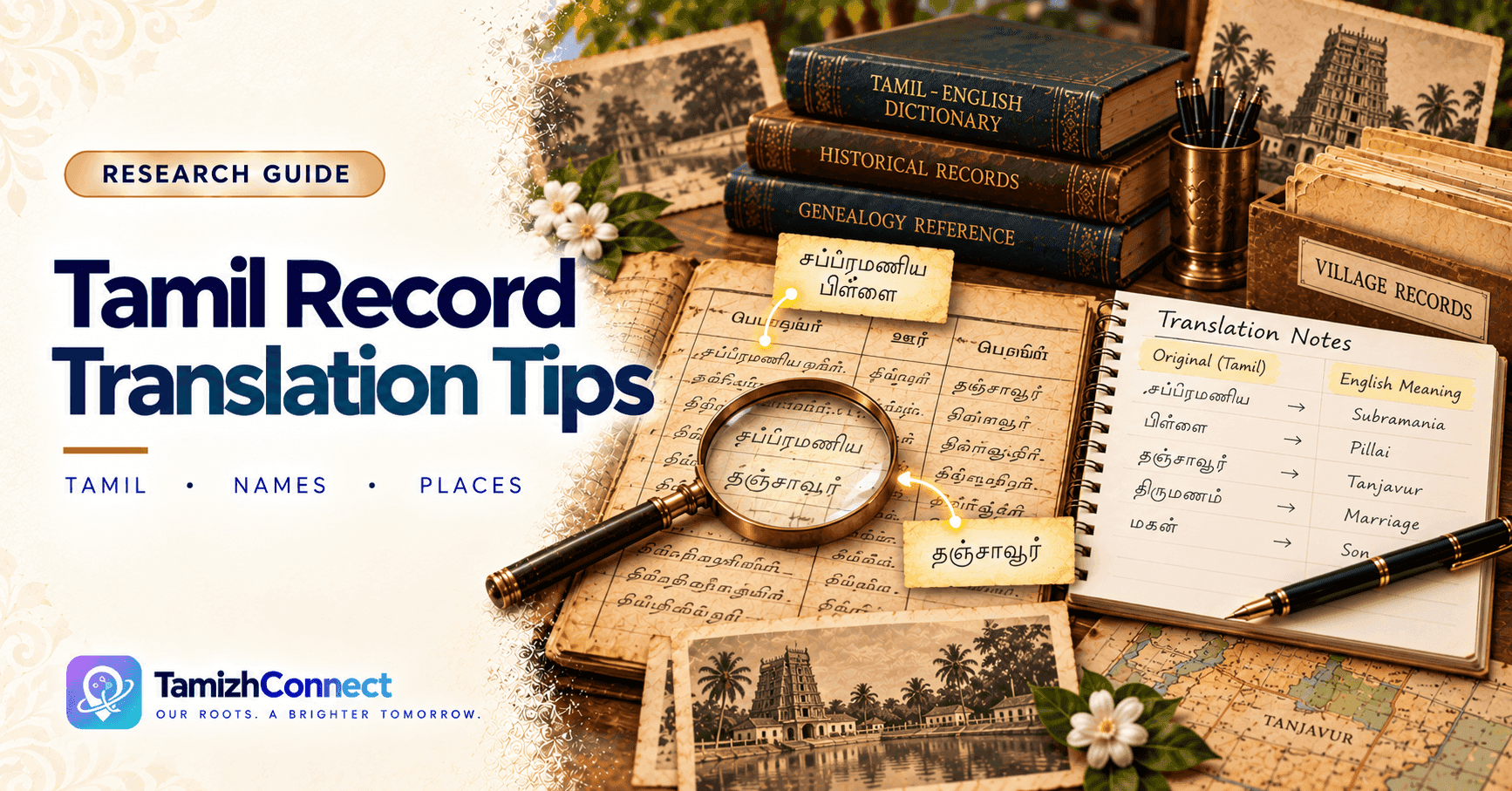
Complete guide to Tamil naming patterns for genealogy: initials, patronymics, titles, spelling variations & safe name normalization to avoid duplicate...

Why Tamil place names appear differently across documents and maps—safe method to normalize spellings using district/taluk structure, nearby towns &...

Complete guide to discover your Tamil roots using TamizhConnect, family interviews, historical records, and community resources. Learn how to build your family tree and preserve your heritage.
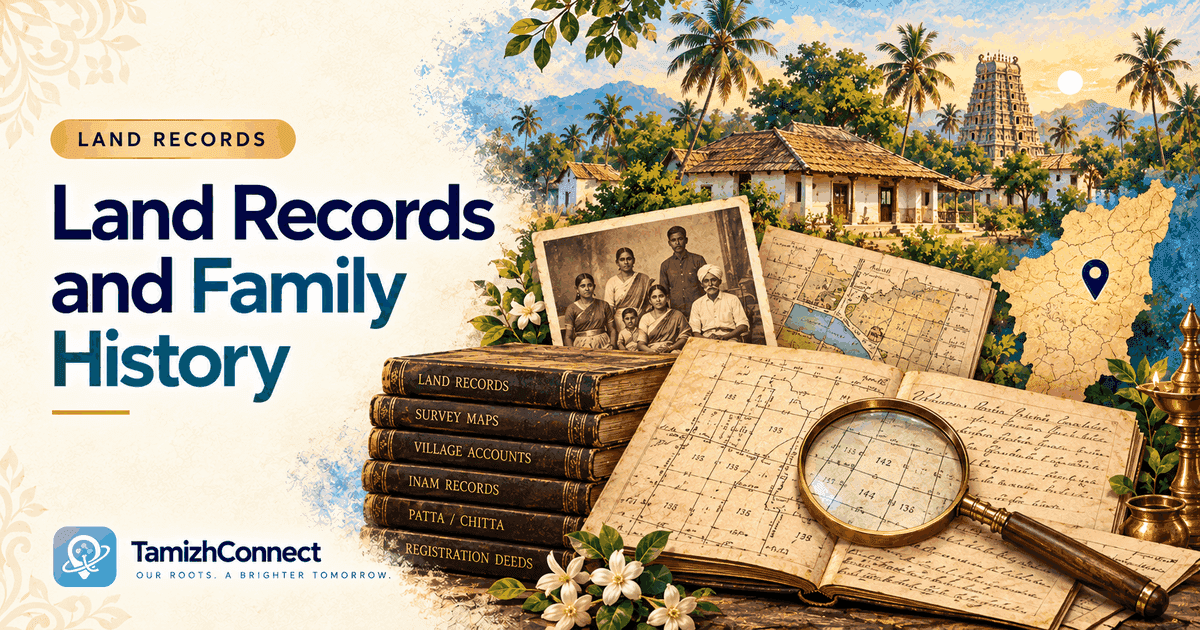
Our research techniques articles provide practical guidance on how to trace your Tamil ancestry using various sources like temple records, land documents, voter lists, and community archives. These guides explain how to interpret historical documents and cross-reference information to build accurate family trees.
Regional heritage articles focus on specific areas of Tamil Nadu and Tamil-speaking regions, detailing local naming conventions, migration patterns, traditional occupations, and cultural practices. These articles help readers understand the unique characteristics of different Tamil communities and their ancestral connections.
Technology-focused articles explain how to use digital tools for genealogy, including our own platform features, how to manage family tree data, and how to collaborate with relatives on research projects. We also cover best practices for preserving and sharing family history online.
Cultural context articles explore the historical and social background of Tamil traditions, helping readers understand the significance of naming practices, religious customs, marriage patterns, and migration reasons. This contextual knowledge is essential for accurate genealogical research.
TamizhConnect blog articles are based on extensive research combining academic sources, community knowledge, and practical genealogy experience. Our team works with local heritage ambassadors, cultural experts, and academic researchers to ensure accuracy and cultural sensitivity.
Each article undergoes a verification process where cultural claims are checked against multiple sources when possible. We prioritize historical accuracy while making complex genealogical concepts accessible to people at all levels of experience.
Older posts are listed here so every article is reachable via internal links.
Each TamizhConnect blog article starts with a real question from our community or a gap in available resources for Tamil genealogy research. Our writing process includes:
We consult multiple sources including academic research, community experts, historical documents, and the experiences of our heritage ambassadors to ensure accuracy and cultural sensitivity.
Articles are reviewed by regional experts and community members with deep knowledge of specific cultural practices, naming conventions, and historical contexts to ensure authenticity.
TamizhConnect articles are written for people who want to do more than collect names. We focus on practical steps: how to preserve family memories, how to avoid common record mistakes, and how to connect places, dates, and relationships into a story that makes sense for Tamil families across villages and diaspora.
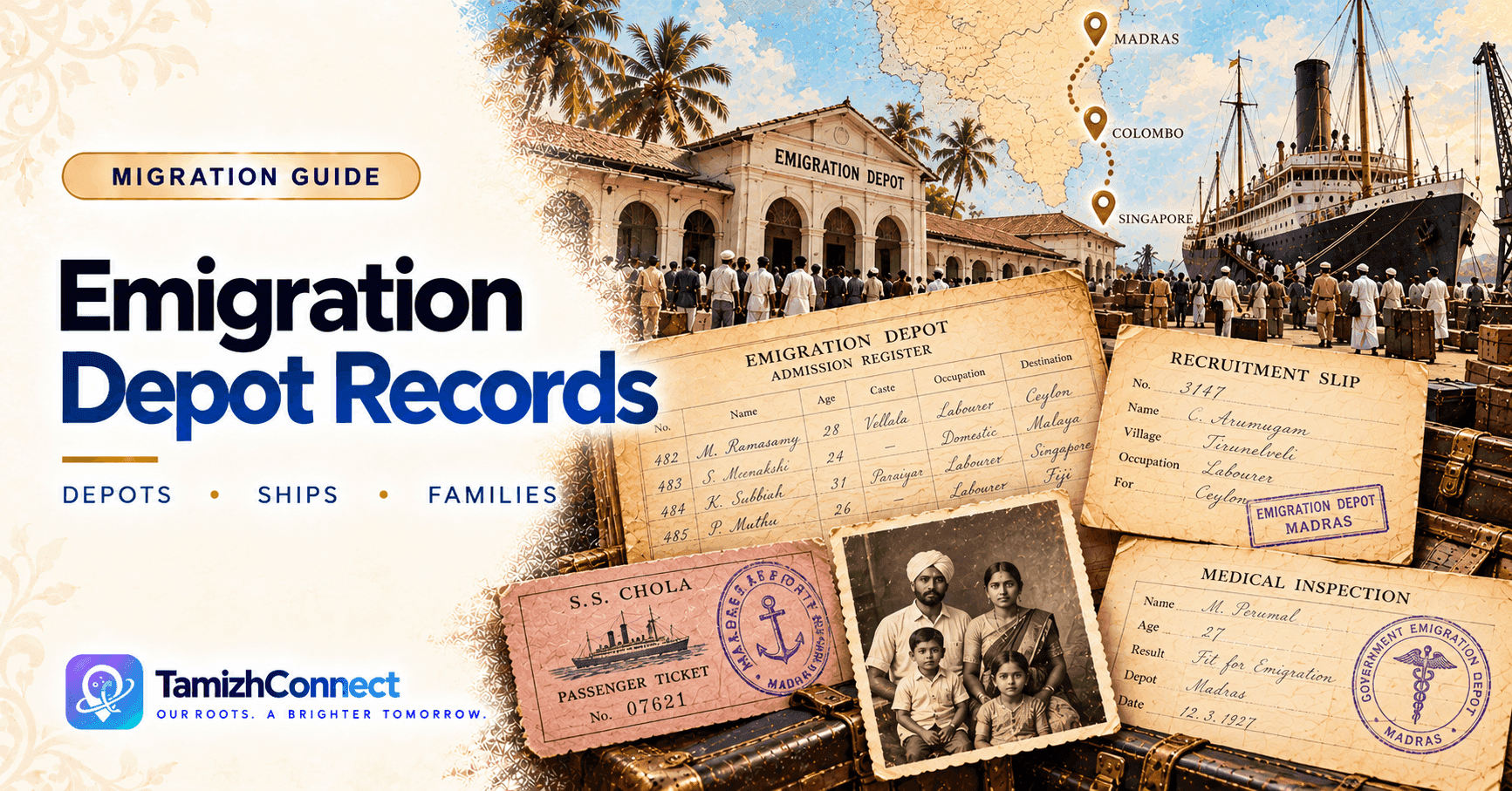
If you are starting from scratch, begin with what is easiest to verify: your parents and grandparents, their known home villages, and the major migration steps (for example: village-to-city, India-to-Sri Lanka, Sri Lanka-to-UK, or India-to-Malaysia/Gulf). Then use the articles here to fill gaps carefully instead of guessing. A clean timeline with “unknown” placeholders is better than a confident but wrong tree.
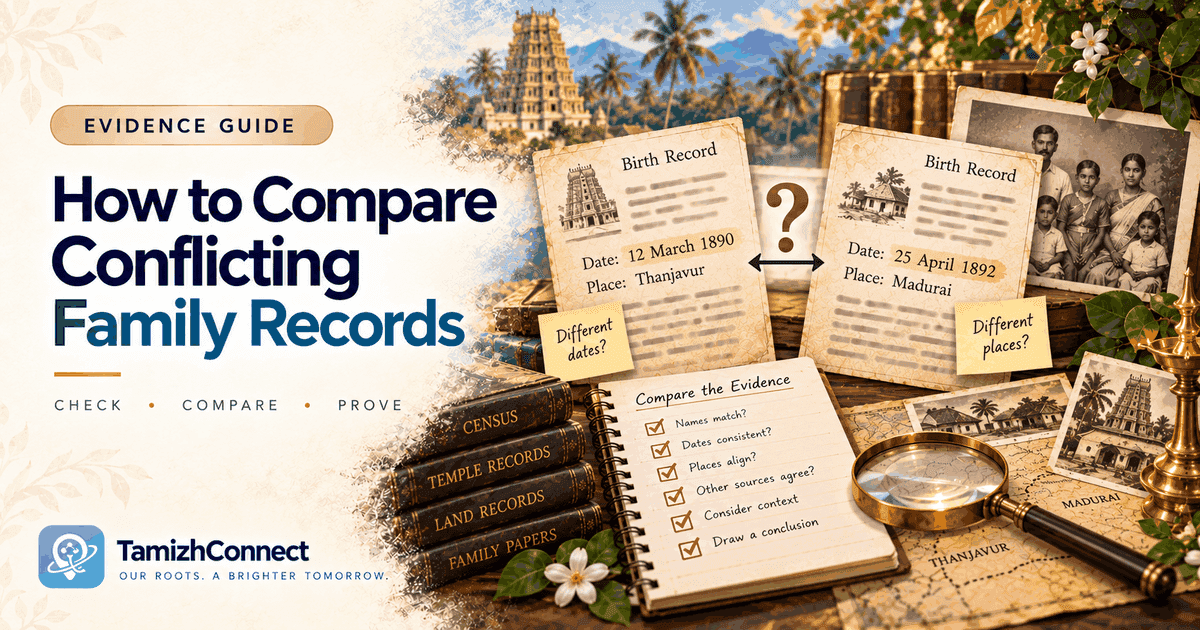
Many posts include checklists for handling Tamil initials, matching spellings across scripts (Tamil and English), and interpreting public records like voter lists, land documents, temple records, and community archives. When you see a “possible match”, treat it like evidence: compare dates, look for consistent place patterns, and confirm using multiple sources before you merge people together.
This blog is also bilingual. Several articles have both an English and a Tamil version. If you are sharing research with relatives, the Tamil versions can be easier to discuss on calls, WhatsApp, and family group chats. Look for the language badge on each article and the cross-links inside a post.
Useful starting paths (choose one, finish it, then move to the next):
When you are ready to turn reading into action, create a free account and start a private family tree. Add only consented information for living relatives, invite collaborators when needed, and keep sensitive details hidden when you share.
If you want to explore data visually without saving anything, use our Family Tree Tools to paste a consented JSON tree and preview a simple visualization. For step-by-step walkthroughs, visit the How TamizhConnect Works.
As you read, try to turn each post into a small action in your tree. For example: add one missing place, attach one document, or write one short note about “how we know this” for a person. Those small steps compound quickly and make it much easier for relatives to trust (and contribute to) your family history.
Before you accept a new match, sanity-check these basics:
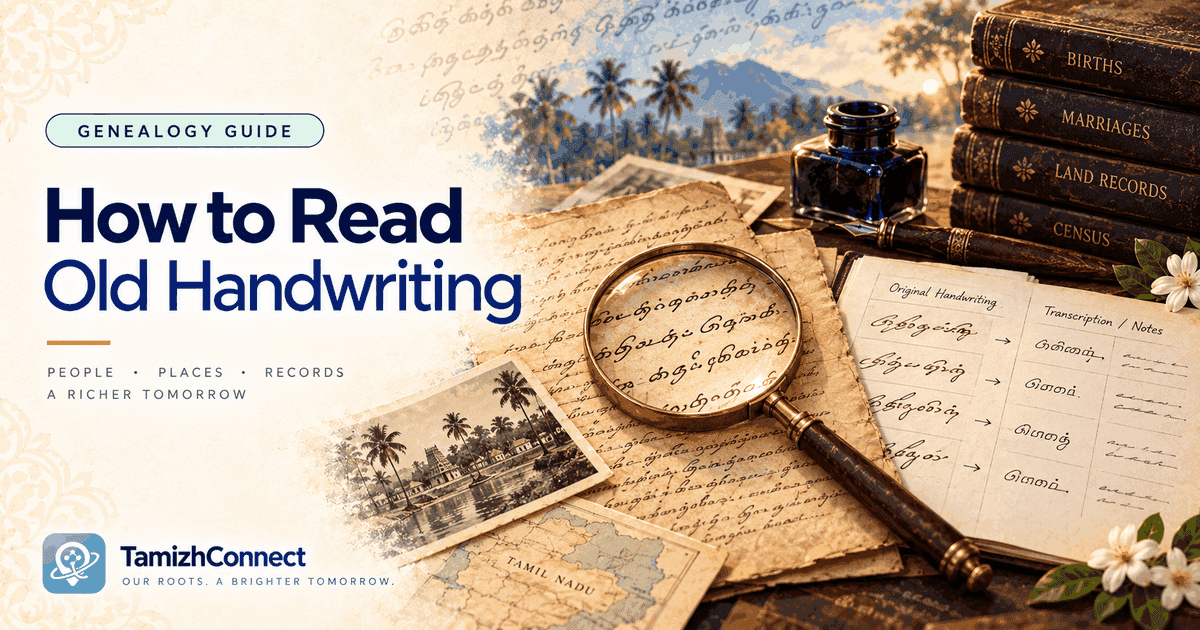
If you are working with scans or hard-to-read text, the Inference tools can help extract and structure information before you add it to your tree.
If you prefer a simple starting point, pick one article, take notes on three “anchor facts” (a village, a full name, and an approximate year), and update your tree with just those anchors. Once anchors are stable, it becomes much easier to expand confidently without creating duplicates.
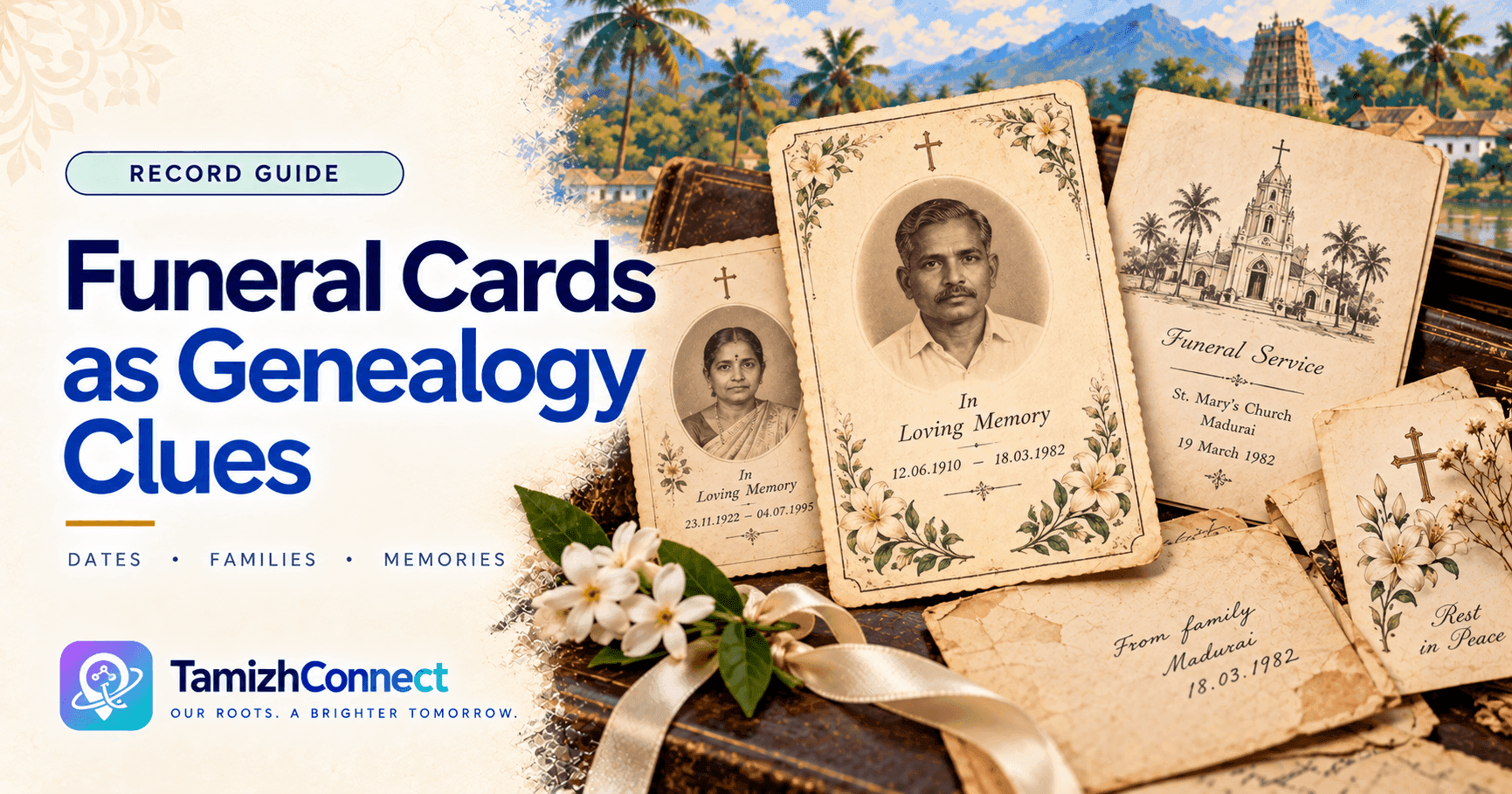
Looking for region-specific help (villages, migration patterns, naming conventions)? Start with our ambassadors.
Apply what you've learned from our blog to build your own family tree with TamizhConnect.