Tamil Ancestry Research | Family Tree Guide
When someone in the family starts with:
- “நம்ம ஊர்ல ஒரு காலத்துல…”
- “பாட்டன் சொல்வார்…”
- “இந்தக் கரையில ஒரே பேய் இருந்துச்சாம்…”
…half the room treats it like comedy filler while scrolling Instagram.
If you actually care about family history, that’s stupid.
Tamil folklore inside the family – villuppattu, paatti stories, ghost tales, folk songs, “moral” stories – is one of the few remaining channels where:
- Old village names
- Local deities and shrines
- Caste and community behaviour
- Migration, famine, flood, war
…are still encoded in living memory.
The problem: it’s all wrapped in drama, exaggeration, and mixing of myth + fact.
Your job is not to become a boring skeptic and kill the story. Your job is to listen properly and strip usable data from the drama.
1. What counts as “folklore” inside your family?
Not some textbook; your actual people.
Typical formats:
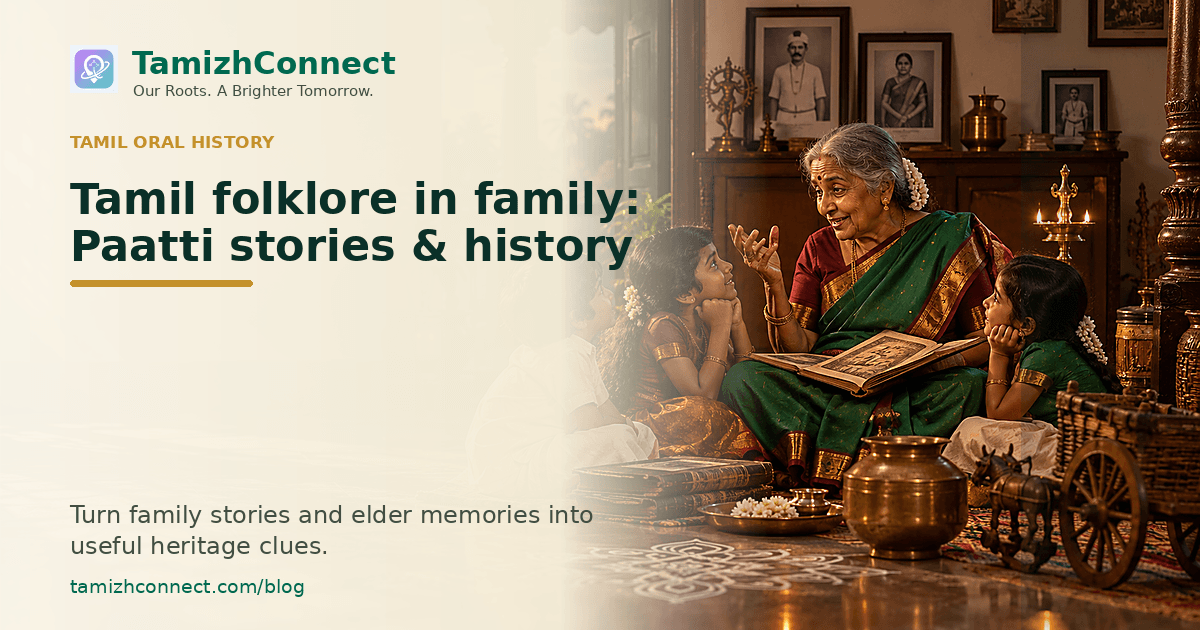
- Paatti story time – before sleep, during power cut, or while shelling peas
- Katha kalakshepam style narration from an uncle who loves performance
- Villuppattu / oppari / folk song fragments someone still remembers
- Ghost / deity / miracle stories tied to:
- specific banyan trees
- ponds
- boundary stones
- shrines / amman kovil
The content is always a mix of:
- Moral lessons
- Local politics
- Fear and control
- Just plain entertainment
Underneath, you’ll often find:
- Real place names
- Real family names and nicknames
- Real historical events (famine, riot, epidemic, flood, migration)
If you’re not mining those, you’re wasting the only living archive you have.
2. How folklore encodes real geography and social structure
Forget the supernatural bits for a second. Focus on clues.
2.1 Place names and micro-topography
Stories casually mention:
கிழக்கு கரை,மேலை கரை,புதுத்தெரு,பழைய பாளையம்அரசமரம்,ஆத்துா,குறிச்சித் தோப்பு,ஓடை,எல்லை கல்
These are not random. They tell you:
- How the old village was spatially organised
- Where different communities lived
- Where border conflicts or rituals happened
You can’t reconstruct that from Google Maps.
When you hear these details:
- Write them down exactly as spoken (Tamil if you can)
- Ask follow-ups after the story, not mid-flow:
- “இந்த ‘கிழக்கு கரை’ exactly எங்கே?”
- “இப்போ அந்த மரம் இருக்கா?”
- “அது எங்க வீட்டுக்கு எவ்வளவு தூரம்?”
Over time you build a mental map of a place that might not exist in the same form anymore.
2.2 Caste, community, and power
Family folklore will almost never say:
“We, as a dominant caste, oppressed others.”
Instead you’ll hear:
- “அந்த வீட்டு பிள்ளைகள் நம்ம வீட்டு வாசல வர மாட்டாங்க.”
- “அந்த ஓரத்துல இருக்குறவங்க தண்ணி எடுக்க வேற கிணறு தான்.”
- “அங்க நடந்த kalyanamல நம்மவங்கக்கு அழைப்பே வரல.”
That’s code.
Translate it:
- Separate wells → water/seating segregation
- Different streets for different “types of people” → caste lines
- Who is described as “எங்கள் வீட்டு பக்கம்”, “அந்த பக்கம்” → power direction
You don’t need to moralise every story. You need to notice what structure it’s describing.
3. Distinguishing myth, exaggeration, and usable history
No, your ancestor did not personally fight a tiger with bare hands and then walk on fire daily without injury. Relax.
But *
some* piece
of that story is usually anchored in reality.
3.1 Strip the core event
Take a classic family brag-story:
“நம்ம தாத்தா மட்டும் தான் அந்தக் காலத்துல காப்பாத்தினதால தான்… இல்லையென்றா முழு ஊரும் அழிந்துருக்கும்…”
Break it:
- What is the claimed event?
- Famine? Drought? Flood? Riot? Temple renovation?
- What’s the time frame?
- Before whose birth? During which government? Around which big festival?
- Which location exactly?
- Specific street, tank, temple, field?
You’re not trying to prove if he saved “the whole village”. You’re trying to extract:
- “There was a major flood in X year; our family lived near the tank and were involved in rescue / storing grain / temple duties.”
That’s history. The heroics are branding.
3.2 Track repetition and cross-check
When three different elders tell variations of the same story, that’s your hint:
- Something roughly like this actually happened
- Details mutated, but core event is shared memory
Cross-check:
- Who is mentioned consistently?
- Which place names stay the same?
- What changes from teller to teller (usually the heroic angle)?
Preserve the event + place + people. Let the exaggeration be part of the colour, not the only thing you record.
4. Ghosts, deities, oaths: why you shouldn’t ignore them
No, you don’t have to believe in any of it. But if you ignore it, you lose:
- Boundary markers
- Old land disputes
- Temple histories
- Social control mechanisms
4.1 Ghost stories as boundary data
Typical lines:
- “அந்தச் சாலயில இரவுல போறதே இல்ல.”
- “அந்த ஓடை கடக்குறோம்னா கல் எடுத்துட்டுப் போவாங்க.”
- “அந்த மரத்தை மாலை 6க்கு அப்புறம் யாரும் touch பண்ண மாட்டாங்க.”
Ask why.
Under the ghost layer, you often find:
- Past murders or suicides
- Caste violence or military conflict
- Dangerous terrain (deep wells, strong currents, wild animals)
The ghost became a compressed warning. You don’t need to fight it; just store:
- Place
- Behaviour
- The “reason” as told
- Any alternative, more realistic explanation offered quietly by someone sensible in the family
4.2 Deity and oath stories as trust maps
You’ll hear:
- “இந்தக் கல்லா சத்தியமா சொல்றேன்…”
- “இந்த அம்மன் சாமி பெயர்ல பொய்காரியே இல்ல.”
This tells you:
- Which deity or stone or temple functioned as a local court
- Which family used which deity for oath-taking
- Where people went when secular law didn’t exist or wasn’t trusted
Record:
- Deity name
- Shrine location
- Which side of the family used it
- Example conflicts or vows tied to it
That’s legal and social history disguised as bhakti.
5. Turning folklore into TamizhConnect-ready data (without killing the vibe)
You can’t shove your paatti into a formal interview and expect magic. You need both:
- Natural storytelling sessions
- Post-processing by you
5.1 During storytelling: don’t interrupt like a pedant
When someone is in flow:
- Don’t fact-check mid-story
- Don’t argue about ghosts or miracles
- Don’t keep asking “which year?” every 20 seconds
Just:
- Listen
- Maybe record audio (with permission)
- Note a few key words quietly (names, places) if you can
5.2 After the story: do the boring extraction
Immediately after, or later the same day:
-
Write a short rough note:
- Who told it
- When (date, your age, their age approx.)
- Main event in one sentence
- All people + place names you can remember
-
If you recorded audio:
- Don’t fully transcribe if you’re lazy
- At least mark timestamps for key parts (“flood story from 03:10 to 07:45”)
-
Convert to structured entries:
- Person(s) involved
- Place (village, street, landmark)
- Approx period (
1950s,before my parents married, etc.) - Event summary
- “Folklore” tag in your tool
In TamizhConnect terms: attach the audio or summary as a story on relevant person or place nodes.
6. What you absolutely should not do
If you want to keep both sanity and history:
-
Don’t treat every story as literal fact.
You’ll end up defending nonsense and miss the actual usable bits. -
Don’t be a smug rationalist in front of elders.
They’ll just stop talking, and you’ll get nothing. -
Don’t mix your own invented “epic” into the record just to sound proud.
If you don’t know, say “unknown”, not “probably we were ministers in the Chola court”. -
Don’t leave everything inside chats.
WhatsApp is where stories appear, not where they should die.
7. Practical checklist: how to mine your family’s folklore this month
No drama, just tasks:
-
List 3 best storytellers in your extended family.
- Elder paatti / thaatha
- That one uncle who loves talking
- A cousin who knows all the village stories
-
Do 3 focused sessions (30–45 min each).
- Topic examples:
- “பள்ளத்தாக்கில் நடந்த வெள்ளக்கதை சொல்லுங்க.”
- “பேரூரில் நடந்த பெரிய temple festival incidents.”
- “நம்ம ஊர்ல famous பேய்/அம்மன் கதைகள் என்ன என்ன?”
- Topic examples:
-
Record audio (phone mic is enough).
- Ask permission once. Most people like being taken seriously.
-
After each call, extract:
- Place names
- Deities / temples
- Key people
- Rough time period
- One-line event summary
-
Enter that into TamizhConnect (or any genealogy system).
- Create / update:
- People nodes
- Village / place nodes
- A “Stories” section with links to audio/files
- Create / update:
-
Tag all of it as “oral folklore”.
- So future generations know:
- This is remembered, not archival
- It’s to be respected, not blindly believed
- So future generations know:
If your idea of “Tamil heritage” is only Sangam quotes, YouTube history channels, and memes about ancient glory, you’re missing the point.
Real heritage is:
- Your own village names
- Your own ancestral deities
- Your own family’s flood, famine, migration, ghost and court stories
They’re messy, biased, and sometimes ridiculous.
But they’re yours.
Use digital tools and TamizhConnect to capture and label that mess instead of letting it evaporate when the last good storyteller dies.
You can clean it later.
If you don’t record it now, there’s nothing left to clean.