Tamil Nicknames: Clues for Family Genealogy
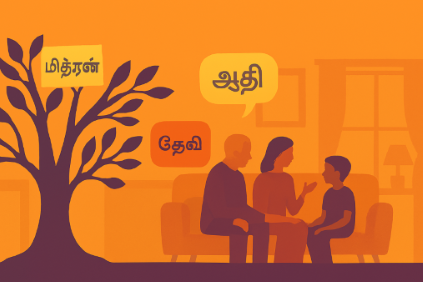
Tamil families use a rich, complex system of pet names, house names, and affectionate nicknames that often carry more emotional and practical significance than official names. These endearing monikers, known in Tamil as பெயர்ச்சொல்லி (peyarsollu), serve as crucial connecting threads in your family’s genealogical network and can unlock hidden relationships that official records might miss.
Understanding how Tamil nicknames function in your family history provides essential clues for genealogical research and helps preserve the intimate, personal connections that make your family tree truly meaningful. These affectionate names often reveal details about personality, family position, physical characteristics, and deep emotional bonds that official documents cannot capture.
1. Understanding the Significance of Tamil Nicknames
Nicknames in Tamil families serve multiple important functions that extend far beyond simple identification. They represent deeply embedded cultural practices that connect generations, preserve family memories, and maintain emotional bonds across time and distance.
Cultural Importance of Affectionate Names
In Tamil culture, nicknames often carry deeper emotional connections than formal names:
- Personal identity markers – Nicknames may be the primary way a family member is known and remembered
- Relationship indicators – The type of nickname reveals the nature of relationships within the family
- Personality reflections – Many nicknames capture unique characteristics, habits, or physical traits
- Emotional bonds – The use of nicknames indicates close, intimate relationships
- Generational continuity – Nicknames sometimes pass down through generations, preserving family memories
Why Nicknames Matter in Genealogical Research
Your elders may remember family members primarily by their affectionate names:
- “Chinna Raju” – Younger Raju (used to distinguish from another family member)
- “Periya Mani” – Elder Mani (used to distinguish from a younger family member)
- “Mottai Anna” – Curly-haired brother (descriptive nickname)
- “Pechi Paati” – Chatty grandmother (descriptive of personality)
- “Kutti” – Diminutive endearment used for various family members
These affectionate names don’t typically appear in official records, but they serve as crucial identification clues that can help verify identities, connect documents, and confirm relationships during genealogical research.
Memory Preservation in Tamil Culture
Tamil elders often remember nicknames more vividly than full official names:
- Nicknames were used daily in family interactions
- They carry emotional associations that strengthen memory
- Different family members may know the same person by different nicknames
- Regional and generational variations exist for the same nicknames
2. Comprehensive Classification of Tamil Nicknames
Tamil nicknames follow specific patterns that reflect cultural values, family structures, and personal characteristics. Understanding these patterns helps in genealogical research by providing clues about relationships, positions, and characteristics.
a) Hierarchical Position-Based Nicknames
These nicknames indicate a person’s position within the family hierarchy and are critical for understanding family structure:
Age-based distinctions:
- Chinna – Younger (e.g., “Chinna Mama” for younger maternal uncle)
- Periya – Elder (e.g., “Periya Akka” for elder sister)
- Nadu – Middle (used for middle child or middle-aged person)
- Motta – Eldest (in some regions)
- Kichi – Youngest (in some families)
Birth order markers:
- Chinna prefixes: Chinna Mama, Chinna Paapa, Chinna Akka
- Periya prefixes: Periya Mama, Periya Akka, Periya Amma
- Ida (middle): Ida Akka, Ida Anna
b) Personality and Characteristic-Based Nicknames
These nicknames often reflect physical characteristics, personality traits, or memorable behaviors:
Physical descriptors:
- Mottai – Curly hair (e.g., “Mottai Anna”)
- Chetti – Small/little (often used as a pet name)
- Mookkan – Big nose (descriptive nickname, not derogatory in context)
- Kondattam – Round face
- Neelam – Blue (from eye color)
Behavioral characteristics:
- Pechi – Talkative (e.g., “Pechi Paati” – chatty grandmother)
- Oora – Talkative (another term for talkative)
- Mallanghi – Mischievous
- Kutti – Diminutive, little one (used for children)
- Kanna – Beloved (affectionate form of longer names)
Emotional traits:
- Pirachu – Mischievous child
- Azhagiya – Beautiful
- Kannu – Beloved (as in “Kannu Mani”)
c) House and Location-Based Names
Tamil families often use house names or location indicators as identifiers, especially important for genealogical research:
Traditional house designations:
- “Kovil Veedu” – Temple house (house near temple)
- “Thekkadi House” – South-side house (directional indicator)
- “Idaikkattu Veedu” – Middle house
- “Muttam Pillaiyar Kovil Veedu” – Specific house near deity
- “Adukkapatti” – Kitchen house (secondary dwelling)
Professional location indicators:
- “Kadai Veedu” – Shop house
- “Agraharam” – Brahmin quarter houses
- “Naicker Street” – Street names based on community
- “Chetty Street” – Street names based on merchant community
These location-based identifiers are crucial for genealogical research as they often indicate specific families from particular villages or neighborhoods.
d) Abbreviated and Pet Forms of Names
These are perhaps the most common type of nicknames, created by shortening or modifying given names:
Common transformations:
- Kanna ← Kannan – Beloved short form
- Kutti ← Various names – Universal pet form for children
- Karthi ← Karthikeyan – Abbreviated form
- Priya → Pri – Shortened international-style form
- Raju ← Rajendran – Common shortening
- Mohan → Mohanji or Mohanji – Affectionate forms
- Saravanan → Saran or Chinnu – Multiple pet forms
- Meenakshi → Meena or Kshi – Abbreviated forms
Regional variations:
- Chellam → Chellamma → Chellu – Multiple transformations
- Rajeshwari → Raji → Raji Amma – Generational forms
- Ganesh → Ganesan → Ganu – Regional shortening
e) Relationship-Based Affectionate Names
These nicknames indicate specific family relationships and roles:
Family position indicators:
- Akka – Elder sister (sometimes used as a nickname)
- Anna – Elder brother (often used as a term of respect)
- Mama – Maternal uncle (sometimes used as a nickname)
- Mami – Maternal aunt (sometimes used as a nickname)
- Thatha – Grandfather (sometimes used as a nickname)
- Paati – Grandmother (sometimes used as a nickname)
3. Genealogical Applications of Tamil Nickname Knowledge
Understanding Tamil nickname patterns provides significant advantages for genealogical research and family history preservation.
Document Linkage and Identity Verification
Nicknames help connect different records that might otherwise seem unrelated:
Example scenario: An official record might list someone as:
“R. Manickam, age 35, of 123 Temple Street, Kovil Veedu”
But family stories may reference him as:
“Periya Mani from Kovil Veedu”
This connection helps verify identity when:
- Official records use formal names while family remembers nicknames
- E-roll names may have discrepancies with family memory
- Documents only show initials but family knows the nickname for that initial
- Multiple family members share the same formal name but have different nicknames
- Migration records might use different name forms than those remembered at home
Cross-Generational Connection Verification
Different generations may know the same person by different names:
- Grandparents may remember someone by their childhood nickname
- Parents may use a formal name
- Children may know them by yet another form
- Diaspora relatives may know them by adapted English forms
Documenting all these variations helps ensure complete family connections.
Regional and Community Pattern Recognition
Nicknames often follow community-specific patterns that can indicate:
- Caste or community origins through traditional naming practices
- Regional origins through area-specific nickname customs
- Temple or village connections through location-based names
- Occupational backgrounds through work-related nicknames
4. Preserving Nicknames in Digital Genealogy
Modern genealogical tools like TamizhConnect provide sophisticated methods for preserving and utilizing nickname information to strengthen family connections.
Comprehensive Nickname Documentation
Effective genealogical preservation requires capturing all nickname variations:
Primary Documentation:
- Official names – Government records and legal documents
- Affectionate names – Names used within the family
- Community names – Names known by neighbors or community members
- Regional variations – Different names used in different geographic locations
- Generational names – How different age groups knew the same person
Digital Tool Applications
Field-specific recording:
- Nickname fields – Dedicated spaces for all known variations
- Relationship tagging – How the nickname connects to specific relationships
- Geographic indicators – Where specific nicknames were used
- Temporal markers – When names changed or evolved
- Audio recordings – How names were pronounced in different contexts
- Story connections – The stories behind how nicknames originated
Connection algorithms:
- Pattern matching – Identifying similar naming patterns across family branches
- Phonetic matching – Connecting names that sound similar but are spelled differently
- Relationship mapping – Using nickname patterns to predict other relationship connections
- Verification tools – Cross-checking nickname information with other family members
Strengthening Family Connections
Nicknames serve as verbal memory anchors that:
- Preserve emotional connections – Maintaining the human element in genealogical records
- Enhance identification – Providing additional verification points for identities
- Facilitate communication – Allowing relatives to identify each other through shared memories
- Preserve cultural context – Maintaining connections to Tamil naming traditions
- Enable research breakthroughs – Providing the missing links that connect different family branches
5. Advanced Research Techniques Using Nickname Data
Cross-Reference Methodology
Document verification:
- Compare official records with family stories using nickname connections
- Identify potential relatives by matching nickname patterns
- Verify migration patterns by tracking name variations across locations
Pattern analysis:
- Look for common nickname themes within family branches
- Identify naming traditions that pass through generations
- Track how families adapted names during migration or cultural transitions
Community Research Applications
Regional studies:
- Use house names to identify specific villages or neighborhoods
- Connect families with similar nickname patterns across regions
- Identify historical community connections through shared naming conventions
Diaspora connections:
- Track how families preserved traditional nicknames in new countries
- Identify adaptation patterns of Tamil names in different cultural contexts
- Connect diaspora families through shared nickname traditions
6. Challenges and Solutions in Nickname Documentation
Common Research Challenges
Variation complexity:
- Multiple nicknames for the same person used by different family members
- Regional pronunciation differences affecting how names should be recorded
- Generational differences in how names were used and remembered
Documentation issues:
- Nicknames often considered informal and not preserved in family records
- Elder family members may forget original name connections
- Language barriers when documenting Tamil script nicknames
Best Practices for Nickname Documentation
Systematic collection:
- Interview multiple family members to collect all known variations
- Cross-reference nickname information with other family members
- Document the origin stories of nicknames when known
- Record both Tamil script and Romanized versions of nicknames
- Include generational and regional usage patterns
Verification techniques:
- Use multiple sources to verify nickname-to-person connections
- Track how nicknames evolved over time
- Confirm relationships through shared knowledge of nicknames
- Cross-reference nickname patterns with known family structures
7. Cultural Sensitivity in Nickname Research
Respectful Documentation
Family privacy:
- Document nicknames with appropriate family permission
- Respect preferences about which names should be shared publicly
- Understand that some nicknames may have personal or sensitive origins
- Maintain cultural appropriateness in how nicknames are discussed
Generational differences:
- Understand that older generations may be more private about certain terms
- Respect family preferences about how names are categorized
- Be sensitive to any nicknames that may have developed from family challenges or difficulties
Conclusion: The Genealogical Value of Tamil Nicknames
Never ignore a Tamil nickname — it may be the crucial missing piece that connects generations, verifies relationships, or unlocks a previously unknown branch of your family tree. Tamil nicknames represent the emotional heart of family connections, preserving the intimate memories and personal relationships that make your genealogical research meaningful and accurate.
These affectionate names provide unique insights into personality, family position, community connections, and cultural traditions that official records cannot capture. By documenting all known nicknames in your family history, you preserve the complete human story of your ancestors and ensure that future generations can connect with their heritage through both formal and affectionate connections.
To maximize your genealogical success, incorporate nickname documentation into your research methodology. The seemingly simple pet name might be the key that connects you to relatives you never knew existed, confirms identity in historical records, or reveals the deeper cultural patterns that define your family’s unique place in Tamil history.
Consider exploring collecting family history from elders to gather these precious nickname details, or learn about tracing your Tamil ancestry to understand how nicknames fit into broader genealogical patterns. Our family tree builder includes specialized fields for documenting all nickname variations and their genealogical significance.
Add known nicknames to TamizhConnect today to strengthen your family’s genealogical foundation and preserve the full human story of your Tamil heritage.
For additional resources on Tamil genealogy, explore our guides on understanding Tamil naming conventions and building Tamil family trees.