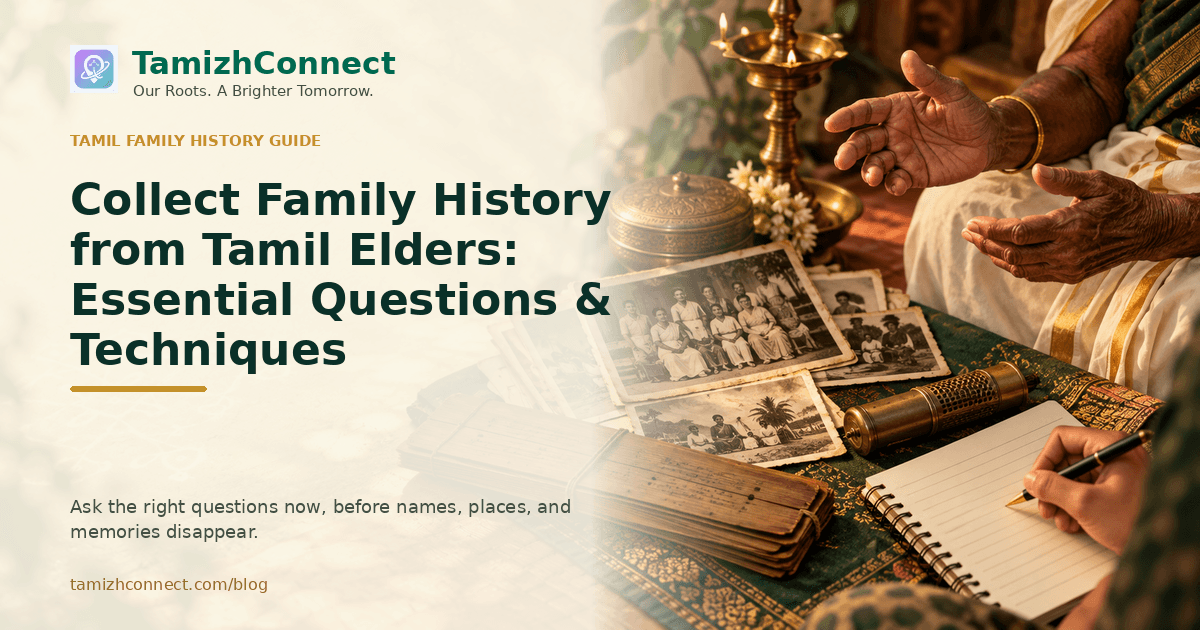
Overview: Collect Family History from Tamil Elders: Essential Questions & Techniques
To collect Tamil family history from elders effectively, ask structured questions in four domains: origin (village, migration year, reason), names (initials, nicknames, name changes at marriage), relationships (exactly who lived in each household and how they’re related), and events (weddings, deaths, moves — with approximate years). Record sessions (video or audio) so you can revisit them when a contradiction or new clue surfaces. Elders carry multigenerational memory that no document preserves — household name-changes, which field the family farmed, which cousin became a temple priest — details that make voter rolls, indenture records, and gazetteer entries interpretable later.
This guide shows exactly how to collect and preserve your family’s history from your elders, ensuring invaluable memories aren’t lost to time.
1. Why Elders Are the Most Reliable Source
Your grandparents and older relatives know intimate details about your family that no official document can capture. They remember not just facts, but context, emotions, and cultural nuances that give meaning to your family’s story.
Essential Information Known by Elders
Your family elders possess detailed knowledge about:
- Village origins – Which specific village your family originally came from, including exact locations within the village and family associations with particular areas
- Marriage connections – Who married whom and the circumstances surrounding these unions, including the social, economic, and cultural factors that influenced marriage choices
- Daily life details – How your ancestors lived, their occupations, social customs, festivals celebrated, and the rhythm of agricultural and seasonal life that shaped their existence
- Migration stories – Detailed accounts of why and when your family moved, including specific events like the Sri Lankan civil war, Malaysian plantation labor, Gulf migration, or urban India opportunities
- Land and property – Specific details about family land holdings, temple connections, and lineage relationships that may not be documented elsewhere
- Cultural practices – Family-specific traditions, rituals, and cultural practices that were passed down through generations
- Personal characteristics – The personalities, talents, and quirks of ancestors that give them humanity and meaning beyond mere names and dates
A single conversation with an elder may uncover decades of detailed family history that would take years to piece together from documents alone.
2. Setting the Right Environment for Meaningful Conversations
Do not approach these conversations like a formal interview. The goal is to create a comfortable, natural environment where stories flow organically. This requires preparation, patience, and sensitivity to the elder’s emotional state.
Creating the Right Atmosphere
Physical Environment:
- Choose a comfortable, quiet location where interruptions are minimal
- Ensure the elder is physically comfortable (temperature, seating, necessary medications nearby)
- Consider familiar settings like their home where they feel most secure
- Have tissues available as emotional memories may surface
Emotional Preparation:
- Start with light conversation about current family matters
- Respect the elder’s attention span and energy levels
- Be prepared to stop if the elder becomes tired or uncomfortable
- Approach sensitive topics gently and with cultural sensitivity
Timing Considerations:
- Schedule sessions during the elder’s most alert time of day
- Keep initial sessions short (30-45 minutes) to avoid fatigue
- Allow flexibility in scheduling to accommodate health needs
Techniques for Relaxed Conversations
Instead of formal question-and-answer sessions, consider these approaches:
- Sit with them during tea or coffee – Shared meals create natural conversation opportunities
- Keep conversation relaxed by allowing topics to flow naturally from one subject to another
- Let stories flow naturally rather than forcing specific topics
- Ask follow-up questions gently using their own words and expressions to show interest
- Share contemporary family news to create a two-way exchange
- Use visual aids like old photographs or documents to stimulate memories
3. Essential Questions for Comprehensive History Collection
Questions About Geographic Origins
Village and Location Details:
- "Where is our ooru (native village)? Can you describe what it looked like?"
- "What was our street name and where exactly was our house located?"
- "Which temples did our family visit regularly and which was most important to us?"
- "What were the main landmarks in the village that helped identify our home or area?"
- "Were there any special wells, trees, or community gathering places connected to our family?"
- "How far was our home from the main temple or market area?"
Regional Context:
- "Which district does the village belong to?"
- "What was the nearest town or city?"
- "How did people from our village typically travel to other areas?"
- "Were there any special connections to nearby villages or communities?"
Questions About Relatives and Family Structure
Immediate Family:
- "Who were your parents and grandparents? Can you tell me about their lives?"
- "Do you remember siblings’ names, birth order, and what happened to them?"
- "Can you describe what your parents and grandparents looked like and what kind of people they were?"
Extended Family:
- "Who were the uncles, aunts, and cousins that we were close to?"
- "Which families in the village were our closest neighbors or friends?"
- "What were the marriage patterns in our extended family over the generations?"
- "Can you tell me about any family members who had special skills, education, or occupations?"
Questions About Migration and Movement
Historical Movement:
- "Why did our family leave the original village originally?"
- "Who in the family moved first and what prompted their decision?"
- "What were the economic, social, or political reasons for various family moves?"
- "Can you describe the journey when family members moved? How was it accomplished?"
Geographic Patterns:
- "Which cities or countries did different family members migrate to?"
- "What kind of work did family members find in new locations?"
- "How did the family maintain connections after people moved away?"
- "Which family members stayed behind and why?"
Questions About Relationships and Community
Family Connections:
- "Who were we closest to in the extended family? Why were those relationships special?"
- "Which neighbors or community members were important to our family?"
- "Who regularly visited our home or whom did we regularly visit?"
- "Were there any special friendships that lasted for generations?"
Community Role:
- "What role did our family play in the village community?"
- "Were there any special responsibilities, duties, or privileges our family had?"
- "How did our family contribute to village festivals and community events?"
- "What were the family’s relationships with different caste or community groups?"
Questions About Cultural and Social Practices
Traditional Practices:
- "What festivals did we celebrate most importantly and how?"
- "What were the special family traditions that were unique to our household?"
- "How did we observe life cycle events like births, weddings, and deaths?"
- "Were there any special foods, crafts, or skills that our family was known for?"
Social Norms:
- "What were the social expectations for different family members?"
- "How did family roles change when the family moved to new locations?"
- "What stories do you remember about social changes over your lifetime?"
4. Documentation and Recording Techniques
Technology-Based Recording Methods
Audio Recording:
- Use your phone’s voice recorder for high-quality audio capture
- Test equipment beforehand to ensure functionality
- Keep backup recording devices available
- Inform the elder before starting to record
Video Recording:
- Capture facial expressions and gestures that add context to stories
- Include visual elements like family photos or documents during the conversation
- Ensure good lighting for clear visibility
- Be sensitive to the elder’s comfort with being filmed
Digital Documentation Tools
TamizhConnect Integration:
- Add stories directly to individual family member profiles
- Organize information chronologically or by theme
- Include relevant dates and locations
- Attach related documents, photos, or audio clips
Structured Note-Taking:
- Create organized bullet points with clear headings
- Use consistent formatting for easy reference
- Note the date and context of each conversation
- Include your observations about the elder’s emotional state or emphasis on particular details
Group Documentation
Family Conference Calls:
- Include multiple family members to prompt memories through group discussion
- Different relatives may remember different details
- Create a more comfortable environment with familiar voices
- Ensure one person coordinates to prevent overlapping conversations
5. Validating Oral History With Documentary Evidence
After gathering rich oral history, cross-check important details with available documents to verify accuracy and add context. This process converts emotional memories into reliable genealogical records.
Document Types for Verification
Government Records:
- Voter lists – Provide names, addresses, and family relationships
- Land revenue records ("patta", "chitta") – Document property ownership and family connections
- Census records – Show family composition across time periods
- Birth and death certificates – Verify dates and family relationships
Educational and Professional Records:
- School certificates – Confirm education details and family locations
- Employment records – Document career paths and family movements
- Military records – Important for families where members served
Religious and Community Documents:
- Marriage invitations – Often contain genealogical details and family connections
- Temple festival booklets – Show family participation and community roles
- Religious certificates – Document important life events
- Community organization records – Reveal family involvement in various associations
Personal Documents:
- Old letters – Provide personal insights and migration details
- Diaries or journals – If available, offer intimate perspectives
- Photographs – Provide visual context and family relationships
- Legal documents – Property transfers, wills, and other legal matters
Cross-Verification Techniques
Timeline Building:
- Create chronologies that align oral stories with documented events
- Identify periods where stories might be confused or conflated
- Note inconsistencies and investigate further
Geographic Verification:
- Use maps to verify village locations and migration routes
- Check if described distances and travel times are realistic
- Confirm the existence of mentioned places and institutions
6. Preserving Stories in Digital Platforms
Organizing Information in TamizhConnect
TamizhConnect provides comprehensive tools to preserve your collected family history effectively:
- Add detailed stories to each family member’s profile with timestamps and context
- Attach notes and documents to specific individuals or events
- Build interconnected family trees that show complex relationship patterns
- Map origin villages and migration paths visually
- Share discoveries safely with appropriate family members
- Add multimedia content including audio, video, and photographs
- Create timelines that show how family events relate to historical events
Structuring Your Content
Person-Based Organization:
- Create individual profiles for each person mentioned
- Link relationships clearly between family members
- Attach specific stories to the most relevant individuals
Event-Based Organization:
- Group related events across multiple family members
- Create connections between similar experiences
- Map how events affected different family branches
Geographic Organization:
- Connect family members to their associated locations
- Track migration patterns over time
- Create village and region profiles with family connections
7. Preserving Cultural Context and Traditions
Capturing Intangible Heritage
Beyond names and dates, document the cultural elements that make your family unique:
- Language variations – Dialects, expressions, and phrases used in your family
- Cooking techniques – Special recipes and cooking methods passed down
- Craft skills – Any traditional arts, crafts, or trades practiced by family members
- Religious practices – Family-specific religious observances and beliefs
- Storytelling traditions – Favorite stories, jokes, or wisdom shared by elders
- Music and songs – Family lullabies, devotional songs, or other musical traditions
Handling Sensitive Topics
Some family stories may involve difficult or painful memories. Approach these with sensitivity:
- Respect privacy – Don’t push for details that cause distress
- Contextualize difficult stories within historical events
- Focus on resilience and how the family overcame challenges
- Verify facts while respecting the emotional truth of experiences
8. Planning for Ongoing Documentation
Establishing Regular Documentation Sessions
- Schedule regular visits for continued story collection
- Prepare conversation starters based on previous sessions
- Follow up on topics mentioned previously but not fully explored
- Include new family members who might have additional information
Training Other Family Members
- Teach documentation techniques to other interested relatives
- Create a family history team to ensure continuity
- Share your methodology for consistent approaches
- Encourage multiple perspectives on the same events
Conclusion: Preserving Elder Stories as Tamil Heritage Treasures
Elder stories are irreplaceable treasures that connect us to our roots and provide identity to future generations. These memories, traditions, and experiences cannot be recovered once lost, making their collection both urgent and important.
The Tamil tradition of passing down history orally is ancient and valuable, but it requires active participation from younger generations to continue. The time to act is now—before time makes it impossible to access these living libraries of family history.
To further your genealogical research, consider reading about discovering your ancestral village, understanding migration patterns, learning about historical documents, or tracing your Tamil ancestry. Our comprehensive family tree builder can help you organize and connect all the precious information you gather from your elders.
Start adding these stories to your TamizhConnect family tree today and ensure that your family’s heritage is preserved for generations to come.
Additional Resources
When collecting stories from elders, you may encounter incomplete or fragmented memories due to historical trauma, migrations, or social taboos. Our guide on working with fragmented memory heritage offers approaches for handling incomplete information with accuracy and sensitivity. You may also find our article on Tamil language origins helpful for understanding language preservation in family heritage.
Elders often share folklore, stories, and cultural traditions that contain valuable historical information. Our guide on Tamil folklore in families explains how to extract meaningful historical data from traditional stories, ballads, and oral histories.
Ready to start preserving your family’s stories? Create your free TamizhConnect account today and begin building your family tree with the invaluable information you gather from your elders.