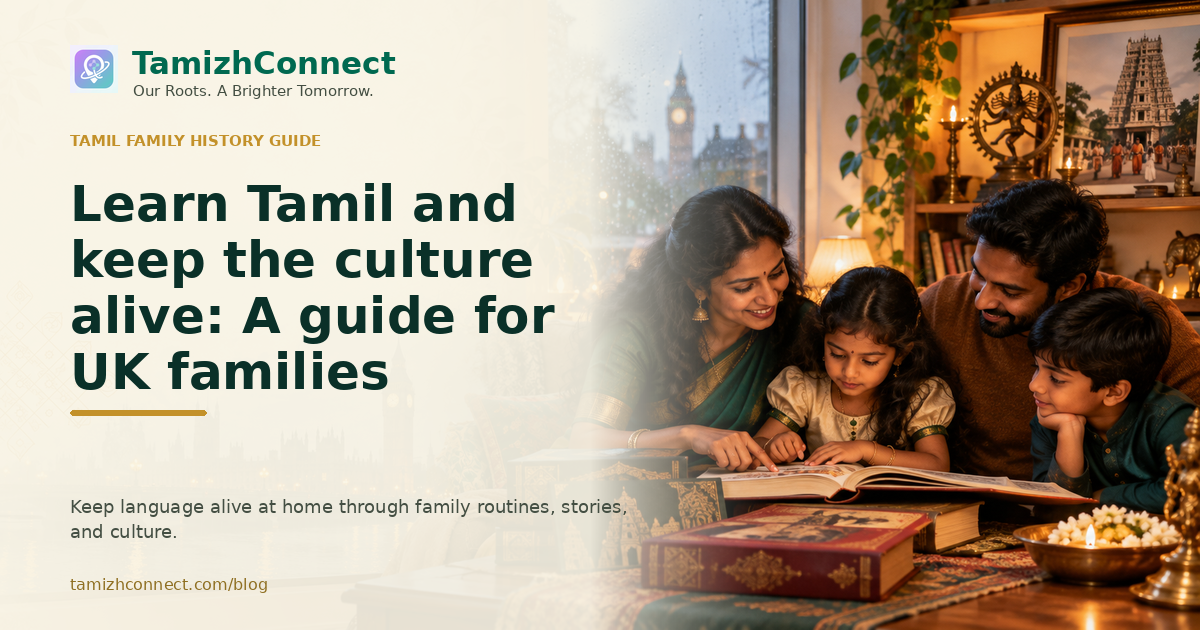
Overview: Learn Tamil and Keep the Culture Alive: A Guide for UK Families
For many Tamil parents in the UK, the worry is simple:
“My children understand a bit of Tamil, but they reply in English. Will they lose the language completely?”
You can’t recreate a Tamil Nadu village in London, but you can use digital tools to keep Tamil alive in a realistic way.
If you want a deeper foundation on what Tamil as a language and identity actually means, read our
core guide to Tamil as a companion to this article.
This guide covers:
- Online Tamil language learning options
- How to use digital magazines and newsletters
- How TamizhConnect can reinforce everything
1. Online Tamil language learning options in the UK
You have three main paths:
- Structured online Tamil schools
- Community-run Tamil classes in the UK
- One-to-one online tutors
1. Structured online Tamil schools
These are platforms set up specifically for diaspora kids:
- Levels from complete beginner to fluent reader
- Fixed syllabus and term structure
- Group classes scheduled around evening/weekend UK times
- Certificates or progress tracking
They are good if you want regular, predictable exposure and a school-like environment.
2. Community-run Tamil classes in the UK
Local Tamil associations, religious institutions and cultural groups often run:
- Weekend Tamil classes for children
- Mixed lessons: language + songs + stories + basic writing
- Annual exams or performances
Some now offer hybrid or online options, especially for families that live far from the venue.
3. One-to-one online tutors
If your child needs:
- Extra speaking practice
- Confidence boost
- A schedule that doesn’t fit group classes
…then 1:1 tutoring via global tutor platforms works well. You can:
- Filter specifically for Tamil tutors
- Pick someone who understands diaspora context
- Focus on speaking, reading or writing depending on your goals
2. Using digital Tamil magazines and newsletters
Learning Tamil is not just about textbooks and verbs. Children need to see Tamil in:
- Stories
- Jokes
- Short articles
- Visual content
Digital magazines and newsletters help with that.
Digital magazines
Most big Tamil magazines now have:
- App or web subscription
- Back issues
- Separate sections for children, cinema, serialised fiction
You don’t have to read everything. Even a single short story a week read aloud at home builds vocabulary.
Newsletters
There are two layers here:
- General Tamil news and culture newsletters
- Your own family newsletter
Using TamizhConnect, you can:
- Record family stories in Tamil and English
- Share them with relatives as a periodic “family update”
- Mix heritage content with your children’s current life in the UK
For more on the media side – news, TV, music, radio and films – see
Digital Tamil Life in the UK: News, TV, Music and Movies.
That way, Tamil isn’t just something they “study” — it becomes part of their story.
3. Making Tamil stick in a British environment
Here’s the uncomfortable truth: if you don’t design Tamil into daily life, English will win by default.
Practical, realistic steps:
- Pick one Tamil day: e.g. Sunday mornings = only Tamil with grandparents on video call.
- Use Tamil media: songs, simple comedy, kids’ shows while they eat or play.
- Keep Tamil books visible: not hidden in a box.
- Let children type in Tamil occasionally (voice input, transliteration keyboards).
You’re not aiming for perfect native-level Tamil. You’re aiming for:
- Basic conversational comfort
- Ability to read simple texts
- Emotional connection to the language
Our Tamil shopping guide for books and traditional clothing pairs well here if you want to physically surround your kids with Tamil words and symbols.
4. How TamizhConnect supports language learning
Language is just one layer of identity. TamizhConnect helps tie it to:
- Ancestral villages and hometowns
- Grandparents’ stories
- Migration journeys into the UK
- Family traditions around festivals, food and names
When a child learns Tamil words for:
- Village
- Temple
- River
- Harvest
…and then sees those concepts mapped onto their own family tree, Tamil stops being abstract. It becomes their story.
Beyond formal vocabulary, preserving Tamil folklore and family stories is crucial for cultural continuity. Learn more about Tamil folklore in families and how paatti stories, ghost tales, and traditional beliefs contain valuable historical clues about your ancestors.
To make this even more concrete, combine this article with:
- Tamil Food Online: Recipe Blogs and Cooking Channels for UK Tamils – using food as a cultural anchor
- Digital Tamil Media Guide – using media as constant background Tamil
Use online classes and digital magazines to teach the language. Use TamizhConnect to show why it matters.