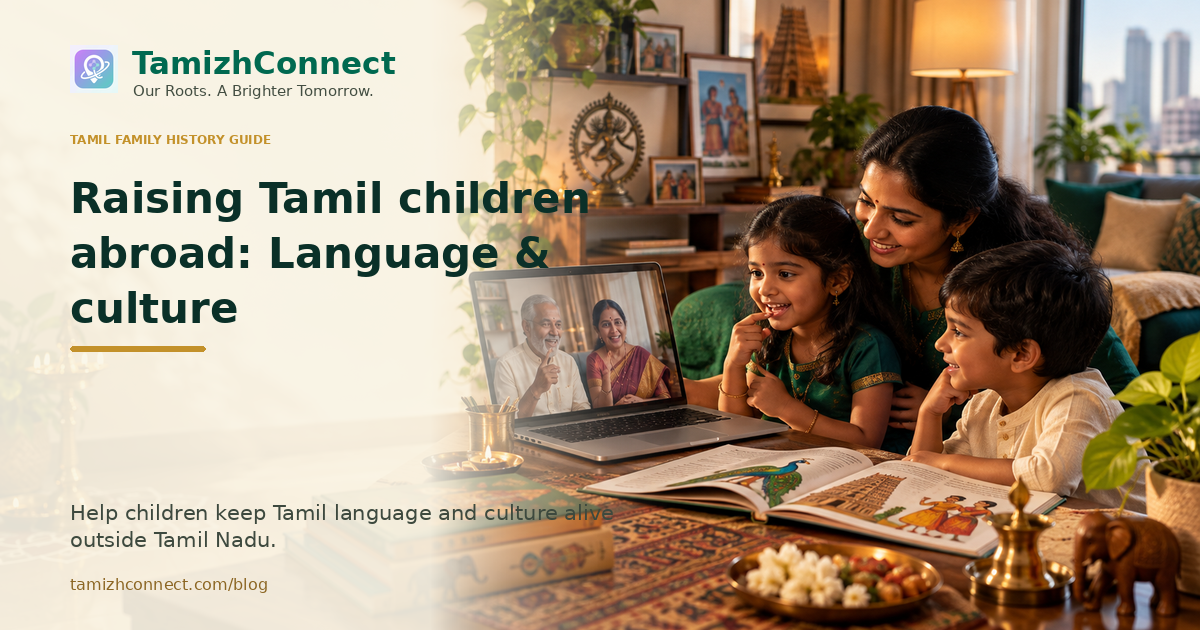
Raising Tamil Children Abroad: Practical Strategies for Cultural Continuity
If you’re Tamil and raising children outside Tamil Nadu or Sri Lanka—in the UK, Canada, the Gulf, Australia, Singapore, or elsewhere—you’re likely familiar with the internal dialogue:
- "I don’t want them to lose connection to their Tamil heritage."
- "I don’t want to push too hard and create resistance."
- "Realistically, the dominant language will be English or the local language."
You’re not wrong. The environment is indeed stacked against heritage language maintenance. The key question isn’t "How do I create perfect Tamil kids?"—that’s an unrealistic fantasy. The real question is:
"What strategic minimum actions must we take to ensure Tamil heritage doesn’t completely disappear across generations?"
To approach this effectively, you need a clear understanding of what Tamil heritage encompasses—language, identity, history, and cultural values—not just surface-level labels. If you haven’t read it yet, start with our guide to Tamil language and identity. This article builds on that foundation and provides practical parenting strategies for diaspora families.
For country-specific guidance, combine this with:
- Digital Tamil Life in the UK: News, TV, Music and Movies
- Learn Tamil and Keep the Culture Alive: A Guide for UK Families
1. Realistic Expectations: Acknowledging the Challenge
Let’s be honest about the baseline reality of raising Tamil children abroad:
The linguistic environment challenge:
- Your children will be more comfortable in the dominant local language (English, French, German, etc.) than in Tamil
- Their school, peer groups, and media consumption occur primarily in the local language
- Without intentional effort, Tamil becomes:
- A few food-related words and expressions
- Some basic phrases and greetings
- A general awareness of "my family comes from South India or Sri Lanka"
The cultural environment reality:
- Your children will grow up embedded in the dominant cultural patterns of their country of residence
- Social institutions, holidays, and community celebrations follow local norms
- Identity formation happens within the host country’s cultural framework
- Tamil may become secondary or situational (only at home or with specific relatives)
Setting achievable goals: Rather than aiming to "recreate Tamil Nadu at home," your goal should be maintaining a living, meaningful connection to Tamil heritage—not a museum piece, but a dynamic and evolving relationship with your cultural identity.
2. Defining Success: What to Aim For
Unrealistic success definitions:
- "My child must speak classical literary Tamil and write formal essays"
- "My child must be equally comfortable in Tamil and [local language]"
- "My child must reject local culture and embrace only Tamil traditions"
Realistic, achievable success targets:
- They understand Tamil well enough to communicate with relatives and access cultural content
- They can speak basic Tamil conversationally, even if grammar and pronunciation aren’t perfect
- They know what Tamil heritage is—language, literature, cultural traditions, and historical identity
- They know the basic story of their family’s journey—where they came from and why they’re in their current location
- They feel proud and comfortable identifying as Tamil when asked, and can explain aspects of Tamil culture
Long-term vision: If children later choose to deepen their Tamil knowledge—learn to read and write properly, study classical literature, or travel to Tamil regions—that’s wonderful. But you can’t control that. Your job is to keep the door open and make Tamil heritage accessible and appealing as an option.
This mobile-optimized approach helps families understand that success looks different across various contexts and generations.
3. Three Critical Levers for Tamil Heritage Maintenance
Effective Tamil heritage preservation involves three interconnected strategies. Success requires consistent attention to at least two of these.
3.1 Language Transmission: Creating Natural Tamil Environments (Mobile-Optimized)
Home environment strategies:
-
Scheduled Tamil time: Establish consistent times and contexts where Tamil is the default language
- Dinner conversations in Tamil
- Bedtime story time in Tamil
- Phone calls with relatives exclusively in Tamil
- Weekend morning routines in Tamil
-
Gradual language integration: Start with Tamil questions + English answers, then gradually encourage Tamil responses
- Use simple Tamil phrases for daily activities: "naangale podhum" (we are going), "sappadu solu" (tell me about food)
- Pair Tamil with English initially: "Please say ‘vanakkam’ (hello) to Appa"
- Make Tamil the language for specific activities: festivals, religious practices, family traditions
-
Technology integration for language practice:
- Tamil podcasts and audiobooks during car rides
- Tamil YouTube channels for entertainment and learning
- Language learning apps designed for heritage speakers
- Video calls with relatives in Tamil-speaking regions
Practical language building blocks (mobile-friendly):
- Weekly vocabulary: Introduce 3-5 Tamil words related to a specific theme (weather, food, family, etc.)
- Cultural connections: Link Tamil words to specific cultural concepts, foods, festivals, or family traditions
- Storytelling: Share family stories in Tamil that help children connect the language to meaningful experiences
- Songs and chants: Traditional Tamil songs, lullabies, and festival music that make language memorable
3.2 Cultural Storytelling: Connecting Children to Their Heritage Narrative (Mobile-First)
Importance of stories over facts: Simply teaching Tamil vocabulary without emotional connections leads to disinterest. Children need engaging narratives that make Tamil heritage personally meaningful:
- Origin stories: "Our great-grandfather came from a village near Thanjavur that had a famous temple dedicated to Lord Murugan"
- Migration narratives: "Your grandfather worked in Malaysia for 8 years on rubber plantations, sending money home to build our house"
- Family traditions: "This recipe for sambar is the same one that your great-grandmother made in her village kitchen 70 years ago"
- Cultural heroes: Stories of Tamil poets, philosophers, and historical figures who inspire cultural pride
Mobile-friendly storytelling methods:
- Audio recordings: Record grandparents telling family stories in Tamil for children to listen to repeatedly
- Photo narratives: Create visual storytelling with family photographs and ancestral locations
- Video documentation: Record traditional practices, festivals, and ceremonies in Tamil-speaking contexts
- Digital storytelling: Use apps and multimedia to create interactive heritage experiences
3.3 Cultural Environment: Tangible Tamil Presence in Daily Life (Responsive Design)
Children absorb culture through their environment, not just through direct instruction. The home environment must visibly support Tamil heritage:
Visual cultural presence:
- Tamil script displays: Framed Tamil quotes, alphabets, or family genealogies on walls
- Cultural artwork: Traditional Tamil paintings, photographs of ancestral locations, religious imagery
- Festival decorations: Regular displays that highlight Tamil festivals and their significance
- Book collections: Tamil books, magazines, and cultural materials accessible to children
Auditory and sensory elements:
- Tamil music: Regularly play traditional Tamil music, bhajans, classical music, or contemporary Tamil songs
- Tamil voices: Audio content including stories, news, or music in Tamil
- Tamil food practices: Regular preparation of traditional Tamil dishes and teaching their cultural significance
- Cultural activities: Involving children in cooking, crafts, and other Tamil cultural practices
Digital cultural environment:
- Tamil media subscriptions: Tamil television, radio, or streaming services accessible to children
- Tamil social networks: Exposure to Tamil communities online and offline
- Heritage learning platforms: Access to TamizhConnect and other Tamil genealogy and cultural resources
- Mobile apps: Tamil learning, music, and cultural apps that children can explore independently
4. Mobile-Optimized Tamil Heritage Activities
With many families accessing information primarily through mobile devices, it’s important to implement heritage activities with mobile accessibility in mind:
4.1 Mobile-First Learning Approaches
Tamil learning via mobile apps:
- Heritage language apps: Designed specifically for Tamil children abroad
- Audio story apps: Tamil folktales, mythology, and family stories accessible on phones
- Game-based learning: Fun apps that make Tamil vocabulary and grammar engaging
- Video tutorial apps: For traditional dances, music, cooking, and cultural practices
Mobile-friendly family practices:
- Shared photo albums: Mobile-accessible collections of family heritage images
- Voice messages: Regular Tamil voice messages between family members in different countries
- Video calls: Scheduled Tamil-only conversations with relatives in Tamil-speaking regions
- Interactive maps: Mobile-optimized maps showing family locations across different countries
4.2 Social Media and Digital Cultural Sharing
Mobile heritage activities:
- WhatsApp family groups: Daily sharing of Tamil cultural content, recipes, and family news
- Tamil cultural groups: Online communities where children can see peers engaging with Tamil heritage
- Digital festivals: Virtual participation in Tamil festivals with family and community
- Collaborative projects: Online family projects documenting Tamil heritage that children can contribute to
5. Common Strategies That Don’t Work
Counterproductive approaches that families should avoid:
5.1 Guilt-Based Motivation Without Action
Ineffective phrases:
- "You should speak Tamil because it’s our oldest language"
- "Our ancestors will be ashamed if you don’t know Tamil"
- "Everyone else manages, so you should too"
Why these fail:
- The language remains associated with nagging rather than personal connection
- Children feel pressured rather than inspired
- Daily habits don’t change despite the emotional appeals
Better alternatives:
- Tie actions to benefits: "Knowing Tamil helps you connect with our family stories"
- Make it rewarding: Connect Tamil learning to privileges, activities, or experiences children enjoy
- Lead by example: Parents consistently speak Tamil in appropriate contexts
5.2 Outsourcing Responsibility to Grandparents Only
Problematic pattern:
- Parents use English predominantly with children
- Tamil learning relies entirely on occasional grandparent visits or phone calls
- Children associate Tamil only with elderly relatives, not their own identity
Mobile-friendly solution:
- Technology integration: Regular video calls between grandparents and grandchildren in Tamil
- Content sharing: Grandparents sending audio messages, stories, or recorded content for children to access
- Collaborative learning: Grandparents coaching parents on effective Tamil communication strategies
- Remote mentoring: Grandparents providing cultural knowledge and values through digital connections
5.3 Unrealistic Language-Only Policies
Problematic approach:
- Attempting "Tamil-only at home" without considering family language competency or community context
- Expecting children to respond in Tamil when parents themselves are not proficient
- Creating artificial language rules that feel forced and inauthentic
Flexible, mobile-friendly approach:
- Context-specific language zones: Specific routines where Tamil is expected
- Gradual integration: Slowly increasing Tamil usage as competency improves
- Mobile language games: Fun apps and activities that naturally incorporate Tamil
- Technology-assisted practice: Using translation, pronunciation, and learning apps to bridge language gaps
6. Strategies for Mixed-Heritage Tamil Families
For families where one parent is Tamil and the other is not, or where both parents are Tamil but from different backgrounds:
6.1 Explicit Cultural Planning
Systematic culture integration:
- Calendar integration: Clear schedule for Tamil cultural celebrations and traditions
- Language rotation: Planned times when each cultural language takes precedence
- Education planning: Clear expectations for which languages and traditions children should learn
- Community involvement: Active participation in Tamil cultural organizations and events
Mobile-friendly integration:
- Digital calendars: Shared mobile calendars showing Tamil festival dates and cultural activities
- Translation apps: Mobile tools to help non-Tamil parent participate in cultural discussions
- Cultural education resources: Mobile-accessible materials for non-Tamil parent to understand Tamil traditions
- Family coordination apps: Tools for coordinating cultural activity participation across multiple family members
6.2 Balanced Identity Development
Approaches for mixed-heritage families:
- Equal representation: Both cultures represented in home environment, celebrations, and education
- Story integration: Connecting children to both cultural heritage narratives
- Community navigation: Helping children feel comfortable in both cultural contexts
- Identity flexibility: Allowing children to define their own cultural identity over time
7. Digital Tools and Mobile Platforms for Tamil Heritage
7.1 Comprehensive Heritage Documentation (Responsive Design)
Using TamizhConnect and similar platforms effectively:
- Family tree creation: Documenting family origins, migration patterns, and connections across countries
- Story attachment: Adding personal narratives, cultural practices, and family traditions to tree entries
- Media integration: Including photographs, audio recordings, videos, and documents that preserve heritage
- Collaborative features: Allowing relatives in different countries to contribute to family heritage documentation
Mobile optimization features:
- Responsive interface: Working well on smartphones, tablets, and computers
- Offline capabilities: Accessing important family information without internet connection
- Push notifications: Alerts for family updates, cultural celebrations, and important dates
- Audio integration: Recording and playing back family voices and stories directly from mobile devices
7.2 Tamil Cultural Resource Apps (Touchscreen-Friendly)
Digital cultural preservation tools:
- Tamil learning apps: Designed specifically for heritage speakers and children
- Cultural content platforms: Tamil music, movies, news, and educational content accessible worldwide
- Religious practice apps: Digital prayer books, temple information, and festival calendars
- Recipe and cooking apps: Tamil food traditions and cooking instructions in digital format
8. Generational Considerations and Long-term Planning
8.1 First Generation (Parents) Responsibilities
Critical tasks for parents:
- Creating initial infrastructure: Establishing Tamil-speaking home environments and cultural practices
- Building community connections: Linking to other Tamil families and cultural institutions
- Maintaining ancestral connections: Keeping relationships with relatives in Tamil-speaking regions
- Resource acquisition: Building Tamil book collections, media, and learning resources
8.2 Second Generation (Children) Support
Support strategies for children:
- Peer connections: Facilitating relationships with other Tamil children in the area
- Cultural pride building: Developing positive association with Tamil identity and heritage
- Language competency development: Supporting gradual improvement in Tamil speaking and comprehension skills
- Identity autonomy: Allowing children to explore and define their cultural identity without pressure
8.3 Third Generation (Grandchildren) Vision
Long-term heritage sustainability:
- Institutional preservation: Creating systems and resources that continue beyond current generation
- Cultural documentation: Recording family stories, traditions, and practices for future reference
- Technology integration: Using digital tools to make heritage accessible across generations
- Flexibility planning: Adapting practices to changing contexts and preferences of future generations
9. Country-Specific Adaptations for Mobile Access
Different countries require different approaches. All should be optimized for mobile access:
9.1 UK Tamil Families (Mobile-First Access)
- Tamil weekend schools: Use mobile apps to coordinate schedules and share information
- Community event calendars: Mobile-accessible information about Tamil cultural events
- Digital media access: Mobile-friendly Tamil news, music, and television streaming
- Religious connections: Mobile temple calendars and religious practice guides
9.2 Gulf Tamil Families (Touchscreen-Optimized)
- Contract-based considerations: Managing heritage activities within temporary residence contexts
- Multi-national identity: Preparing children for potential return to origin countries
- Expatriate community connections: Linking to Tamil expatriate communities in Gulf regions
- Technology dependence: Using digital tools extensively due to temporary nature of residence
9.3 North American Tamil Families (Device-Responsive)
- Distributed community: Using mobile platforms to connect with Tamil communities across large geographic areas
- Educational integration: Balancing Tamil heritage with American educational expectations
- Professional heritage: Connecting Tamil cultural values with North American professional contexts
- Intergenerational differences: Managing varying levels of Tamil competency and interest across generations
10. Measuring Success and Adjusting Strategies
10.1 Key Performance Indicators
Mobile-friendly metrics:
- Language usage: Frequency and naturalness of Tamil usage within the family
- Cultural engagement: Children’s voluntary participation in Tamil cultural activities
- Identity connection: Children’s comfort and pride in identifying as Tamil
- Relational maintenance: Children’s ability to connect meaningfully with Tamil-speaking relatives
10.2 Adaptive Strategies
Continuous improvement approaches:
- Regular family discussions: Using mobile tools to gather feedback about heritage activities
- Technology integration: Adjusting strategies as new apps and digital tools become available
- Cultural adaptation: Modifying practices to suit local contexts while preserving core values
- Intergenerational consultation: Involving children in decisions about Tamil heritage activities
11. Common Misconceptions and Correct Approaches
11.1 Debunking Language Myths
Myth: Children will become confused by multiple languages. Reality: Children can successfully learn multiple languages, especially when contexts are clearly defined.
Myth: Children need to learn local language first, then heritage language. Reality: Early exposure to heritage languages often provides cognitive advantages and cultural connection.
Mobile correction approach:
- Language app integration: Show children that multilingualism is common through global language learning apps
- Bilingual content: Provide content in both Tamil and local language to validate both identities
- Peer examples: Connect with other multilingual families through mobile platforms
11.2 Cultural Identity Myths
Myth: Children must choose between Tamil and local identity. Reality: Bicultural identity can be a strength when properly managed.
Myth: Cultural practices must remain unchanged across generations. Reality: Successful cultural transmission involves adaptation to new contexts while preserving core values.
Conclusion: Raising Tamil Children Abroad With Cultural Continuity
Raising Tamil children abroad requires a systematic, mobile-optimized approach that acknowledges the challenges while implementing practical, sustainable strategies. Success is not about creating perfect Tamil replicas of village-raised children, but about ensuring that Tamil heritage remains accessible, meaningful, and positive for future generations.
The key to effective heritage maintenance lies in understanding that Tamil identity in diaspora is not static but dynamic—adapting to local contexts while maintaining essential cultural values and connections. This requires consistent effort from parents, integration of modern technology tools, and recognition that different strategies work for different families and countries.
Mobile-optimized approaches are increasingly important as families access information and resources through smartphones and tablets. Creating heritage content and activities that work well in mobile formats ensures that Tamil traditions remain accessible to children who are digital natives.
Most importantly, the goal is not perfection but preservation—creating conditions that allow future generations to explore their Tamil heritage if they choose to, rather than losing it entirely due to insufficient infrastructure and opportunity.
The time to implement these strategies is during the early years when children are forming their identity and establishing their relationship with heritage languages and cultures. Later interventions, while possible, require significantly more effort and face greater challenges.
For those raising Tamil children abroad, remember: you are the guardians of heritage for the next generation. Your efforts today determine whether they have access to their Tamil identity tomorrow.
When naming your children, consider choosing modern Tamil names that balance identity, meaning, and global usability. Learn more about choosing modern Tamil names that preserve heritage while working well in international contexts.
To continue exploring Tamil heritage preservation strategies, consider reading about maintaining Tamil identity in diaspora, documenting Tamil migration patterns, or collecting family history from elders. Our family tree builder includes specialized features designed to help Tamil families document their connections to ancestral villages and maintain cultural heritage across generations.
The future of Tamil heritage in the diaspora depends on how effectively families today implement these preservation strategies.