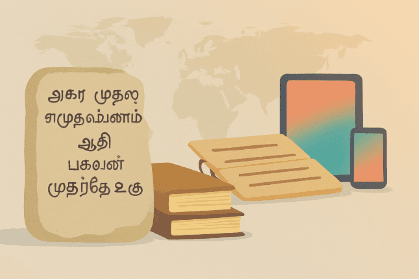
Tamil: One of World’s Oldest Living Languages & Cultural Heritage
In Tamil communities worldwide, you’ll hear this proud declaration:
"Tamil is the world’s oldest living language."
This statement brings deep pride to Tamil identity and spans centuries across continents. While the claim of being "the world’s oldest" is debated among scholars, Tamil has one of the world’s most remarkable language histories with an unbroken literary tradition going back over 2,000 years.
Tamil’s ancient heritage connects modern families to a continuous cultural path that preserved identity, literature, and community through political changes, invasions, and global migrations. This linguistic continuity represents one of humanity’s most enduring cultural achievements, spanning from ancient Sangam literature to contemporary digital communication.
Understanding Tamil’s Ancient Status in Scholarly Context
While Tamil is not definitively "the world’s oldest language," it does possess several remarkable characteristics that make it unique among world languages:
- The longest unbroken literary tradition of over 2,000 years with continuous written records
- One of the few ancient languages still spoken natively by over 75 million people worldwide
- A living classical language that maintains both ancient forms and modern evolution
- Documented historical continuity with archaeological evidence of written Tamil from 3rd century BCE
- Unique linguistic features preserved from Proto-Dravidian origins around 2,500-3,000 BCE
Understanding Tamil’s actual ancient status, while avoiding competitive claims, helps appreciate its remarkable heritage and motivates preservation efforts.
Why Tamil Is So Old
Four main things make Tamil an ancient language:
Written Records
Tamil has continuous written records. Other spoken languages may have no written proof. Tamil has kept literary works going back over 2,000 years.
Early written works:
- Sangam literature (300 BCE – 300 CE): The first Tamil literary works
- Tevaram and Divya Prabandham (7th-9th centuries CE): Devotional songs from the medieval period
- Kamba Ramayanam (12th century): Epic poetry
- Modern Tamil literature (19th century–today): Current literary works
Unbroken Change Through Time
This shows how Tamil changed smoothly from old to modern forms. The language kept changing from old forms without disappearing completely. This is different from Latin which died and was brought back.
How Tamil changed over time:
- Old Tamil (300 BCE – 700 CE) – The first literary period
- Middle Tamil (700 – 1600 CE) – The medieval period
- Modern Tamil (1600 CE–today) – How people speak and write today
People Still Speak It
This ensures the language stays alive. People still speak it daily. It is not just used in school or religious settings.
How many people speak Tamil:
- More than 75 million native speakers around the world
- Official language in Tamil Nadu, Puducherry (India), and Sri Lanka
- Used in schools from elementary to university levels
- Found in media and tech with digital resources and online content
Passing Culture to Children
This shows how well the language passes from parents to children. It keeps its core features.
How Tamil passes through generations:
- Learned at home where children get Tamil skills
- Taught in community classes through weekend schools and cultural centers
- Used in temples for ceremonies and teaching
- Used in customs that encourage Tamil use
Timeline of Tamil Language Growth
Early Tamil Roots (About 4,000-7,000 BCE)
Tamil comes from the Proto-Dravidian language family:
Main branches:
- South branch: Tamil, Malayalam, Kannada, and Tulu
- Central branch: Kurukh, Malto, and other languages
- North branch: Brahui, Gondi, and others
- Northeast branch: Parji, Kui, and others
What experts found:
- Tamil split from Proto-Dravidian around 2,500-3,000 BCE
- Shared words with other Dravidian languages show common origins
- Unique changes set Tamil apart from similar languages
First Tamil Writings (3rd century BCE)
The first clear Tamil writings appear in rock carvings and cave writings:
They show:
- Tamil-Brahmi script used for government and religious records
- Writings in two languages mixing Tamil and Prakrit
- Spread across areas of what is now Tamil Nadu and Kerala
- Signs of cities showing developed urban centers and trade networks
Sangam Period (300 BCE – 300 CE)
The Sangam writings show Tamil’s golden age:
Major works:
- Ettuthokai (Eight Anthologies): Poems about war, love, and ethics
- Pattupattu (Ten Idylls): Long poems celebrating kings and heroes
- Tolkappiyam: The first Tamil grammar book
- Thirukkural: Life lessons in couplets
- Paripaadal and Kaliththokai: More devotional and lyrical poems
Special features include:
- Deep poetic skills with rules for metaphor and imagery
- Writers from different backgrounds from various social groups and regions
- Large vocabulary with specific terms for plants, animals, landscapes, and social structures
- Deep thinking about ethics and life
Medieval Times (7th-16th centuries CE)
This time saw religion and literature together:
Changes included:
- Devotion poetry becoming more popular with the Bhakti movement
- Songs in temples praising local gods and pilgrimage places
- Better grammar and word rules building on earlier books
- Regional changes happening while keeping core traditions
- Mixing cultures from Sanskrit, Arabic, Persian, and European languages
Modern Tamil (1600 CE–today)
Today shows change to modern influences while keeping classic elements:
Changes:
- Meeting colonial languages with Portuguese, Dutch, and English
- Books becoming common making literature widely available
- Setting standards creating modern Tamil literary language
- Using Tamil in politics for democratic participation
- Keeping Tamil in the global diaspora around the world
Tamil’s Special Language Features
Word Building
Tamil has a strong word-building system compared to other world languages:
- Adding endings: Multiple grammar parts attach to word bases
- Case system: Eight different grammar cases with specific endings
- Time markers: Complex verb endings showing time, mood, and completion
- Politeness levels: Formal and casual register differences built in grammar
Special Sounds
Tamil keeps special tongue-tip sounds that are rare in other world language families:
- Six tongue-tip sounds: ṭ, ṱ, ḍ, ḑ, ṇ, á¹›, ṝ
- Clear sound difference: Different from tooth and middle tongue sounds
- Kept ancient sounds: Keeping old sound differences lost in nearby languages
Keeping Classic Literature
Unlike many ancient languages that lost their classic forms, Tamil keeps:
- Still studying Sangam literature in schools
- Modern versions of classic works in current media
- Expert commentaries keeping interpretation traditions alive
- Performance practices keeping classic reading methods
Writing System Growth and Consistency
Tamil made its own writing system while keeping old connections:
- Tamil-Brahmi starting with early Indian scripts
- Vatteluttu growth during medieval times
- Modern Tamil script keeping old character shapes
- Digital changes keeping visual links to historical forms
Tamil Compared to Other Ancient Languages
Tamil vs. Sanskrit
Both are old South Asian languages. But they are very different:
- Sanskrit: Used mainly in religious settings; no native speakers
- Tamil: Changing all the time with millions of native speakers
- Sanskrit: Influenced all of India with multiple regional changes
- Tamil: Regional and with strong local identity
Tamil vs. Chinese
Both have ancient literary traditions but with different traits:
- Chinese: Picture writing system with tone languages
- Tamil: Sound writing system with word-building grammar
- Chinese: Multiple languages that can’t understand each other
- Tamil: Geographic differences but people can understand each other
Tamil vs. Hebrew and Arabic
These Middle Eastern languages share ancient status but different types:
- Hebrew: Became native language again after centuries of religious use
- Tamil: Always spoken by native communities
- Arabic: Multiple types with Classical Arabic as religious standard
- Tamil: Literary and everyday forms but continuous native speech
Tamil vs. Greek and Latin
Classic European languages with historical value:
- Greek: Still speakers but with big changes from ancient forms
- Tamil: Better keeping of ancient sound and grammar features
- Latin: Used again in religious/academic settings, no native speakers
- Tamil: Unbroken native speech across all historical times
Proof from Archaeology and Old Writings
First Tamil Writings
Archaeological proof confirms Tamil’s ancient written tradition:
Old graffiti (300-100 BCE):
- Pottery marks with Tamil-Brahmi characters found in burial sites
- Rock paintings with early Tamil script variations
- Coins and artifacts with Tamil writings
- Trade links shown by Tamil marks on international goods
Rock writings and cave inscriptions (3rd-1st centuries BCE):
- Pandya kingdom records showing royal support of Tamil literature
- Jain and Buddhist sites with Tamil religious texts
- Business groups using Tamil for business records
- Temple grants recording land gifts in Tamil
Literature Proof
The internal proof in Tamil literature gives time markers:
Sangam poems reference:
- Historical rulers and kingdoms with independent proof
- Geographic places that can be matched to real sites
- Economic systems matching archaeological evidence
- Social structures fitting archaeological findings
Religious literature records:
- Temple construction projects with building evidence
- Royal support confirmed through inscriptions
- Regional differences matching geographic and linguistic boundaries
Gene and Anthropology Links
Modern research shows biological continuity connecting old populations to modern speakers:
- Gene studies of Tamil-speaking populations showing long-term settlement patterns
- Archaeological proof of continuous living in Tamil-speaking regions
- Cultural practices that continue from ancient to modern times
- Language influences in nearby languages showing Tamil influence
Why This Matters for Tamil Families
Identity and Heritage Connection
For Tamil families worldwide, understanding ancient heritage provides:
- Historical connection: Linking modern families to ancient literary and cultural traditions
- Cultural confidence: Keeping pride in language and traditions
- Learning motivation: Encouraging younger generations to learn Tamil
- Community bonding: Strengthening connections with other Tamil families worldwide
Language Keeping Strategies
Knowing Tamil’s ancient status motivates keeping efforts:
- Family language planning: Making sure Tamil passes to children
- Community education: Supporting Tamil schools and cultural centers
- Tech use: Using digital tools to keep Tamil skills
- Connection between generations: Helping communication between elders and youth
Cultural Keeping Challenges
Modern Tamil families face specific challenges in maintaining ancient traditions:
- Moving around the world: Geographic separation of family members
- Changing languages: Children preferring main local languages
- Cultural change: Pressure to fit in with host country norms
- Limited resources: Limited access to Tamil teachers and materials
Keeping in the Digital Age
New tools and platforms help maintain connection to ancient heritage:
- Digital libraries: Access to classic Tamil texts online
- Language learning apps: Mobile tools for Tamil learning
- Cultural networks: Connecting Tamil families globally through social media
- Family history research: Linking family histories to geographic origins
The Science Behind Tamil’s Ancient Status
Language Rebuilding Methods
Modern linguistics uses scientific methods to establish language relationships and age:
- Comparison method: Comparing Tamil with other Dravidian languages
- Internal rebuilding: Examining Tamil’s own historical development
- Word counting: Calculating vocabulary keeping rates
- Time estimates: Guessing differences between related languages
Computer Language Research
Advanced computer analysis supports Tamil’s ancient status:
- Family tree studies: Modeling language family trees
- Sound change analysis: Following sound evolution
- Word structure complexity: Measuring grammar system age
- Shared word analysis: Finding shared vocabulary with sister languages
Multiple Field Proof
Different academic fields confirm Tamil’s ancient heritage:
- Archaeological correlation: Matching language evidence with material culture
- Gene studies: Confirming population continuity
- Historical records: Supporting linguistic evidence with written history
- Anthropological research: Recording cultural practices
Debates and Scholar Views
Competing Claims to Ancient Status
Various languages make legitimate claims to ancient status:
- Chinese: Longer continuous written tradition in some measures
- Hebrew: Revival of ancient form as spoken language
- Greek: Continuous speaker community with classical connections
- Arabic: Ancient literary tradition with modern speakers
Definition Problems
The term "oldest living language" involves meaning complexities:
- "Oldest": Timeline age vs. cultural continuity
- "Living": Native speakers vs. religious use vs. revival
- "Language": Family continuity vs. understanding vs. cultural identity
- "Claim": Scholar accuracy vs. cultural pride
Scholar Agreement
Most linguists and Tamil scholars agree on:
- Tamil’s ancient written tradition with clear evidence
- Continuous speaker community across historical periods
- Significant cultural influence on South Asian civilization
- Unique language features deserving preservation
A more scholarly accurate statement would be:
"Tamil has one of the world’s longest surviving literary traditions with continuous native speaker communities and distinctive linguistic features."
This avoids competition while keeping appreciation for Tamil’s remarkable heritage.
Impact for Tamil Family History Research
Geographic and Cultural Context
Understanding Tamil’s ancient heritage provides context for family history research:
- Regional variations: Different dialects showing different geographic origins
- Cultural practices: Traditional customs linking to specific historical periods
- Name patterns: Origins of family names in historical context
- Job terms: Traditional jobs shown by surnames and titles
Documentation Strategies
Family history research benefits from Tamil’s ancient heritage:
- Historical records: Temple inscriptions, land grants, and official documents
- Literary references: Family names and locations mentioned in classic works
- Cultural markers: Religious affiliations and community connections
- Linguistic evidence: Dialect features showing geographic origins
Cross-Regional Connections
Ancient Tamil heritage connects families across different regions:
- Sri Lankan Tamils: Shared literary and cultural traditions
- Malaysian Tamils: Estate communities with village origins
- Fijian Indians: Descendants of Tamil plantation workers
- Global diaspora: Keeping connections to classic traditions
Cultural Keeping and Identity
Learning Approaches
Families can engage with Tamil’s ancient heritage through:
- Classic literature study: Reading Sangam poetry and other ancient works
- Language learning: Prioritizing Tamil literacy and fluency
- Cultural practice: Keeping traditional festivals and customs
- Academic engagement: Supporting Tamil studies at universities
Passing Between Generations
Making sure heritage continues to future generations:
- Storytelling practices: Sharing classic tales and family histories
- Language maintenance: Creating home environments that support Tamil usage
- Cultural participation: Involving children in traditional ceremonies
- Community engagement: Connecting with other Tamil families and organizations
Digital Keeping
Using technology to maintain connections to ancient heritage:
- Online resources: Accessing classic texts and educational materials
- Digital communities: Connecting with Tamil speakers globally
- Language tools: Using apps and software for Tamil learning
- Cultural content: Creating and sharing videos, music, and art in Tamil
The Global Tamil Context
Diaspora Identity
Tamil’s ancient heritage provides special significance for diaspora families:
- Cultural anchor: Maintaining identity while adapting to new countries
- Language bridge: Connecting generations across different linguistic environments
- Community building: Creating bonds between Tamil families of diverse origins
- Educational priority: Motivating Tamil language and culture education
Modern Tamil Society
Ancient heritage continues to influence contemporary Tamil communities:
- Educational systems: Emphasis on classic literature and grammar
- Media production: Films, music, and television incorporating classic themes
- Political discourse: References to ancient traditions in public debate
- Social organization: Community structures based on traditional patterns
Practical Steps for Families
Personal Engagement
Individuals can connect with Tamil’s ancient heritage through:
- Language learning: Developing reading and speaking skills in Tamil
- Literature study: Reading classic works like Thirukkural and Sangam poems
- Cultural participation: Attending temple festivals and classical performances
- Family history research: Connecting family history to geographic and linguistic origins
Family Documentation
Families can preserve connections to ancient heritage by:
- Recording elder knowledge: Documenting traditional stories and practices
- Preserving documents: Collecting family papers, photographs, and certificates
- Maintaining libraries: Building collections of Tamil books and cultural materials
- Creating resources: Developing family histories that connect to broader Tamil heritage
Community Involvement
Participation in Tamil cultural preservation:
- Supporting schools: Contributing to Tamil language education programs
- Cultural organizations: Joining groups that promote Tamil literature and arts
- Religious institutions: Participating in temples and cultural centers
- Academic initiatives: Supporting Tamil studies research and teaching
Conclusion: Tamil’s Position Among the World’s Oldest Languages
Tamil’s position among the world’s oldest continuously spoken languages shows a remarkable achievement of cultural preservation and linguistic continuity. While the exact label of "oldest" remains subject to scholarly debate, the evidence for Tamil’s exceptional antiquity is strong:
- More than 2,000 years of continuous literary tradition from Sangam poetry to contemporary works
- Clear archaeological evidence of written Tamil from the 3rd century BCE
- Millions of active native speakers worldwide who maintain the language
- Sophisticated grammar and sound systems preserved across millennia
- Rich cultural traditions that continue to evolve while maintaining ancient roots
For Tamil families worldwide, this heritage represents more than academic achievement. It provides a continuous cultural lineage connecting modern families to ancient traditions of scholarship, poetry, and community. Understanding Tamil’s ancient status motivates language maintenance, cultural preservation, and intergenerational transmission efforts that ensure this remarkable heritage continues into the future.
The responsibility of preserving Tamil’s ancient heritage ultimately rests with individual families and communities. They must balance adaptation to modern contexts with faithful transmission of cultural values and linguistic traditions. Success in this endeavor ensures that future generations inherit not just names and origins, but also the profound cultural wealth that connects them to one of humanity’s most enduring civilizations.
Whether living in traditional Tamil regions, global diaspora communities, or mixed-culture environments, Tamil families carry forward a legacy that predates most other continuous literary traditions. This remarkable heritage provides both the privilege and obligation of continuing a cultural chain that stretches back over two millennia while adapting to the needs of modern global society.
Preserving Tamil’s Ancient Heritage for Future Generations
The responsibility of preserving Tamil’s ancient heritage ultimately rests with individual families and communities who must balance adaptation to modern contexts with faithful transmission of cultural values and linguistic traditions. Success in this endeavor ensures that future generations inherit not just names and origins, but also the profound cultural wealth that connects them to one of humanity’s most enduring civilizations.
Key Preservation Priorities for Tamil Families
- Language learning: Develop Tamil literacy and fluency among younger family members
- Literature study: Read and share classic works like Thirukkural and Sangam poems
- Cultural participation: Attend temple festivals and classical performances
- Family history research: Connect family stories to geographic and linguistic origins
- Elder knowledge documentation: Record traditional stories and practices from older generations
Continue Your Tamil Heritage Journey
To better understand your Tamil heritage and connect with your ancestral roots, consider reading about Tamil migration patterns, documenting family history from elders, Tamil language origins, or understanding Tamil language origins. Our family tree builder includes specialized features designed to help Tamil families document their connections to this ancient heritage while preserving important cultural context for future generations.
Additionally, explore these related resources:
- Kolam and cultural preservation for maintaining artistic traditions
- Cultural anthropological perspectives for understanding Tamil social structures
- Global Tamil communities to understand worldwide distribution
The time to engage with this heritage is now, before opportunities for direct transmission from elder generations are lost forever. Proper preservation ensures that future generations can appreciate and continue this ancient linguistic and cultural tradition that spans over two millennia.