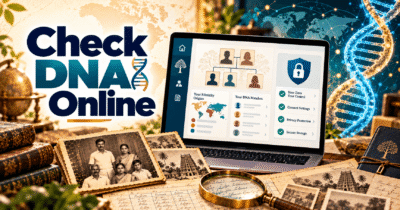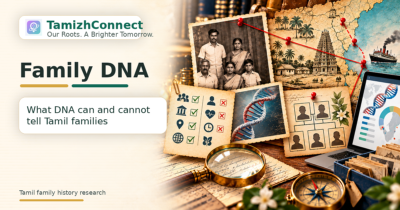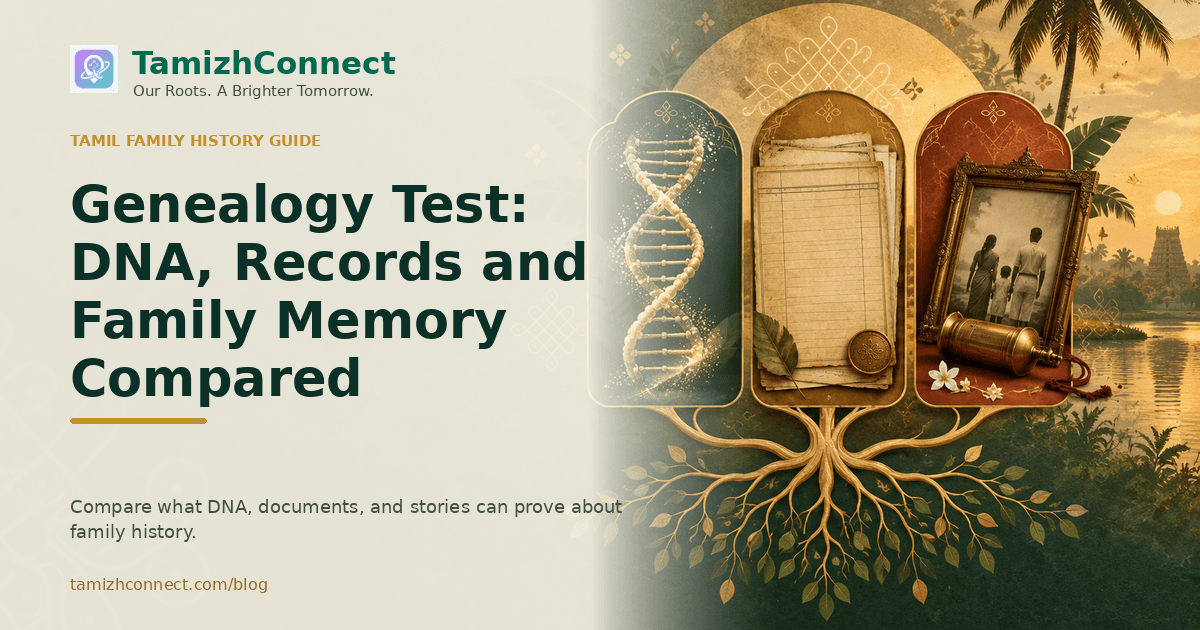
Searches for genealogy test often come from people hoping DNA will answer every ancestry question. DNA can be helpful, but for Tamil genealogy it is usually strongest when combined with documents, native villages, family memory and migration records.
What DNA can help with
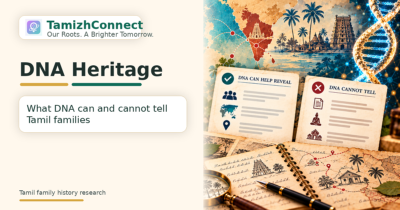
DNA can suggest broad ancestry, confirm biological relationships in some cases, and identify possible cousin matches. It can be useful when paper records are missing or when migration has separated branches of a family.
What DNA cannot do alone
DNA usually cannot name your exact Tamil Nadu village, identify your Kula Deivam, or tell you which ancestor left on a particular ship. Those answers usually require documents, oral history and record comparison.
Best method
Use DNA as one layer of evidence, not the whole answer. A stronger genealogy method combines:
- family-tree structure
- elder interviews
- native village clues
- migration or indenture records
- voter, land or civil records
- DNA matches where appropriate
Tamil genealogy caution
For South Asian families, DNA ethnicity percentages can be broad and sometimes vague. They may confirm regional ancestry, but they rarely replace the work of tracing names, places and relationships.
Privacy matters
DNA data is sensitive. Before uploading DNA or sharing match details, read the privacy settings carefully. Do not upload another person’s DNA information without proper consent.
TamizhConnect tip
Start with documents and family memory first. Use DNA only as a supporting clue when it helps answer a specific relationship question.
Where to go next
- Tamil Ancestry: A Complete Guide — the master research method for Tamil family history.
- Tamil Nadu voter search — 50 million+ current voters indexed by village and district.
- Indenture registers — for South African, Fijian, Mauritian and Malayan diaspora branches.