Sri Lankan Tamils are genetically distinct from mainland Tamil Nadu Tamils: population genetic studies find them carrying a higher proportion of ASI-type ancestry (~60–65% vs ~55% in mainland Tamils), lower West Eurasian input, and detectable Sri Lankan-specific founder effects from roughly 2,000 years of island isolation. The two groups share a common Dravidian-speaking ancestor population but diverged genetically after initial Tamil migration to Sri Lanka (documented from trade contacts c. 300 BCE onwards). A third group — Up-Country/Estate Tamils, descendants of 19th-century plantation labourers recruited from Tamil Nadu — clusters closer to mainland Tamils genetically because their migration was comparatively recent. Conflating the three groups is the most common Sri Lankan Tamil ancestry error.
The Deep Roots: Early Migrations to Sri Lanka
Sri Lanka, an island strategically positioned in the Indian Ocean, has been a crossroads for human migration for tens of thousands of years. Archaeological evidence suggests the arrival of anatomically modern humans as early as 125,000 years ago. However, the genetic story relevant to present-day populations largely begins with migrations from the Indian subcontinent. The earliest significant migrations that contributed to the foundational gene pool of both Sinhalese and Tamil populations on the island are believed to have occurred during the Neolithic period, bringing agricultural practices and new genetic lineages. These early settlers would have formed the bedrock upon which subsequent layers of genetic influence were laid.
Genetic studies often identify an ‘Ancestral South Indian’ (ASI) component, which is prevalent across most South Indian populations, including Tamils. This component reflects deep, ancient lineages within the Indian subcontinent. For Sri Lankan Tamils, this ASI component is a significant part of their genetic makeup, underscoring their shared heritage with mainland South Indian Tamils. However, the proportions and specific sub-lineages can vary, hinting at different migration waves and subsequent genetic drift or founder effects.
Distinguishing Sri Lankan Tamils: A Unique Blend
One of the most intriguing aspects of Sri Lankan Tamil genetics is the presence of ancestral components that differentiate them from many mainland Indian Tamil populations. While a strong South Indian genetic signature is undeniable, studies have also pointed to other influences. For instance, research has indicated a detectable, albeit minor, genetic contribution from groups associated with North India and, more broadly, West Eurasian populations. This West Eurasian component is often linked to the ‘Ancestral North Indian’ (ANI) lineage, which is more prevalent in North Indian populations and is thought to be associated with later migrations, potentially including those of Indo-Aryan speakers.
What accounts for this unique blend? The island’s history provides some clues. Sri Lanka has long been a hub for maritime trade, connecting South India, Southeast Asia, the Middle East, and even East Africa. This extensive trade network facilitated not only the exchange of goods and ideas but also people. Sailors, merchants, and even small communities from various regions would have settled on the island over centuries, contributing their genetic signatures to the local gene pool. While the primary genetic input remains South Indian, these additional components, even if small, contribute to the distinctiveness observed in Sri Lankan Tamil genetic profiles.
Comparing with Other Tamil Populations
When comparing Sri Lankan Tamils to Tamils in mainland India, genetic studies generally show a close relationship, as expected due to shared linguistic and cultural heritage. However, subtle differences emerge. For example, some studies suggest that Sri Lankan Tamils might exhibit slightly lower levels of certain South Indian-specific genetic markers compared to some mainland Tamil groups, while showing a slightly higher proportion of certain other components, including those with more distant North Indian or West Eurasian affinities. These differences are not dramatic but are significant enough to point towards distinct historical trajectories and population movements.
It’s also important to distinguish between different groups of Tamils within Sri Lanka. The ‘Jaffna Tamils’ or ‘Sri Lankan Tamils’ (often referring to those with long-standing roots on the island) show a different genetic profile than the ‘Indian Origin Tamils’ or ‘Up-Country Tamils,’ whose ancestors were brought to Sri Lanka by the British in the 19th century as indentured laborers for tea plantations. The latter group, having arrived more recently and often maintaining a degree of endogamy, tends to more closely resemble specific South Indian populations from which they originated.
The Limits and Nuances of Genetic Ancestry
While genetic studies offer powerful insights, it’s crucial to understand their limitations. Genetic ancestry tests don’t tell us about ‘ethnicity’ in a cultural or linguistic sense, which are complex social constructs. Instead, they trace ancestral origins to broad geographical regions and ancient population groups based on shared genetic markers. The percentages provided by commercial ancestry tests are statistical estimates and can vary between companies and over time as reference databases improve.
Furthermore, the historical narratives derived from genetic data are inferences, often needing to be corroborated with archaeological, linguistic, and historical evidence. The picture is rarely simple, and human populations are continuously mixing and evolving. The ‘Ancestral South Indian’ and ‘Ancestral North Indian’ labels, for instance, are broad categories representing ancient, diverse groups rather than single, homogenous populations.
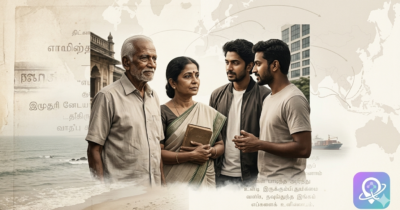
The genetic story of Sri Lankan Tamils is a testament to the island’s vibrant history as a melting pot of cultures and peoples. It highlights a deep connection to the South Indian mainland, yet also reveals unique influences from broader historical migrations and trade networks. This intricate genetic tapestry underscores that identity is a multifaceted concept, woven from threads of shared language, culture, history, and a distinct ancestral legacy.