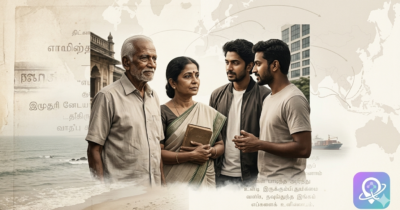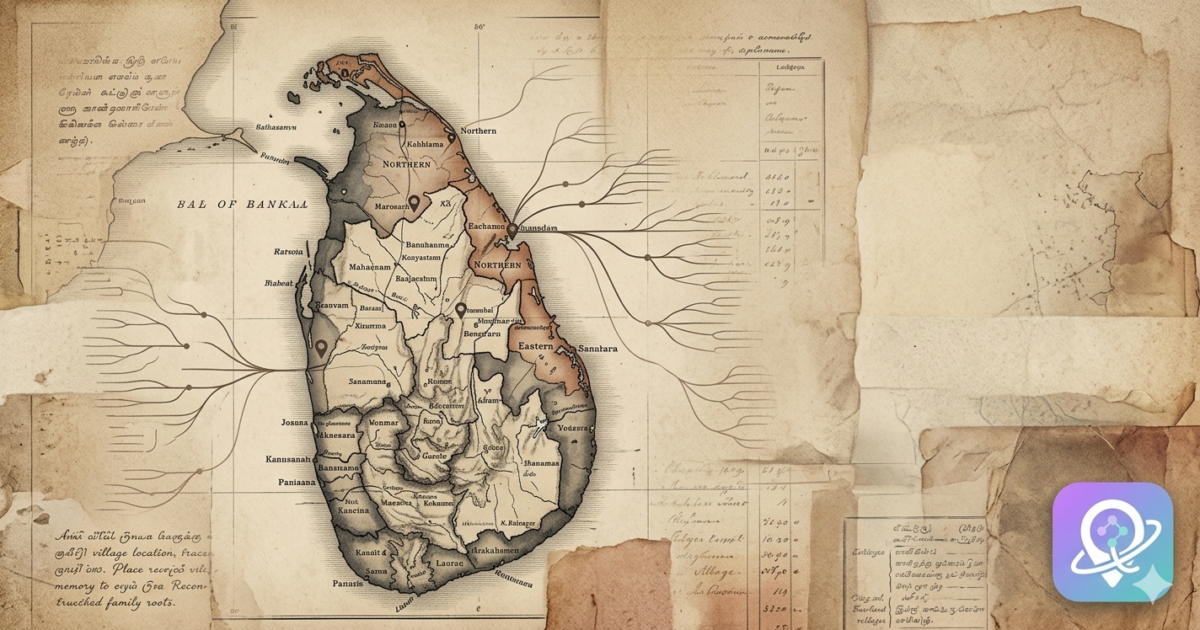
Sri Lankan Tamil ancestry splits into two legally and historically distinct streams: Elam Tamils (native to the Northern and Eastern provinces since at least 300 BCE; pre-colonial land records in Dutch Thombus and British registers), and Up-Country / Indian Origin Tamils (descendants of 1830s–1930s plantation-labour migration from Madras Presidency, often with 19th-century British estate records). These two groups have different record trails, citizenship histories (Up-Country Tamils had stateless status between 1948 and 1988), and migration patterns — Elam Tamils scattered to the UK/Canada/Germany during the 1983–2009 war; Up-Country Tamils mostly remained on tea estates or returned to India. Which stream your family belongs to determines where to look first.
While the island’s long history means deep roots for many, the nature of available records often dictates the depth and direction of research. This guide explores the challenges and offers practical starting points for uncovering your family’s story, whether your ancestors arrived centuries ago or in more recent waves of migration.
Understanding the Two Main Groups
Broadly, Sri Lankan Tamils are categorized into two main groups, each with distinct origins and genealogical pathways. Elam Tamils, often referred to as Ceylon Tamils or Jaffna Tamils, are descendants of Tamil-speaking peoples who have inhabited the northern and eastern parts of the island for millennia. Their history is intertwined with ancient kingdoms, trade routes, and successive waves of migration from South India, predating colonial rule. For Elam Tamils, genealogical research often involves sifting through temple records, land deeds, and colonial administrative documents that can sometimes stretch back several generations, though consistency varies.
Up-Country Tamils, also known as Indian Origin Tamils or Estate Tamils, are descendants of laborers brought by the British colonial government from South India, primarily between the 1820s and 1930s, to work on coffee, tea, and rubber plantations in the central highlands. Their history is more recent and often better documented in specific colonial labor records, though these records prioritize administrative function over detailed family lineage. Understanding this fundamental distinction is crucial, as the types of records relevant to each group differ significantly.
Starting Your Research: Oral Histories and Family Documents
Before delving into archives, the most valuable first step for any Sri Lankan Tamil ancestry project is to gather oral histories from elder family members. Ask about names, birthplaces (even general regions or villages), occupations, and significant life events. Crucially, inquire about kula deivam (family deity) and associated temples, as this can be a powerful anchor for Elam Tamil research. For Up-Country Tamils, ask about the specific plantation or estate their ancestors worked on, the district in India they came from (if known), and any family stories about the journey.
Simultaneously, collect and organize all existing family documents: birth, marriage, and death certificates; old letters; photographs (which might have dates or names on the back); land deeds; school records; and even old passports or ration books. These personal records often contain vital clues, such as full names, dates, places of residence, and parents’ names, which are essential for navigating official archives.
Records for Elam Tamils
For Elam Tamils, research can be challenging due to historical disruptions, including conflict and natural disasters, which have led to record loss. However, several categories of records may prove useful:
- Temple Records (கோயில் பதிவேடுகள்): Many ancient Hindu temples in the North and East maintained records of donations, rituals, and sometimes even family lineages associated with specific rites or hereditary positions. Accessing these requires local contact and often a deep understanding of temple administration.
- Land Deeds and Cadastral Records: Colonial and post-colonial land records can trace property ownership through generations. These are typically held at District Land Registries (காணிப் பதிவகம்) and can establish familial connections to specific geographical locations.
- Church Records: For Christian Tamils, church registers of baptisms, marriages, and burials are often well-preserved and can be an excellent source of genealogical information, sometimes dating back to the Portuguese and Dutch colonial periods.
- Colonial Administrative Records: Records from the British colonial administration, such as census fragments, court documents, and administrative reports, occasionally list Tamil individuals and families. These are often housed at the National Archives of Sri Lanka in Colombo.
- Nallur Kandaswamy Temple Archives: This prominent temple in Jaffna has historically been a significant cultural and religious center. While not a public genealogical resource, its historical records might contain mentions of prominent families or patrons.
Records for Up-Country Tamils
Up-Country Tamil ancestry research benefits from the more structured, albeit often impersonal, nature of colonial labor records:
- Immigration Passes (Kanganies’ Books): The most crucial records are the registers maintained by the kanganies (labor recruiters) and estate managers. These often list the name of the laborer, their village of origin in India (sometimes just the district), their father’s name, and the name of the estate they were indentured to. While many are lost, some have been digitized or are held in private estate archives or the National Archives.
- Estate Records: Individual tea and rubber estates kept various administrative records, including payrolls, birth and death registers (for those born on the estate), and medical records. Accessing these can be difficult, as many are still privately held or poorly preserved.
- National Archives of Sri Lanka: The National Archives hold significant collections related to Indian indentured labor, including some immigration registers, government reports on plantation conditions, and correspondence that might mention specific estates or groups of laborers.
- Indian Emigration Records: For those who know their ancestral district in India, exploring emigration records at regional archives in Tamil Nadu (e.g., Chennai, Trichy) might yield details about their departure. However, these are often incomplete or difficult to cross-reference without specific names and dates.
- Birth, Marriage, and Death Certificates: Post-independence civil registration records for Up-Country Tamils will be available through the Registrar General’s Department, provided you have enough identifying information.
Challenges and Future Directions
Both groups face unique challenges. For Elam Tamils, the Sri Lankan Civil War led to significant displacement and destruction of records, making local research in former conflict zones particularly difficult. For Up-Country Tamils, the colonial system often recorded laborers impersonally, sometimes even assigning new names, making it hard to trace back to specific Indian villages. The lack of robust, centralized, and digitized genealogical databases for either group remains a significant hurdle.
Despite these difficulties, the growing interest in heritage and the increasing availability of digital resources offer new hope. Initiatives by community organizations, universities, and archives (both in Sri Lanka and among the diaspora) are slowly making more records accessible. Connecting with online forums, diaspora groups, and local historical societies can provide invaluable guidance and shared knowledge. Patience, persistence, and a willingness to explore various types of records, both official and unofficial, are key to unlocking your Sri Lankan Tamil ancestral story.