TamizhConnect Blog
22 Jan 2026 · TamizhConnect
Tracing Tamil Ancestry in Sri Lanka's Complex Tapestry
Tamil genealogy article
Uncover the unique challenges and opportunities for tracing Tamil ancestry in Sri Lanka, navigating historical records, conflict impacts, and community resources.
Document Digitisation
Turn documents into verified Tamil lineage.
Choose the depth you need. One-time service, results stay in your account.
Tracing Tamil ancestry in Sri Lanka requires navigating a complex interplay of colonial administration, civil conflict, and a deeply interwoven cultural heritage. Unlike some other diaspora contexts, the island's long history means that ancestral research often involves piecing together information from diverse and sometimes fragmented sources, demanding both persistence and a nuanced understanding of the island's past. This post will explore the types of records available, the impact of historical events on their preservation, and strategies for uncovering your Sri Lankan Tamil roots.
The Colonial Legacy and Early Records
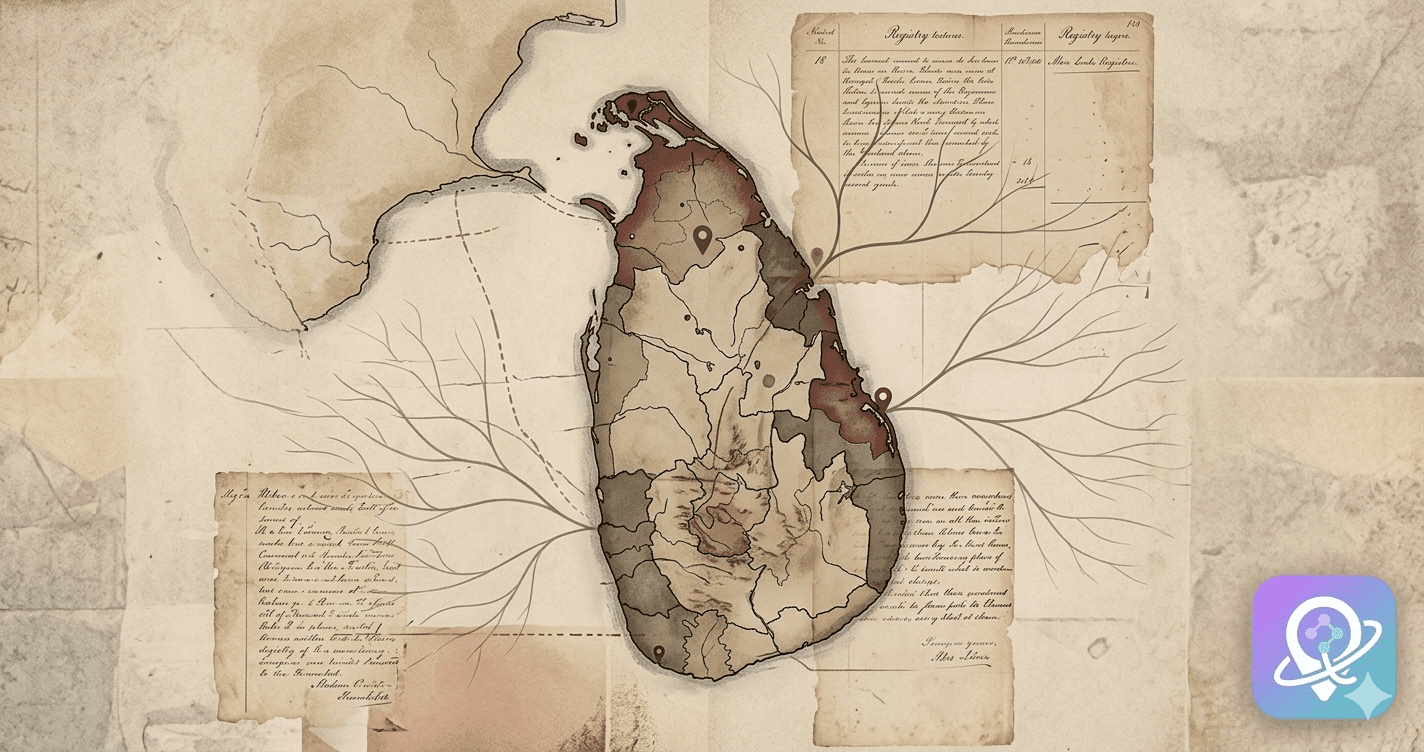
Sri Lanka, formerly Ceylon, experienced successive periods of European colonial rule, first by the Portuguese, then the Dutch, and finally the British. Each administration left its own imprint on record-keeping, which can be invaluable for genealogical research. The Dutch period (1658-1796) is particularly significant for its meticulously kept Thombo registers. These registers, essentially land and population surveys, often listed heads of households, their families, and property, categorizing people by ethnicity (including 'Malabar' for Tamils). While not exhaustive, many Thombo records have been digitized or are available in archives in Colombo and The Hague, offering a window into 17th and 18th-century family structures, especially in the coastal areas and Jaffna Peninsula.
The British colonial era (1796-1948) saw the introduction of more systematic civil registration, including birth, marriage, and death certificates. However, the completeness and accessibility of these records vary significantly by region and time period. Early records might be less detailed, and their survival depended on local administrative practices and subsequent events. For those with ancestors involved in public service, land ownership, or specific professions, additional records such as land deeds, court documents, and government gazettes can provide crucial details. Church records, particularly those of Catholic and Protestant missions, also offer valuable baptism, marriage, and burial information for converts or families residing near mission centers.
Impact of Conflict and Displacement
One of the most significant challenges in tracing Sri Lankan Tamil ancestry is the profound impact of the country's civil conflict (1983-2009). Decades of war led to widespread displacement, destruction of infrastructure, and the loss or inaccessibility of vital records in the Northern and Eastern provinces, which are predominantly Tamil. Many families were forced to flee their homes, often leaving behind personal documents and community records. Government administrative offices and local temples, which historically kept records, were sometimes damaged or their contents scattered.
This means that for recent generations, oral histories and personal family documents become even more critical. Interviews with elder family members, examination of old photographs, letters, and property documents held within the family can bridge gaps where official records are missing. Understanding migration patterns within Sri Lanka, such as movements from rural to urban areas or between districts due to economic opportunities or conflict, is also essential. Researchers must be prepared for gaps and rely on a combination of official, religious, and personal sources.
Community Resources and Cultural Intersections
Beyond official archives, community-based resources and cultural institutions play a vital role. Local temples (kovils), especially those with long histories, sometimes maintain records of endowments, family contributions, or even marriage ceremonies. Genealogical societies or cultural organizations within the Tamil diaspora (e.g., in Canada, UK, Australia) can also be valuable, as many have initiated projects to document family histories and collect oral testimonies from first-generation migrants. Online forums and social media groups dedicated to Sri Lankan genealogy also offer platforms for connecting with distant relatives and sharing research tips.
It's also important to acknowledge the shared cultural heritage between Sinhalese and Tamils, particularly in certain regions. Centuries of interaction have led to linguistic borrowings, shared customs, and even intermarriages, though often not explicitly documented as such in official records. This shared history means that some cultural practices or traditional naming conventions might offer subtle clues, but it also necessitates careful verification to distinguish between distinct ethnic lines when records are ambiguous. Understanding the historical context of a specific village or region, including its dominant ethnic composition over time, can help interpret ambiguous entries in older documents.
Strategies for Success
Begin your research by documenting everything you know, starting with the most recent generations and working backward. Collect birth, marriage, and death dates, places of residence, and names of parents and grandparents. Prioritize interviewing elder family members to gather oral histories, noting down names, relationships, and any stories or traditions associated with specific ancestors or places. Once you have a foundational understanding, you can then target specific archives or record sets. For records in Sri Lanka, engaging with local researchers or professional genealogists can be immensely helpful, especially given potential language barriers (Tamil, Sinhala, English) and the need for on-the-ground access to local archives. Patience and persistence are key, as is a respectful approach to the complex historical narratives that have shaped Sri Lanka's communities.
Share this article
TamizhConnect
TamizhConnect helps Tamil families worldwide trace their ancestry using voter records, indenture archives, and origin village matching. Our research team combines genealogy expertise with digitised Tamil Nadu datasets to help you discover your roots.
Ready to start your Tamil family tree?
TamizhConnect helps you discover relatives, trace your origin village, and keep your family history alive for the next generation.
Create your free TamizhConnect accountGo to my family treeDocument Digitisation
Have old documents? Upload them and we'll verify, trace, and add them to your tree.
Was this article helpful?
Get new articles in your inbox
Tamil genealogy tips, research guides, and new feature updates.
You might also like
Tracing Tamil Ancestry in Sri Lanka's Complex Tapestry (English)
Uncover the unique challenges and surprising opportunities for researching Tamil family history in Sri Lanka, navigating centuries of records and recent conflicts.
18 Mar 2026
Crafting Your Tamil Family History: Narrative Paths to Explore (English)
Uncover various narrative structures for your Tamil family history, from chronological journeys to thematic explorations, and find the perfect fit for your unique story.
27 Feb 2026
Tracing Your Tamil Ancestry: A Beginner's Guide (English)
Embark on a journey to uncover your Tamil roots. This guide provides a starting point for genealogical research, addressing common challenges and relevant records for those in Tamil Nadu and the diaspora.
09 Apr 2026
Tracing Your Lineage: What Genealogy Means in Tamil Culture (English)
Genealogy, or 'வம்சாவளி' (vamsāvaḷi) in Tamil, is the study of family history and ancestral lines, deeply rooted in Tamil cultural identity.
25 Mar 2026
தமிழ் மூதாதையர் ஆய்வு நூலகம் (Tamil)
TamizhConnect-க்கு தேவையான தமிழ் வம்சாவளி முறைகள், பதிவுகள், இனவியல் மற்றும் பாரம்பரியச் சரிபார்ப்புக்கான அனைத்து ஆழமான வழிகாட்டிகளும் ஒரே இடத்தில்.
03T19:44:08.008Z Sep 2026
Tamil ancestry research: Complete guide for genealogical methods (English)
All our deep-dive guides on Tamil genealogical methods, records, ethnography, and heritage validation for TamizhConnect.
03T19:44:08.007Z Sep 2026
Related by topic
Tracing Sri Lankan Tamil Ancestry: Records and Resources (English)
Uncover your Sri Lankan Tamil roots with this guide to historical records and resources, addressing the unique challenges and opportunities for both Elam and Up-Country Tamil lineages.
10 Mar 2026
Tracing Brahmin Ancestry Between Tamil Nadu and Sri Lanka (English)
Explore the historical ties and migratory patterns of Brahmin communities connecting Tamil Nadu and Sri Lanka, and learn how to trace this unique heritage.
3 Feb 2026
More from TamizhConnect
Tamil Elder Interview Kit: Ready-to-Use Questions & Prompts (English)
A ready-to-copy interview kit for capturing Tamil family history from elders — grouped by topic, sequenced from easy to sensitive, with recording tips and follow-ups that unlock the stories behind the names.
21 Aug 2026
The Tamils of Dharavi: A Hundred Years from Tirunelveli to Mumbai (English)
From the droughts of Tirunelveli to the tanneries and textile mills of Mumbai, the Tamil community of Dharavi has built one of the largest Tamil cities outside Tamil Nadu. With redevelopment underway, here's how families can preserve their migration story for the next generation.
15 May 2026
Core topics
What is Tamil, really? Language, identity, and where it comes from
A clear, human explanation of what Tamil is-language, identity, people, and history-plus how to talk about it without stereotypes.
4 Feb 2026
What Defines Tamil Identity Beyond Borders and Sub-Groups? (English)
Tamil identity is primarily defined by shared language and cultural heritage, rather than by geographic borders or internal sub-group affiliations. This core identity persists across the diaspora and within Tamil Nadu.
17 Apr 2026
Continue reading
Tracing Roots: The Enduring Legacy of Ancient Tamil Kingdoms (English)
21 Jan 2026
Batticaloa – Lagoon, border violence and shared Tamil-Muslim memory: A complete guide to tracing your roots (English)
13 Jan 2026
மட்டக்களப்பு – ஏரி, எல்லை வன்முறை மற்றும் பகிரப்பட்ட தமிழ்-முஸ்லிம் நினைவு: உங்கள் மூதாதையரைக் கண்டறிவதற்கான முழுமையான வழிகாட்டி (Tamil)
13 Jan 2026
கொடிவழி / குடும்ப மரம் (kodivazhi Maram) – தமிழ்நாடு உறவுப் பெயர்கள் + Family Tree எழுதும் practical format (Tamil)
28 Dec 2025