Tamil identity is a composite of three separable things: genetic ancestry (the ANI/ASI ratios inherited from ancestors), linguistic heritage (Tamil as native or fluently spoken language — distinct from Tamil-speaking ability alone), and cultural identity (ritual practices, kula deivam, community recognition). Any one of these can be present without the others. A Tamil-speaking descendant of 20th-century Telugu migrants to Chennai may be genetically Telugu but culturally Tamil; a second-generation Sri Lankan Tamil in London may be linguistically lapsed but culturally anchored by temple affiliation; a Malaysian-born person with documented Tamil estate-worker ancestry may have neither the language nor active ritual observance. Most conversations about "Tamil ancestry" assume all three map together. They don’t — and that’s why the question often has a more complicated answer than the asker expects.
The Genetic Landscape: A Shared Indian Tapestry
When we talk about genetic ancestry, we’re delving into the biological markers passed down through generations – the DNA that tells a story of migrations, ancient admixtures, and population movements over millennia. Modern genetic studies, while often complex and nuanced, generally indicate a broad genetic continuity across the Indian subcontinent. This means that, at a foundational level, the genetic components found in various communities within Tamil Nadu often share significant overlaps with populations in other parts of India.
For instance, research often points to ancient migrations, such as the movement of early agriculturalists and later Indo-Aryan speakers, contributing to the genetic makeup of diverse groups across India, including those in Tamil Nadu. The specific proportions and timings of these contributions can vary, leading to subtle genetic differences between communities. However, the idea of a completely distinct, isolated ‘Tamil gene’ that exists independently of the broader Indian genetic landscape isn’t supported by current scientific understanding. Instead, it’s more accurate to view Tamil genetic ancestry as a unique thread woven into the larger, intricate tapestry of South Asian genetics, shaped by thousands of years of human interaction within the subcontinent.
Culture and Language: The Pillars of Tamil Identity
If genetic ancestry paints a picture of biological origins, then cultural and linguistic identity illuminate the lived experience, the shared heritage of generations. Tamil identity, first and foremost, is deeply rooted in the Tamil language – one of the world’s longest-surviving classical languages with a literary tradition spanning over two millennia. This language is not merely a tool for communication; it is a repository of history, philosophy, poetry, and a unique worldview.
Beyond language, Tamil culture encompasses a vast array of traditions: distinct art forms like Bharatanatyam and Carnatic music, architectural marvels, culinary practices, religious beliefs (both indigenous and adopted), social customs, and a profound sense of historical continuity. These cultural markers are learned, adopted, and transmitted through social interaction, family upbringing, and community engagement. They are not inherited through DNA but through immersion and participation. A person can be genetically diverse yet culturally and linguistically deeply Tamil, having grown up speaking the language, celebrating its festivals, and identifying with its rich heritage.
Divergence and Convergence: Exploring the Nuances
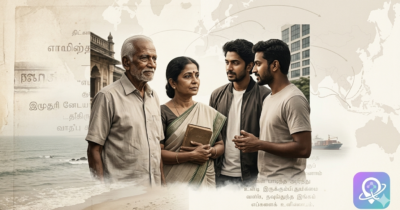
The fascinating aspect of Tamil identity lies in how these genetic and cultural threads intertwine, sometimes seamlessly, sometimes with noticeable divergence. Consider the Tamil diaspora: communities that have lived for generations in Malaysia, Singapore, Sri Lanka, Fiji, or South Africa. Genetically, they carry ancestral markers that reflect their origins in Tamil Nadu, but also potentially admixtures from their host countries over time. Culturally, while they fiercely preserve their Tamil language and traditions, their practices have often evolved, incorporating local influences and creating unique diasporic Tamil identities. Their ‘Tamilness’ is undeniably strong, forged through cultural preservation and linguistic continuity, even as their genetic profiles might show subtle shifts.
Conversely, within Tamil Nadu itself, various communities, including some Brahmin groups, might exhibit genetic markers that show a greater affinity to populations in other parts of India, perhaps reflecting ancient migration patterns. However, these communities have been an integral part of Tamil society for centuries, speaking Tamil as their mother tongue, contributing significantly to Tamil literature, philosophy, and art, and participating fully in Tamil cultural life. To deny their ‘Tamil ancestry’ based solely on perceived genetic differences would be to ignore centuries of shared history, linguistic immersion, and cultural contribution. Their identity is profoundly Tamil, shaped by their deep engagement with the language and culture of the land.
Beyond Simple Categories
The discussion around Tamil ancestry, therefore, requires us to move beyond simplistic notions of ‘pure’ genetic lineages. It challenges us to embrace a more holistic understanding where genetic heritage provides insights into ancient population movements, while cultural and linguistic heritage define the living, breathing identity of a people. Both are crucial, but they answer different questions.
Ultimately, being Tamil is not solely about a specific genetic signature, but about a vibrant, living connection to a language, a history, and a rich cultural tapestry. It’s about the stories we tell, the songs we sing, the food we share, and the collective memory we uphold. In this light, Tamil identity is a testament to the enduring power of culture and language to shape who we are, regardless of the ancient genetic currents that flowed through our ancestors.