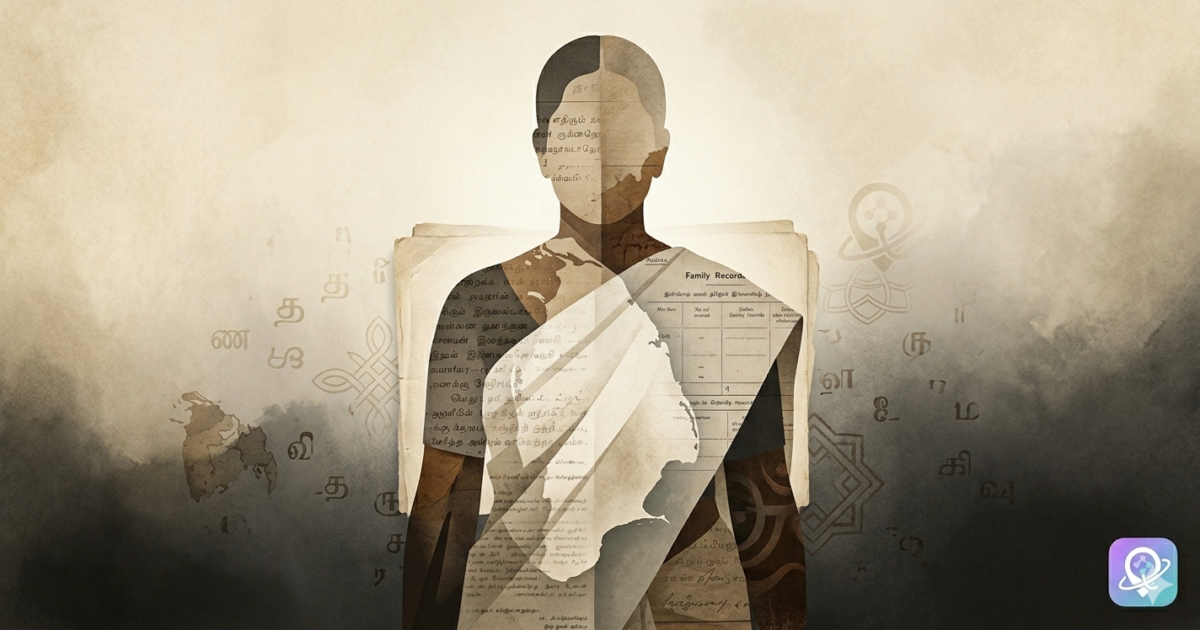
Tamil identity is a complex, multifaceted construct encompassing ethnicity, language, and religious affiliation, which are interconnected but fundamentally distinct. While these elements often appear inseparable, particularly in cultural expressions and diaspora communities, understanding their individual roles is crucial for appreciating the depth of Tamil heritage. This post will explore the nuances of these components, drawing particular insight from the experiences of Tamils in Mauritius, where unique cultural adaptations have sometimes led to conflations.
The Bedrock of Tamil Ethnicity
At its core, Tamil identity is an ethnic one, rooted in shared ancestry, history, and a common cultural heritage that predates modern nation-states and organized religions. The Tamil people are an ethnolinguistic group native to the Indian subcontinent, primarily inhabiting the Indian state of Tamil Nadu and the northeastern region of Sri Lanka. This ethnic identity is passed down through generations, irrespective of an individual’s proficiency in the Tamil language or their religious beliefs. For centuries, Tamils have migrated globally, establishing communities that retain their ethnic identity even as they adopt new languages and religious practices. In places like Mauritius, descendants of indentured laborers from Tamil Nadu still identify as Tamil, even if their first language is now Mauritian Creole and their religious observances have evolved.
Tamil as a Language, Not a Religion
Tamil is one of the world’s longest-surviving classical languages, with a literary tradition spanning over two millennia. It is a Dravidian language, distinct from the Indo-Aryan languages of northern India, and holds official language status in India, Sri Lanka, and Singapore. The language is a powerful symbol of Tamil identity, often serving as a cultural glue that binds communities together. It is through Tamil literature, poetry, and song that much of Tamil heritage, philosophy, and historical narratives are preserved and transmitted. However, despite its profound cultural significance, Tamil is a language, a medium of communication and artistic expression, not a religion. The idea that "Tamil is a religion" or that "Murugan is the Tamil god" is a simplification that arises from the deep intertwining of language and religious expression within Tamil culture. Many Hindu deities, including Murugan (Kartikeya), are revered in Tamil-speaking regions, and their worship is often expressed through Tamil hymns and rituals, but this does not make the language itself a faith.
Religious Diversity Among Tamils
While the majority of Tamils globally are adherents of Hinduism, particularly various forms of Shaivism and Vaishnavism, Tamil people also practice a diverse array of other religions. Significant populations of Tamils are Christians (both Catholic and various Protestant denominations), Muslims (Sunni and Shia), Jains, and even a small number of Buddhists. This religious diversity underscores that faith is a distinct component of identity, separate from ethnicity or language. For example, a Tamil Christian in Chennai shares an ethnic and linguistic heritage with a Tamil Hindu, but their religious doctrines and practices differ. Similarly, in the diaspora, such as in Malaysia or Singapore, one finds Tamil Muslims and Tamil Christians who maintain their ethnic and linguistic ties while practicing their respective faiths. The cultural expressions of these religions often incorporate Tamil language and customs, demonstrating the permeable boundaries between these aspects of identity.
The Mauritian Context: A Unique Blend
In Mauritius, the historical context of indentured labor and subsequent cultural evolution has led to a particularly interesting dynamic regarding Tamil identity. The early migrants brought their language, customs, and religious practices from Tamil Nadu. Over generations, the necessity of adapting to a new multicultural environment, coupled with limited contact with the ancestral homeland, led to certain cultural shifts. While many Mauritian Tamils have maintained their adherence to Hinduism, their practice has often integrated elements unique to the island. The enthusiastic celebration of festivals like Cavadee, dedicated to Murugan, is a prominent feature of Mauritian Tamil culture, often celebrated with a fervor that might lead some to perceive Murugan as the Tamil god, or Tamil as the religion. This perception arises from the strong cultural expression of religious devotion through Tamil traditions, rather than a theological claim about the language itself being a faith. The community’s efforts to preserve Tamil language and culture often take place within religious institutions, further blurring the lines for some.
Navigating Identity in the Diaspora
For diaspora communities worldwide, navigating the distinct yet intertwined aspects of Tamil identity is an ongoing process. Maintaining the Tamil language can be challenging in environments where English, French, or other languages are dominant. Similarly, religious practices may adapt to local customs or integrate with broader Hindu or Christian traditions. However, the underlying ethnic identity often remains a strong anchor, fostering a sense of belonging and shared heritage. Understanding that one can be ethnically Tamil, speak another language, and practice a non-Hindu faith, or conversely, be a non-Tamil who speaks Tamil and practices Hinduism, is key to appreciating the richness and adaptability of this ancient culture. It allows for a more inclusive and accurate understanding of what it means to be Tamil in the 21st century.
Ultimately, Tamil identity is a dynamic interplay of heritage, language, and belief. While these elements frequently coalesce into a vibrant cultural expression, recognizing their individual nature is essential. This distinction not only honors the diversity within the Tamil community but also provides clarity for those seeking to understand their roots in a globalized world.