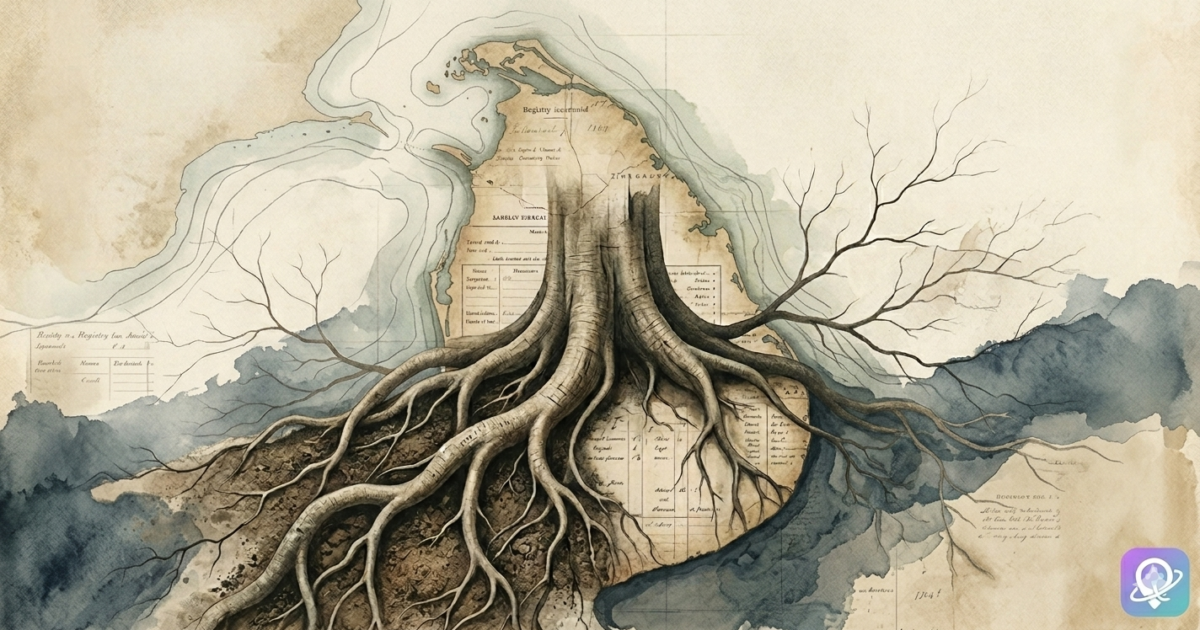
Population genetic studies consistently find Sri Lankan Tamils and Sinhalese sharing a significant proportion of their genetic ancestry — far more than either shares with mainland South Indian or North Indian populations — reflecting roughly 2,500 years of coexistence, intermarriage, and common indigenous ancestry on the island of Sri Lanka. This shared substrate sits beneath distinct cultural and linguistic identities that diverged through separate language traditions (Tamil vs. Sinhala, a Sanskrit-influenced Indo-Aryan language), religious affiliations, and post-colonial political histories. The genetic data challenges the popular framing of the two communities as fundamentally separate "racial" groups; the real distinction is linguistic and cultural, layered on a mostly shared genetic past.
Unpacking the Genetic Landscape of Sri Lanka
The island of Sri Lanka, due to its strategic location at the crossroads of ancient maritime trade routes, has been a melting pot of populations for millennia. Archaeological evidence points to human habitation dating back over 125,000 years, with modern human presence firmly established by at least 37,000 years ago. The indigenous Vedda people, often considered the aboriginal inhabitants, carry some of the oldest genetic markers on the island, and their genetic signatures are found, to varying degrees, in both the Sinhalese and Sri Lankan Tamil populations, indicating ancient admixtures. This foundational layer of ancestry forms a crucial part of the genetic story for all communities on the island.
Early genetic research, particularly studies focusing on mitochondrial DNA (mtDNA) and Y-chromosomal DNA, which trace maternal and paternal lineages respectively, began to paint a nuanced picture. These studies often revealed a higher degree of genetic similarity between Sri Lankan Tamils and Sinhalese than between Sri Lankan Tamils and certain groups of Indian Tamils, particularly those from North India. However, it is crucial to note that “Indian Tamils” itself is a broad category, encompassing diverse groups within Tamil Nadu, whose own genetic profiles show regional variations. More recent, high-resolution genomic studies, analyzing hundreds of thousands of genetic markers across the entire genome, have further refined these understandings, confirming the shared ancient genetic substratum while also identifying unique markers that reflect distinct historical trajectories.
Shared Ancestry with the Sinhalese
The genetic affinity between Sri Lankan Tamils and Sinhalese is a recurring theme in population genetics research. Multiple studies have demonstrated that both groups share a substantial proportion of common ancestry, suggesting that a significant part of their genetic makeup originates from early settlers on the island. This shared genetic heritage likely stems from the initial peopling of Sri Lanka and subsequent gene flow over thousands of years, long before the linguistic and cultural divergence into distinct Sinhalese and Tamil identities became prominent. It is a testament to the fact that cultural and linguistic boundaries do not always perfectly align with genetic ones, especially when viewed through the lens of deep time.
For instance, certain haplogroups common in both populations, such as specific branches of mtDNA haplogroup M and Y-DNA haplogroup R1a, point to ancient migrations into the Indian subcontinent and subsequent dispersal into Sri Lanka. While the Sinhalese language is Indo-Aryan and Tamil is Dravidian, their genetic overlap suggests that the adoption of different languages and the formation of distinct ethno-linguistic identities occurred on a foundation of shared ancestry, possibly through a process of language shift rather than wholesale population replacement. This perspective challenges simplistic narratives of separate origins and highlights the complex, interwoven history of the island’s inhabitants.
Distinctions from Indian Tamils
While Sri Lankan Tamils do share genetic connections with Indian Tamil populations, particularly those from southern India, the degree of relatedness can vary. Studies often show that while there is an undeniable link, Sri Lankan Tamils tend to exhibit certain genetic distinctions from their Indian counterparts. These distinctions can be attributed to several factors:
- Founder Effects and Genetic Drift: The initial migrations from India to Sri Lanka, even if substantial, would have involved a subset of the larger Indian Tamil population. Over centuries, genetic drift—random changes in gene frequencies—could have led to the accumulation of unique genetic signatures in Sri Lankan Tamils, differentiating them from the source population.
- Admixture with Indigenous and Other Island Populations: As discussed, Sri Lankan Tamils, like the Sinhalese, have absorbed genetic contributions from the island’s indigenous Vedda population and potentially other groups that arrived on the island over millennia. This local admixture further distinguishes them from populations in mainland India.
- Isolation by Distance: Despite proximity, the Indian Ocean has historically acted as a partial barrier. While there has been continuous interaction, the degree of gene flow might not have been uniform or as extensive as within mainland South India itself, leading to subtle genetic divergence over time.
It’s important to differentiate between Sri Lankan Tamils (who have lived on the island for centuries or millennia) and the more recent ‘Indian Tamils’ or ‘Up-Country Tamils’ whose ancestors migrated to Sri Lanka in the 19th and early 20th centuries as indentured laborers for tea and rubber plantations. These latter groups, while also ethnically Tamil, generally show a closer genetic affinity to specific populations in Tamil Nadu from which they originated, and less admixture with the ancient island populations compared to the indigenous Sri Lankan Tamils.
The Role of Ancient Migrations and Cultural Identity
The genetic evidence underscores that the history of Sri Lanka is one of continuous interaction, migration, and amalgamation. The genetic landscape reflects layers of human movement: the earliest hunter-gatherers, subsequent arrivals from the Indian subcontinent who brought agricultural practices and eventually the Dravidian and Indo-Aryan languages, and later, influences from various traders and seafarers. Both Sinhalese and Sri Lankan Tamil identities have evolved from this complex tapestry, shaped by language, religion, political developments, and a shared island environment.
Understanding these genetic relationships does not diminish the distinct cultural, linguistic, and historical identities that have formed over centuries. Instead, it provides a deeper, more ancient context for these identities, showing how they have emerged from a backdrop of shared ancestry and continuous interaction on the island. The scientific findings encourage a view of identity that is dynamic and multi-layered, recognizing both deep historical connections and the unique paths that communities have forged for themselves.
In conclusion, the genetic studies illuminate a fascinating aspect of Sri Lankan history: that while Sri Lankan Tamils and Sinhalese have developed distinct cultural and linguistic traditions, their genetic heritage is significantly intertwined, reflecting a shared past on the island. This understanding provides a scientific basis for acknowledging the deep, shared roots of these communities, even as they maintain their unique and cherished identities.