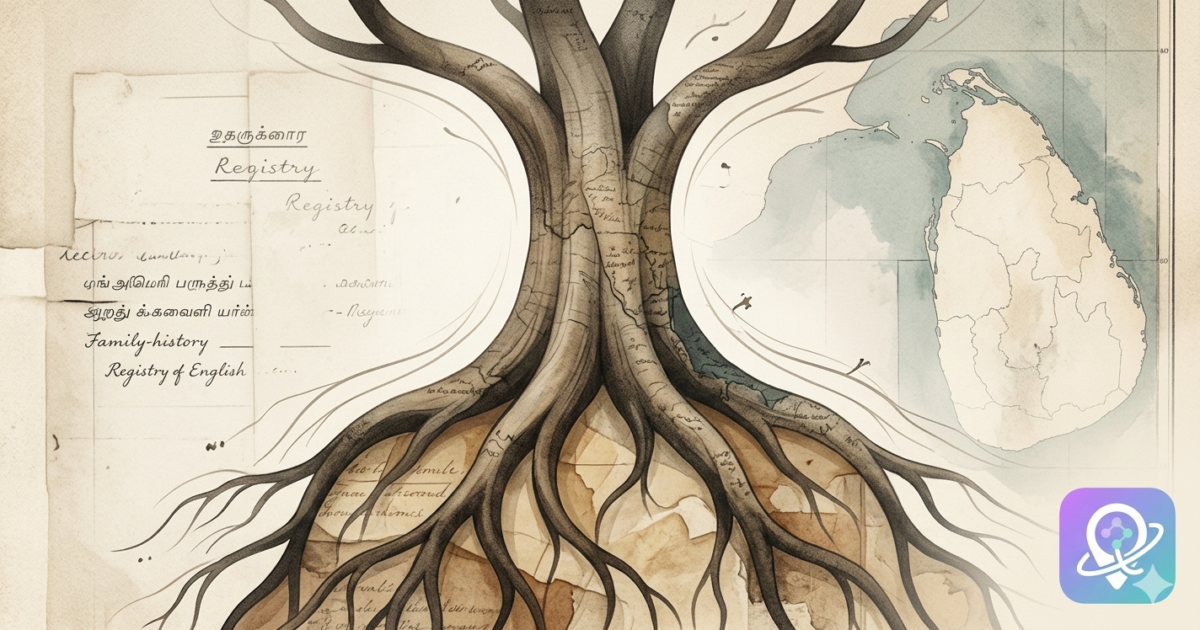
Sri Lankan Tamils share a majority of their genetic ancestry with Sinhalese — reflecting 2,500 years of common habitation on the island — while also retaining clear affinities with South Indian Tamil populations from the Palk Strait region. The real distinction between Sri Lankan Tamils and Sinhalese is linguistic and cultural, not genetic. Both communities descend largely from the same ancient migrations into the island from mainland India, layered on top of indigenous Vedda ancestry. Understanding this challenges the "separate racial origins" framing often used in post-colonial political narratives.
The Genetic Landscape of Sri Lanka
Modern genetic research, particularly studies focusing on mitochondrial DNA (mtDNA) and Y-chromosome markers, offers compelling insights into the peopling of Sri Lanka. These studies consistently reveal that both Sinhalese and Sri Lankan Tamil populations exhibit a substantial genetic contribution from early settlers of the island, who likely arrived from the Indian subcontinent thousands of years ago. A significant finding is the presence of common haplogroups (genetic lineages) found in high frequencies across both major ethnic groups, suggesting a shared deep ancestry that predates the clear linguistic and cultural differentiations observed today. For instance, certain mtDNA haplogroups, indicative of maternal lines, are prevalent in both Sinhalese and Tamils, pointing to common female ancestors.
This shared genetic substratum is not surprising given Sri Lanka’s geographical proximity to India and its history as a major stopping point on ancient maritime trade routes. Subsequent migrations from various parts of India, particularly South India, have further enriched this genetic pool, contributing to the diversity seen today. While there are discernible genetic differences that correlate with ethnic identity, these are often subtle and represent shifts in allele frequencies rather than absolute distinctions, reinforcing the idea of a complex, interwoven history.
Distinguishing Features and Indian Connections
Despite the significant shared heritage within Sri Lanka, genetic studies also highlight the distinct contributions that differentiate Sri Lankan Tamils from their Sinhalese neighbors and connect them to their South Indian counterparts. Y-chromosome studies, which trace paternal lineages, often show specific haplogroups that are more common among Sri Lankan Tamils and frequently found in Tamil Nadu, indicating a more recent and substantial migration of male lineages from South India. This aligns with historical records of successive waves of Tamil migration, settlement, and influence on the island, particularly from the Chola, Pandya, and Pallava kingdoms.
The genetic overlap with South Indian Tamil populations is a critical aspect of Sri Lankan Tamil identity, reflecting continuous cultural, linguistic, and genetic exchange across the Palk Strait. This connection is stronger for some Sri Lankan Tamil subgroups, such as the Jaffna Tamils, who have maintained closer ties with South India over centuries. These genetic markers serve as biological echoes of historical movements, demonstrating how populations have navigated and settled the region over millennia, carrying their unique genetic signatures with them.
The Vedda Connection: An Ancient Layer
An intriguing layer in Sri Lanka’s genetic story involves the Vedda people, considered the indigenous inhabitants of the island. Genetic analyses consistently show that both Sinhalese and Sri Lankan Tamils possess some genetic admixture from the Vedda population. This suggests that as later migrants arrived and settled, they intermarried with the existing Vedda communities, incorporating their ancient genetic heritage into the broader Sri Lankan gene pool. The Vedda themselves exhibit genetic markers that point to a very ancient migration into Sri Lanka, possibly from Africa, predating the arrival of most Indo-Aryan and Dravidian speakers.
The presence of Vedda genetic markers in both major ethnic groups further underscores the deep, shared history on the island. It challenges simplistic notions of distinct, unmixed ethnic origins and instead paints a picture of continuous interaction, assimilation, and genetic exchange among various groups over thousands of years. The extent of Vedda admixture can vary across different sub-populations within Sri Lankan Tamils and Sinhalese, providing clues about localized interactions and settlement patterns.
Reconciling Genetics with Identity
It is crucial to remember that genetic ancestry provides a biological narrative, which may not always perfectly align with self-identified ethnic or cultural identities. While genetics can reveal shared biological origins and migration patterns, ethnic identity is a complex construct shaped by language, religion, culture, history, and shared narratives. Sri Lankan Tamils, despite sharing genetic commonalities with Sinhalese and Vedda populations, maintain a distinct Tamil linguistic and cultural heritage rooted in millennia of Dravidian civilization and specific historical trajectories on the island.
The findings from genetic studies should be interpreted as evidence of the dynamic and interconnected history of all communities in Sri Lanka. They highlight the fluidity of ancient populations and the continuous processes of migration, interaction, and integration that have shaped the island’s unique heritage. Understanding these genetic connections can foster a deeper appreciation for the intricate tapestry of human history that underpins modern identities.
In conclusion, the genetic ancestry of Sri Lankan Tamils is a fascinating blend of ancient island heritage, shared roots with the Sinhalese, and strong connections to South Indian Tamil populations. This complex genetic signature reflects millennia of migrations, interactions, and cultural developments, painting a rich picture of the island’s past.