TamizhConnect Blog
24 Jan 2026 · TamizhConnect
Tamil: The Enduring Cornerstone of Identity and Ancestry
Tamil genealogy article
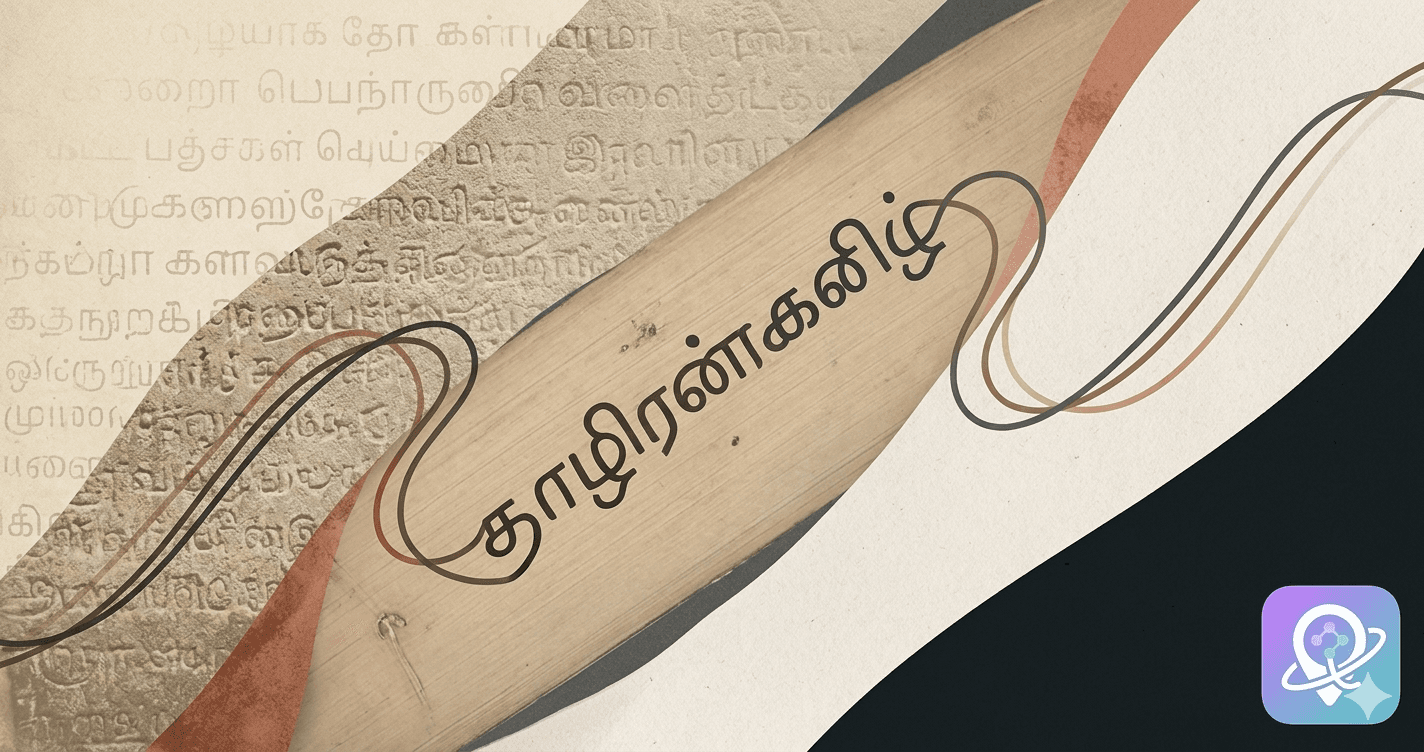
The Tamil language is a foundational element of Tamil identity, linking individuals to a rich cultural heritage across generations and geographies. This post explores its historical significance and ongoing role.
Document Digitisation
Turn documents into verified Tamil lineage.
Choose the depth you need. One-time service, results stay in your account.
The Tamil language serves as an irreplaceable cornerstone of Tamil identity, anchoring individuals to their ancestral heritage and cultural memory across millennia. This deep connection transcends geographical boundaries, linking the diaspora to a shared past and providing a continuous thread through historical migrations. Understanding the role of Tamil language is essential for anyone seeking to connect with their roots, as it offers a direct portal to the collective experience and wisdom of their forebears.
Ancient Roots and Literary Legacy
The antiquity of the Tamil language is not merely a matter of pride but a testament to its enduring cultural significance. With a literary tradition stretching back over two millennia, Tamil boasts a classical corpus that stands among the world's oldest living languages. The Sangam literature, dating from approximately 300 BCE to 300 CE, provides an unparalleled window into the social structures, daily life, philosophical thought, and poetic sensibilities of ancient Tamil society. Works like the Tirukkural, a treatise on ethics and morality by Tiruvalluvar, continue to be studied and revered today, demonstrating the language's capacity to convey profound human truths across generations. This rich literary heritage is not just a collection of texts; it is a living archive of ancestral voices, offering insights into the worldview and values that shaped Tamil identity long before modern nation-states emerged. For those tracing their lineage, engaging with these ancient texts can feel like a direct conversation with their distant ancestors, revealing shared cultural patterns and ways of thinking.
Language as a Marker of Belonging
Beyond its literary grandeur, Tamil has historically functioned as a powerful marker of community and belonging. In a subcontinent characterized by linguistic diversity, speaking Tamil has often signified a shared cultural space, distinct customs, and a collective history. This sense of shared identity became particularly pronounced during various historical periods, including the Chola empire's expansive reach and subsequent interactions with other regional powers. For individuals, proficiency in Tamil fosters a sense of inclusion within the broader Tamil community, whether in their ancestral homeland or among diaspora populations. Learning the language, even partially, can unlock access to family stories, traditional songs, proverbs, and cultural nuances that are often lost in translation. It allows for a deeper engagement with ceremonies, festivals, and the informal oral traditions that are vital to preserving ancestral memory.
The Diaspora Experience and Linguistic Preservation
The role of language becomes even more critical in the context of the Tamil diaspora, which spans continents from Sri Lanka, Malaysia, Singapore, and Fiji to South Africa, the Caribbean, and beyond. For generations of Tamils who migrated for various reasons—indentured labor, economic opportunity, or political refuge—the Tamil language often served as the primary link to their heritage. In new lands, surrounded by different cultures and languages, speaking Tamil became a way to maintain cultural distinctiveness, transmit values to younger generations, and preserve a sense of 'home.'
Many diaspora communities have established Tamil schools, cultural organizations, and religious institutions precisely to ensure the survival of the language. These efforts are not just about communication; they are about maintaining a direct connection to ancestral lands, stories, and identities. For descendants of migrants, reclaiming the Tamil language can be a powerful act of ancestral reconnection, allowing them to understand the sacrifices and resilience of their forebears and to participate more fully in their cultural heritage.
Language and Ancestry Research
For those engaged in Tamil ancestry research, the language offers practical advantages. While many official records might be in English or other colonial languages, family letters, personal diaries, religious texts, and community archives are often written in Tamil. The ability to read and understand these documents can unlock crucial genealogical clues, providing names, dates, places, and relationships that might otherwise remain hidden. Moreover, understanding Tamil can facilitate conversations with elders who may not be fluent in English, allowing for the collection of invaluable oral histories, family lore, and traditional knowledge that are vital to reconstructing family trees and understanding ancestral narratives. The nuances of Tamil kinship terms, for instance, can reveal intricate familial relationships and social structures that are not always apparent in Western genealogical frameworks.
Conclusion
The Tamil language is far more than a communication tool; it is a living repository of history, culture, and identity. Its ancient roots, rich literary tradition, and role in fostering community have made it an enduring link to ancestral heritage for millions worldwide. For anyone seeking to deepen their connection to their Tamil ancestry, engaging with the language offers an unparalleled pathway to understanding, belonging, and a profound appreciation for their roots.
Share this article
TamizhConnect
TamizhConnect helps Tamil families worldwide trace their ancestry using voter records, indenture archives, and origin village matching. Our research team combines genealogy expertise with digitised Tamil Nadu datasets to help you discover your roots.
Ready to start your Tamil family tree?
TamizhConnect helps you discover relatives, trace your origin village, and keep your family history alive for the next generation.
Create your free TamizhConnect accountGo to my family treeDocument Digitisation
Have old documents? Upload them and we'll verify, trace, and add them to your tree.
Was this article helpful?
Get new articles in your inbox
Tamil genealogy tips, research guides, and new feature updates.
You might also like
Sri Lankan Tamil Genetics: A Tapestry of Island and Mainland Ancestry (English)
Explore the genetic landscape of Sri Lankan Tamils, examining their deep connections to both Sinhalese and mainland Indian Tamil populations through ancient migrations and shared history.
16 Feb 2026
Sri Lankan Tamil Ancestry: Shared Island Roots, Distinct Heritage (English)
Explore the genetic landscape of Sri Lankan Tamils, examining how their DNA reflects both ancient migrations and a shared history with other communities on the island, while maintaining unique cultural markers.
10 Feb 2026
What Defines Tamil Identity Beyond Borders and Sub-Groups? (English)
Tamil identity is primarily defined by shared language and cultural heritage, rather than by geographic borders or internal sub-group affiliations. This core identity persists across the diaspora and within Tamil Nadu.
17 Apr 2026
Unearthing Roots: A Guide to Tracing Sri Lankan Tamil Ancestry (English)
Embark on a journey to discover your Sri Lankan Tamil heritage. This guide explores available records, research strategies, and common challenges in piecing together your family history.
03 Apr 2026
Tamil ancestry research: Complete guide for genealogical methods (English)
All our deep-dive guides on Tamil genealogical methods, records, ethnography, and heritage validation for TamizhConnect.
04T00:03:30.092Z Sep 2026
தமிழ் மூதாதையர் ஆய்வு நூலகம் (Tamil)
TamizhConnect-க்கு தேவையான தமிழ் வம்சாவளி முறைகள், பதிவுகள், இனவியல் மற்றும் பாரம்பரியச் சரிபார்ப்புக்கான அனைத்து ஆழமான வழிகாட்டிகளும் ஒரே இடத்தில்.
04T00:03:30.092Z Sep 2026
Related by topic
Tracing the Ancient Roots of Tamil Language (English)
Tamil is one of the world's longest-surviving classical languages, with a rich history distinct from Indo-Aryan languages like Sanskrit. This post explores its independent evolution.
24 Feb 2026
Beyond 'Madras': Unpacking South Indian Ancestry in the Diaspora (English)
The colonial term 'Madras' often obscured the distinct linguistic and regional identities of South Indian indentured laborers. Learn how descendants can trace their specific Tamil, Telugu, or Malayalam heritage.
21 Apr 2026
More from TamizhConnect
Tamil Elder Interview Kit: Ready-to-Use Questions & Prompts (English)
A ready-to-copy interview kit for capturing Tamil family history from elders — grouped by topic, sequenced from easy to sensitive, with recording tips and follow-ups that unlock the stories behind the names.
21 Aug 2026
The Tamils of Dharavi: A Hundred Years from Tirunelveli to Mumbai (English)
From the droughts of Tirunelveli to the tanneries and textile mills of Mumbai, the Tamil community of Dharavi has built one of the largest Tamil cities outside Tamil Nadu. With redevelopment underway, here's how families can preserve their migration story for the next generation.
15 May 2026
Core topics
What is Tamil, really? Language, identity, and where it comes from
A clear, human explanation of what Tamil is-language, identity, people, and history-plus how to talk about it without stereotypes.
4 Feb 2026
Tracing Telugu Roots in Tamil Nadu: A Journey Through Time and Heritage (English)
Unravel the fascinating history of Telugu-speaking communities in Tamil Nadu, exploring migrations, cultural integration, and how to research your dual heritage.
15 Apr 2026
Continue reading
Chola Ancestry: Unraveling Myths, Uncovering History (English)
23 Jan 2026
Tracing Tamil Ancestry in Sri Lanka's Complex Tapestry (English)
22 Jan 2026
Tracing Roots: The Enduring Legacy of Ancient Tamil Kingdoms (English)
21 Jan 2026
Batticaloa – Lagoon, border violence and shared Tamil-Muslim memory: A complete guide to tracing your roots (English)
13 Jan 2026