Tamil ancestry research, when starting with limited information about grandparents, primarily relies on transforming sparse details into specific names, places, and dates through a methodical approach. This process involves leveraging oral history, understanding geographical context, and then strategically exploring available record types, whether your family remained in Tamil Nadu or joined the diaspora. The challenge lies in the fragmented nature of historical records and the need to triangulate information from various sources to build a coherent family tree.
The Power of Oral History and Family Knowledge
The most crucial first step, even with seemingly limited information, is to exhaust all avenues of oral history. Sit down with your oldest living relatives – great-aunts, great-uncles, and your grandparents if they are still alive – and record everything they remember. Ask open-ended questions: What village or town did your grandparents come from? Do you recall any specific street names, temples, or prominent landmarks? What was their occupation? Did they ever mention their parents’ names, or even just their father’s name? Were there any unique family customs, festivals, or even distinct dialect patterns? Even vague clues like "they lived near a big banyan tree" or "they worked in the fields" can provide geographical anchors. Pay close attention to family stories, migration narratives, and any heirlooms or photographs that might offer visual cues or inscriptions. These conversations often yield a surprising amount of detail that, while not immediately verifiable, provides the crucial keywords for subsequent record searches.
Anchoring to Place: The Geographic Imperative
Genealogy is fundamentally about place. Before you can search any record, you need to narrow down a geographical origin for your grandparents. If you only have a district name, try to pinpoint a taluk (sub-district) or even a specific village. If your grandparents emigrated, understanding their destination country or region is equally vital. For those in the diaspora, knowing the approximate year of emigration and the port of departure (e.g., Madras/Chennai, Pondicherry, Nagapattinam) can unlock indenture records or passenger lists. For those whose ancestors remained in Tamil Nadu, even a general region can help you understand the types of local records that might exist and where they might be archived. Mapping out these potential locations, even if speculative initially, helps frame your research and manage expectations about record availability.
Navigating Records in Tamil Nadu
If your grandparents remained in Tamil Nadu, the primary records to explore are often local and community-based. The Village Administrative Officer (VAO) records, particularly the ‘A-Register’ or ‘Adangal’ (land and crop registers), sometimes contain generational information linked to land ownership, though these are not easily accessible to the public without specific land parcel details. Temple records (koil register) can be invaluable, especially for families with strong religious affiliations to a particular temple, as they sometimes recorded births, deaths, and marriages of devotees. Caste-specific records or community registers, if they exist and are maintained by local community organizations, can also be a goldmine, though access varies widely. For more recent generations, birth, marriage, and death certificates from the local Panchayat or Municipal Corporation are foundational. If you have a specific village, visiting in person and speaking with elders, local historians, or even the VAO can often yield breakthroughs that digital searches cannot.
Tracing Diaspora Ancestors: Indenture and Migration Records
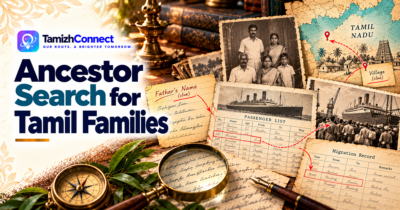
For Tamil families whose ancestors emigrated, particularly during the indenture period (mid-19th to early 20th century) to places like Malaysia, Singapore, Fiji, Mauritius, South Africa, or the Caribbean, the records are different but often more centralized. Indenture passes or Coolie Passes are crucial documents that typically recorded the emigrant’s name, father’s name, age, caste, and most importantly, their village and district of origin in India. These records are often held in the national archives of the destination country, or sometimes in the source archives in India (e.g., Tamil Nadu Archives for Madras Presidency records). Passenger lists for non-indentured migrants, though often less detailed, can still provide names and sometimes last known addresses. Colonial census records, plantation registers, and early birth/death/marriage certificates in the destination country are also vital, as they often preserve the Indian names and, occasionally, the place of origin. Online genealogical platforms like Ancestry.com or FamilySearch.org have digitized many of these diaspora records, making them increasingly accessible.
Overcoming Challenges and Next Steps
The biggest challenge in tracing Tamil ancestry with limited information is the commonality of names and the absence of standardized surnames in many parts of Tamil Nadu until relatively recently. This makes precise identification difficult without a strong geographical anchor. Be prepared for dead ends and the need to cross-reference information from multiple sources. When you find a name, try to find other individuals with similar names and ages in the same locality to piece together family units. Consider DNA testing as a complementary tool, particularly for connecting with distant relatives and confirming regional origins, though it won’t directly provide names and dates. Persistence, meticulous record-keeping, and a willingness to explore both digital archives and on-the-ground research are key to unlocking your family’s story.
Starting with just a few details about your grandparents can feel daunting, but by systematically gathering oral histories, anchoring your research to specific places, and understanding the types of records available for your family’s particular journey, you can begin to reconstruct the vibrant tapestry of your Tamil heritage. Each small piece of information, no matter how minor, contributes to a larger narrative waiting to be discovered.