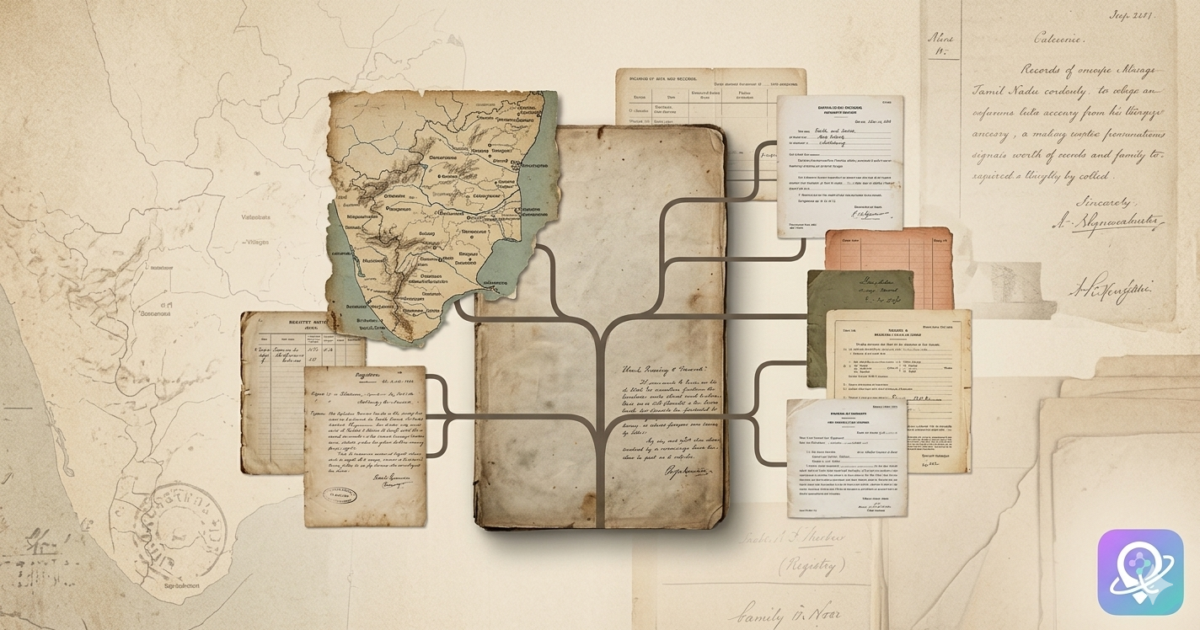
Tamil ancestry research runs on a fixed four-step workflow regardless of whether you’re in Chennai or Toronto: interview elders (names, village, kula deivam, approximate dates, caste/community), collect home documents (passports, certificates, ration cards, marriage invitations), normalize name variants (handle initials, English-Tamil spellings, generational name repetition), then search records (voter rolls for Tamil Nadu, indenture passes for diaspora, temple archives for pre-1900). Steps 1–3 are cheap and mandatory; step 4 wastes time without them. This guide walks each step with realistic time estimates and shows what to expect when records are missing.
Starting with What You Know: Oral Histories and Home Documents
The most valuable resource for any genealogical research is often right within your own family. Begin by speaking to your oldest living relatives – grandparents, great-aunts, and great-uncles. Ask open-ended questions about their parents, grandparents, where they grew up, significant life events, and any stories or traditions they remember. Pay close attention to names (including nicknames and maiden names), places (villages, districts, countries), dates (births, marriages, deaths, migrations), and professions. Record these conversations, with permission, or take detailed notes. This oral history provides the crucial framework for your research.
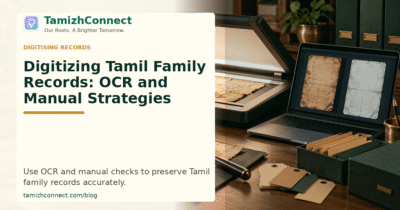
Simultaneously, gather any documents available at home. This could include old passports, birth certificates, marriage certificates, death certificates, land deeds, immigration papers, family Bibles with entries, letters, or even old photographs with names and dates written on the back. These physical documents often contain names, dates, and places that can be cross-referenced with your oral histories and provide solid leads for further investigation.
Navigating Records for Diaspora Communities
Tamil communities have established themselves globally, often due to migration patterns like indentured labor in the 19th and early 20th centuries, or more recent professional migrations. The types of records available will vary significantly depending on where your ancestors settled outside Tamil Nadu.
- Indentured Labor Records: For descendants of Tamils who migrated to countries like Malaysia, Singapore, Sri Lanka, Fiji, Mauritius, South Africa, Trinidad and Tobago, Guyana, and others, indentured labor records are a critical resource. These records, often found in national archives of the destination country or in colonial records held in the UK (e.g., British National Archives), can list names, origin villages in India, father’s name, age, and sometimes even physical descriptions. Researchers often need to know the destination country and approximate arrival period to search these effectively.
- Colonial Administration Records: Beyond indentured labor, colonial powers maintained various administrative records. These might include census records, land registers, court documents, and church records (if ancestors converted to Christianity). These are typically held in the national archives of the former colonial territories.
- Immigration and Naturalization Records: For more recent migrations, immigration records, passenger lists, and naturalization papers in countries like the UK, USA, Canada, and Australia can provide valuable details about an immigrant’s place of birth, date of arrival, and family members.
Access to these records often requires contacting the national archives of the relevant country or exploring online databases that have digitized portions of these collections.
Researching Within Tamil Nadu
Tracing ancestors within Tamil Nadu itself can be particularly intricate due to historical record-keeping practices and privacy laws. However, several avenues exist:
- Birth, Marriage, and Death Records: Civil registration in India became more standardized in the 20th century. For recent generations, these records are maintained at the local municipal or panchayat level. Obtaining them often requires knowing the exact village/town and date, and sometimes demonstrating direct lineage.
- Land Records (Patta/Chitta): Land ownership records can sometimes trace back several generations, especially in rural areas. These are held at the Tahsildar’s office or district collectorate. Knowing the specific village and survey number is usually necessary.
- Temple Records: Some temples, especially older ones, may have maintained records of donations, pujas, or even family histories for prominent patrons. This is highly variable and often requires on-site inquiry.
- Village Records: Historically, village administrative officers (Karnam/Munsif) maintained various registers. While many of these are lost or not publicly accessible, some older district archives might hold remnants. This is a more challenging avenue.
- Gazetteers and District Manuals: These historical government publications, often available in university libraries or national archives, provide socio-economic and historical information about specific districts and villages, which can offer context to your family’s history.
The Role of DNA Testing and Online Platforms
DNA testing has emerged as a powerful tool in modern genealogy. Services like AncestryDNA, 23andMe, and MyHeritage DNA can provide insights into your ethnic origins and connect you with distant relatives who have also tested. For Tamil ancestry, these tests can confirm South Asian roots and sometimes narrow down regional connections, though fine-grained regional ethnicity within India is still an evolving science. The real power lies in the DNA matches – connecting with unknown cousins can open doors to shared family trees and information that you wouldn’t find otherwise.
Online genealogical platforms (e.g., Ancestry.com, FamilySearch.org, MyHeritage.com) offer vast databases of digitized records from around the world. While Indian records are less comprehensively digitized compared to Western countries, these platforms are constantly expanding. FamilySearch, in particular, has a significant collection of microfilmed records from various parts of India, including some from Tamil Nadu, which can be accessed through their family history centers.
Tracing your Tamil ancestors is a journey of patience, persistence, and discovery. It’s about piecing together fragments of history, connecting with living relatives, and sometimes, making unexpected breakthroughs. Each step you take not only uncovers your personal story but also deepens your connection to the rich tapestry of Tamil heritage.