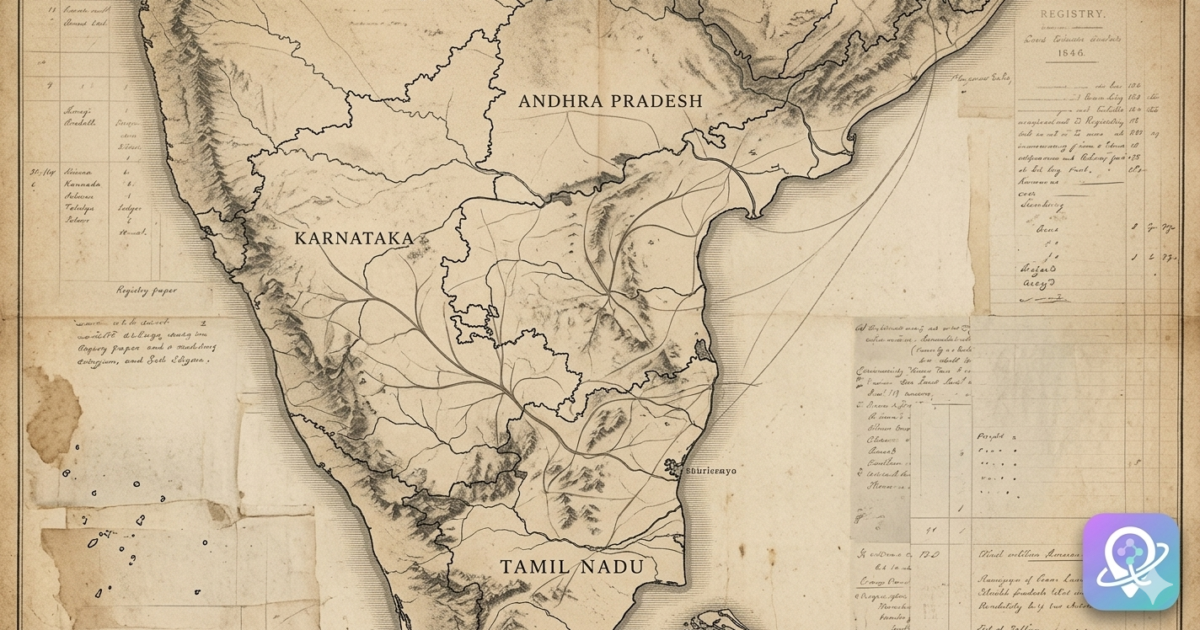
Tamil-speaking families in border districts of Karnataka (Bangalore Urban, Kolar, Chamrajanagar) and Andhra Pradesh (Chittoor, Nellore, Anantapur) typically descend from one of three migration streams: medieval Chola-era expansions eastward and northward (c. 900–1300 CE), Vijayanagara-era administrative placements (14th–17th century), and post-independence labour movement into Bangalore’s industrial growth (1960s+). Record-searching these families means working in three languages (Tamil, Kannada, Telugu) and across three state archival systems with different naming conventions — a Tamil family name may appear naidu-ised in Andhra records or ayya-ised in Karnataka records. The anchor that survives translation is usually the kula deivam (village temple) rather than the name itself.
Historical Context of Tamil Migration to Border Regions
The presence of Tamil communities in present-day Karnataka and Andhra Pradesh is not a recent phenomenon but a result of centuries of migration, trade, and political shifts. Historically, the borders between these linguistic regions were fluid, defined more by the reach of various empires than by modern state boundaries. The Chola, Pandya, Vijayanagara, and Nayak kingdoms, for instance, all exerted influence over territories that now span multiple states, leading to significant population movements. Tamil merchants, artisans, and farmers often settled in new areas for economic opportunities, while soldiers and administrators followed the expansion of their respective rulers. Over generations, these communities established roots, sometimes maintaining strong ties to their Tamil heritage, and at other times assimilating into the local culture to varying degrees. Understanding these historical layers is crucial because it helps frame the possible origins and trajectories of an ancestral line, whether they arrived centuries ago or in more recent economic migrations.
Navigating Linguistic and Administrative Barriers in Records
One of the primary challenges in researching Tamil ancestry in Karnataka and Andhra Pradesh is the language barrier. Records in these states are predominantly in Kannada and Telugu, respectively, alongside English for more recent administrative documents. Birth, marriage, death, land, and educational records will likely be in the dominant regional language. This necessitates either proficiency in these languages or collaboration with individuals who are fluent. Translation services can be helpful, but direct engagement with the original script is often indispensable for understanding nuances and avoiding misinterpretations. Furthermore, administrative boundaries have shifted over time. What is now a district in Karnataka might have historically been part of the Madras Presidency or Mysore State, influencing where older records might be archived. Researchers must be diligent in understanding these historical administrative changes to identify the correct archives or government offices to consult. Persistence and cross-referencing information across different record types are key to overcoming these hurdles.
Key Record Types and Research Strategies
When researching Tamil ancestry in these border regions, a multi-pronged approach to record collection is essential. Start with oral histories from living relatives, gathering names, approximate dates, and most importantly, specific village or town names. Even if the family has moved, the ancestral village is the most critical piece of information. Once a location is established, investigate local records:
- Temple Records: Many Tamil families in these regions maintain strong ties to their kula deivam (family deity) or local temples. Temple registers, especially those for major festivals or family events like ear-piercing ceremonies (kaadhu kuthu), can sometimes provide valuable generational data, even if informal.
- Land Records (Patta/Chitta): Land ownership records are often meticulously kept by local revenue departments. These can show generational transfers of property, providing names, relationships, and approximate dates. These are typically in the local language.
- Electoral Rolls: Modern electoral rolls are publicly accessible and can trace families back a few generations, listing household members and their relationship to the head of the family. These are usually bilingual or in the local language.
- School and University Records: Educational institutions, especially older ones, may have admission registers detailing parentage, birth dates, and native places.
- Cemetery Records: For Christian or Muslim Tamil communities, cemetery records can be a rich source of information, often detailing birth and death dates, and sometimes relationships.
- Newspaper Archives: Local newspapers, particularly those from a few decades ago, might contain obituaries, marriage announcements, or community news that mentions family members.
For families with origins in Karnataka and Andhra Pradesh, it is also important to explore the possibility of their ancestors having come from Tamil Nadu itself. If an ancestral village in Tamil Nadu is identified, then the research path would shift to records available within Tamil Nadu, such as the extensive civil registration records available from the early 20th century in some areas, or even older temple and palm-leaf manuscript records.
Connecting with Heritage and Identity
Beyond paper records, connecting with Tamil heritage in border regions often involves understanding how identity has been maintained or evolved. Many Tamil descendants in Karnataka and Andhra Pradesh identify strongly with their Tamil roots, celebrating festivals like Pongal, speaking Tamil at home, and maintaining cultural practices. Others may have integrated more fully into the local Kannada or Telugu cultures, perhaps speaking primarily the regional language and adopting local customs while retaining a subtle awareness of their Tamil lineage. Genealogical research can be a powerful tool for affirming and rediscovering this heritage, providing concrete links to an ancestral past that might otherwise feel distant. Engaging with local Tamil associations, cultural groups, or even online forums dedicated to Tamil communities in these states can provide invaluable insights and connections to living relatives or community historians. This journey is not just about names and dates, but about understanding the rich tapestry of South Indian history and one’s place within it.
The pursuit of Tamil ancestry in Karnataka and Andhra Pradesh is a rewarding endeavor that bridges linguistic divides and historical narratives. By combining rigorous record research with an appreciation for cultural fluidity and community connections, individuals can successfully uncover their family’s unique story and deepen their understanding of their heritage.