TamizhConnect Blog
28 Mar 2026 · TamizhConnect
Telugu Voices in Tamil Nadu
Tamil genealogy article
Explore the complex journey of Telugu-speaking communities in Tamil Nadu, examining how migration, politics, and social integration have shaped their linguistic and ancestral ties.
Document Digitisation
Turn documents into verified Tamil lineage.
Choose the depth you need. One-time service, results stay in your account.
Telugu-speaking communities in Tamil Nadu descend from three distinct migration streams: Vijayanagara-era (14th–17th century) military and administrative movements that settled Nayak rulers and their retinues across Madurai, Tanjore, and Gingee; medieval agricultural-and-artisan migrations (12th–14th century) of castes who farmed and served under Chola and successor kingdoms; and post-independence labour migration for industrial jobs in Chennai and the factory belts around it. The oldest two streams are now largely indistinguishable from native Tamil communities linguistically, often recognizable only through Telugu-origin surnames (Naidu, Reddy, Gounder variants), caste-association records, or ritual traditions. Whether a family "disowns" its Telugu ancestry depends heavily on which stream and which generation — and often on whether the family had political or economic reasons to foreground one identity over the other.
Historical Currents: Waves of Migration
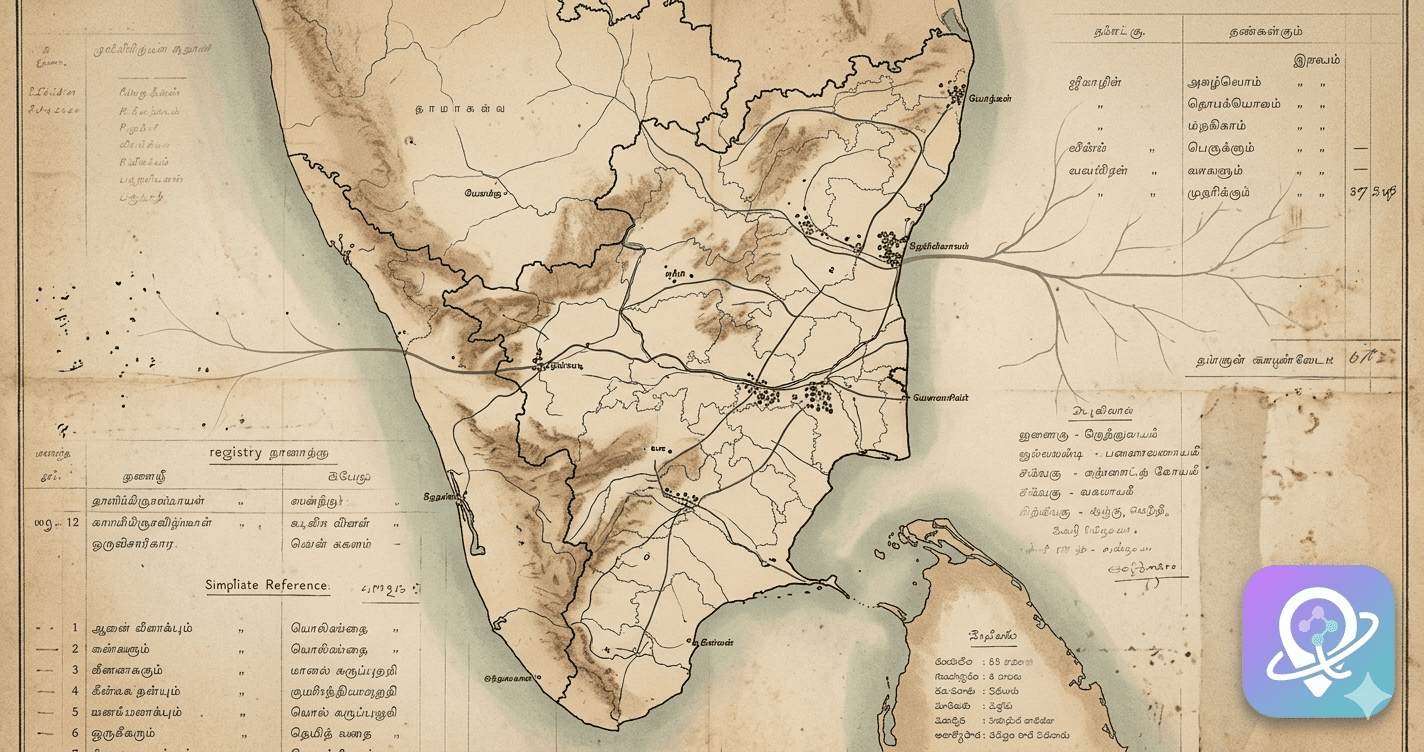
The migration of Telugu-speaking populations into the region now known as Tamil Nadu has occurred in several distinct waves, each with its own motivations and impacts. One of the most significant periods was during the Vijayanagara Empire (14th-17th centuries). As the empire expanded and its influence spread south, many Telugu-speaking administrators, soldiers, traders, and artisans moved into Tamil-speaking territories. These were not merely transient individuals; many settled, established new towns, and became integral parts of the local economy and social structure. The Nayak kingdoms, which emerged from the Vijayanagara Empire (such as the Nayaks of Madurai and Thanjavur), further solidified this presence, often bringing their own Telugu-speaking courtiers and military personnel.
Later migrations, particularly during the colonial period and into the 20th century, were often driven by economic opportunities, drought, or political changes. These more recent waves saw people moving for work in agriculture, textiles, or as merchants, settling in various parts of Tamil Nadu, from the fertile delta regions to bustling urban centers. Each wave contributed to the existing Telugu demographic, creating communities with varying degrees of connection to their ancestral lands and language.
Language, Culture, and Social Integration
For communities living for generations in a new linguistic environment, the question of language maintenance versus assimilation is paramount. In Tamil Nadu, many Telugu families have become bilingual, speaking Tamil in public and Telugu at home. For some, particularly in urban areas or among younger generations, Tamil may become the primary language, with Telugu knowledge diminishing over time. This linguistic shift is a natural outcome of social integration, educational systems, and the need to navigate daily life in the dominant language.
However, cultural practices often endure even when language proficiency wanes. Festivals like Ugadi (Telugu New Year), specific culinary traditions, family rituals, and even certain folk arts might be meticulously preserved. Marriage customs, naming conventions, and an awareness of one's gotram (lineage) often remain strong markers of identity. Temples dedicated to deities revered in Telugu tradition, or maths (monasteries) that cater to specific Telugu Brahmin communities, also serve as vital cultural anchors, fostering a sense of community and shared heritage.
The Role of Political and Social Movements
The 20th century brought significant political and social changes to South India, which inevitably impacted Telugu communities in Tamil Nadu. The Dravidian movement, with its emphasis on Tamil identity and language, created a powerful cultural current. While primarily focused on promoting Tamil, this movement also, perhaps inadvertently, encouraged greater assimilation for non-Tamil linguistic groups living within the state's borders. For some, identifying strongly with Tamil Nadu and its dominant culture became a way to integrate and participate fully in the state's social and political life.
Simultaneously, the formation of Andhra Pradesh as a separate linguistic state in 1956, following the States Reorganisation Act, gave a distinct political identity to Telugu speakers. While this strengthened Telugu identity in its home state, for those in Tamil Nadu, it further cemented their status as a linguistic minority. This period saw some movement of people, but many long-settled families chose to remain, having established roots and livelihoods over generations.
Navigating a Dual Identity
To suggest that Telugu communities in Tamil Nadu 'disown' their ancestry misunderstands the complex process of maintaining a dual identity. For many, it's not a matter of rejection but rather an evolution. They are Tamilians by domicile, by their daily lives, and often by their primary language, yet they remain Telugu by heritage, by their family histories, and by cherished cultural practices. This dual identity can be a source of richness, allowing individuals to draw from two distinct cultural wells.
Researching one's Telugu ancestry in Tamil Nadu can involve piecing together oral histories, examining old family records, looking at village names, and understanding migration patterns. Public records from earlier centuries often did not prioritize linguistic identity in the way modern censuses do, making precise historical counts challenging. However, the cultural markers and family narratives provide a powerful, if informal, archive of their journey.
The story of Telugu communities in Tamil Nadu is a testament to the fluidity of identity and the enduring human capacity to adapt, integrate, and yet hold onto the threads of one's past. It's a narrative not of disowning, but of weaving new patterns into an existing fabric, creating a unique and vibrant cultural expression that enriches the broader South Indian heritage.
Share this article
TamizhConnect
TamizhConnect helps Tamil families worldwide trace their ancestry using voter records, indenture archives, and origin village matching. Our research team combines genealogy expertise with digitised Tamil Nadu datasets to help you discover your roots.
Ready to start your Tamil family tree?
TamizhConnect helps you discover relatives, trace your origin village, and keep your family history alive for the next generation.
Create your free TamizhConnect accountGo to my family treeDocument Digitisation
Have old documents? Upload them and we'll verify, trace, and add them to your tree.
Was this article helpful?
Get new articles in your inbox
Tamil genealogy tips, research guides, and new feature updates.
You might also like
Tracing Telugu Ancestry Within Tamil Nadu (English)
Many families in Tamil Nadu have Telugu roots, often through centuries of migration and assimilation. This post explores historical movements and offers guidance on how to uncover these ancestral connections.
11 Apr 2026
Tracing Telugu Roots in Tamil Nadu: A Journey Through Time and Heritage (English)
Unravel the fascinating history of Telugu-speaking communities in Tamil Nadu, exploring migrations, cultural integration, and how to research your dual heritage.
15 Apr 2026
Tracing Telugu Ancestry in Tamil Nadu: A Guide (English)
Explore the history of Telugu-speaking communities in Tamil Nadu and how to research your family's journey and cultural evolution.
07 Apr 2026
Tracing Telugu Ancestry in Tamil Nadu (English)
Many families in Tamil Nadu speak Telugu as their mother tongue, reflecting centuries of migration, trade, and political shifts. This post explores how to trace these unique ancestral lines and understand their cultural evolution.
05 Apr 2026
தமிழ் மூதாதையர் ஆய்வு நூலகம் (Tamil)
TamizhConnect-க்கு தேவையான தமிழ் வம்சாவளி முறைகள், பதிவுகள், இனவியல் மற்றும் பாரம்பரியச் சரிபார்ப்புக்கான அனைத்து ஆழமான வழிகாட்டிகளும் ஒரே இடத்தில்.
02T21:31:40.701Z Sep 2026
Tamil ancestry research: Complete guide for genealogical methods (English)
All our deep-dive guides on Tamil genealogical methods, records, ethnography, and heritage validation for TamizhConnect.
02T21:31:40.700Z Sep 2026
Related by topic
Untangling Tamil Roots: Genetics, Language, and Identity (English)
Explore the complex interplay between genetic ancestry and cultural identity in the Tamil context, examining how these elements converge and diverge across communities.
24 Mar 2026
From Ancient Shores: The Shared Tapestry of Tamil and Malayalam (English)
Explore the deep linguistic and historical roots connecting Tamil and Malayalam, tracing their divergence from a common ancestor through centuries of cultural and geographical evolution.
17 Mar 2026
More from TamizhConnect
Tamil Elder Interview Kit: Ready-to-Use Questions & Prompts (English)
A ready-to-copy interview kit for capturing Tamil family history from elders — grouped by topic, sequenced from easy to sensitive, with recording tips and follow-ups that unlock the stories behind the names.
21 Aug 2026
The Tamils of Dharavi: A Hundred Years from Tirunelveli to Mumbai (English)
From the droughts of Tirunelveli to the tanneries and textile mills of Mumbai, the Tamil community of Dharavi has built one of the largest Tamil cities outside Tamil Nadu. With redevelopment underway, here's how families can preserve their migration story for the next generation.
15 May 2026
Core topics
What is Tamil, really? Language, identity, and where it comes from
A clear, human explanation of what Tamil is-language, identity, people, and history-plus how to talk about it without stereotypes.
4 Feb 2026
What Defines Tamil Identity Beyond Borders and Sub-Groups? (English)
Tamil identity is primarily defined by shared language and cultural heritage, rather than by geographic borders or internal sub-group affiliations. This core identity persists across the diaspora and within Tamil Nadu.
17 Apr 2026
Continue reading
Tracing Tamil Roots: The Distinctive Dravidian Heritage (English)
26 Mar 2026
Tracing Your Lineage: What Genealogy Means in Tamil Culture (English)
25 Mar 2026
Tracing Your Tamil Roots: A Step-by-Step Guide to Ancestry (English)
22 Mar 2026
Tracing Tamil Origins: Genetic and Linguistic Evidence (English)
21 Mar 2026